


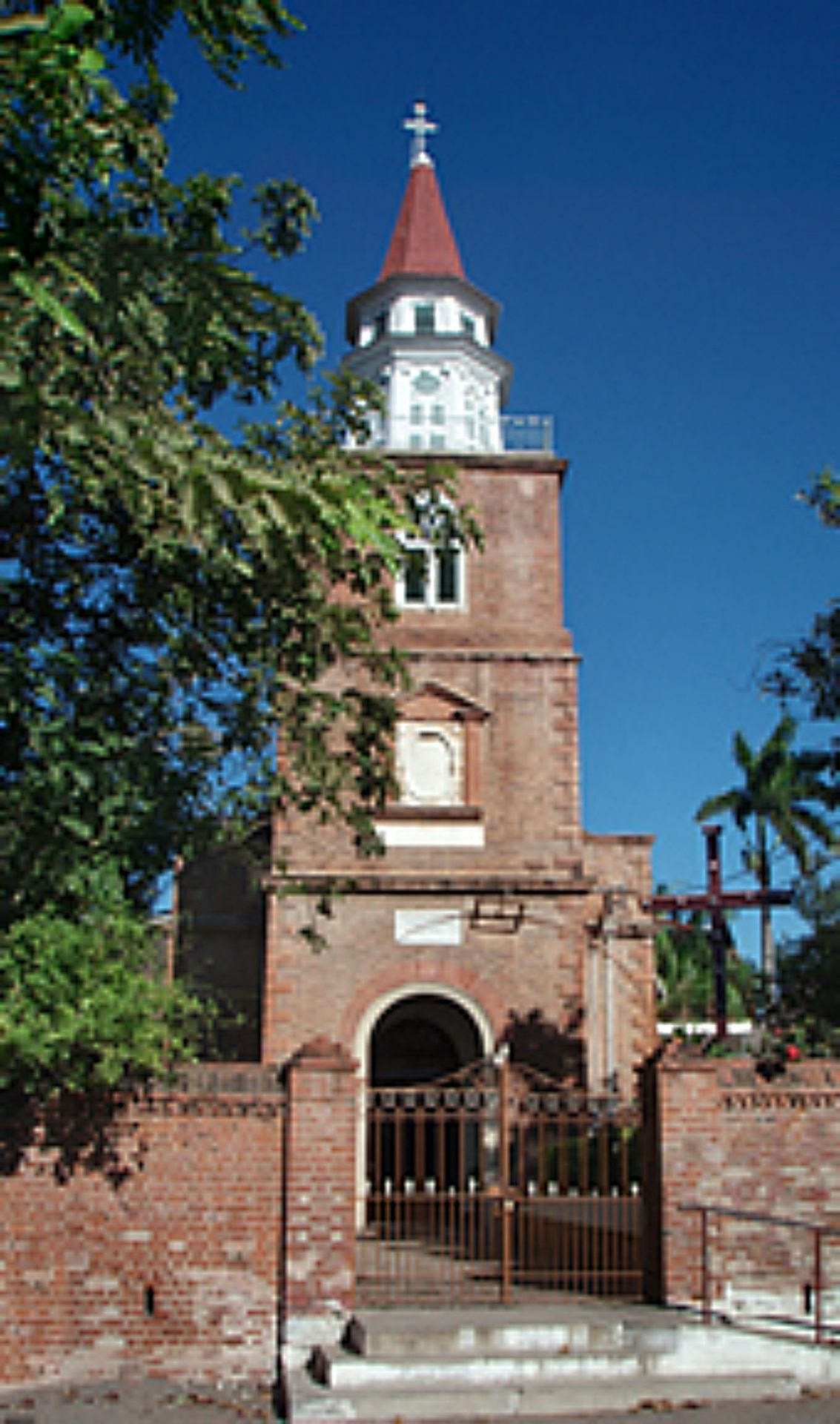
The Spanish Town Cathedral, also known as the St. Catherine Parish Church, is a historic landmark located in the parish of St. Catherine, Jamaica. Constructed in the latter half of the seventeenth century, it stands as a symbol of the island’s colonial history, particularly the period following the British conquest of Jamaica in 1655. After the conquest, the British demolished the original Catholic church and replaced it with an Anglican structure, which is now the Spanish Town Cathedral. Although the church was destroyed by a hurricane in 1712, it was rebuilt in 1714, and over the years, it has become a central site for religious, cultural, and historical activities in the region. The cathedral is renowned for its role in preserving some of Jamaica’s oldest baptismal and marriage records. Additionally, it holds the graves of notable figures such as Sir Thomas Modyford, who served as governor of the island from 1664 to 1671, and the Earl of Effingham, who governed in 1790–1791. Architecturally, the cathedral blends multiple styles, incorporating round-headed and pointed arches, classical quoins, and medieval buttresses, making it an exceptional example of the fusion of architectural trends. In 1817, a tower was added to the structure, which is topped with one of the few steeples found in the Caribbean. The Spanish Town Cathedral not only serves as a place of worship but also stands as an important heritage site, influencing the local real estate landscape by attracting visitors, historians, and preservationists. Its unique architectural features, historical significance, and connection to influential figures have made it a valuable part of Jamaica’s cultural identity, while also contributing to discussions around the conservation of historic buildings in the broader context of global architectural preservation.