


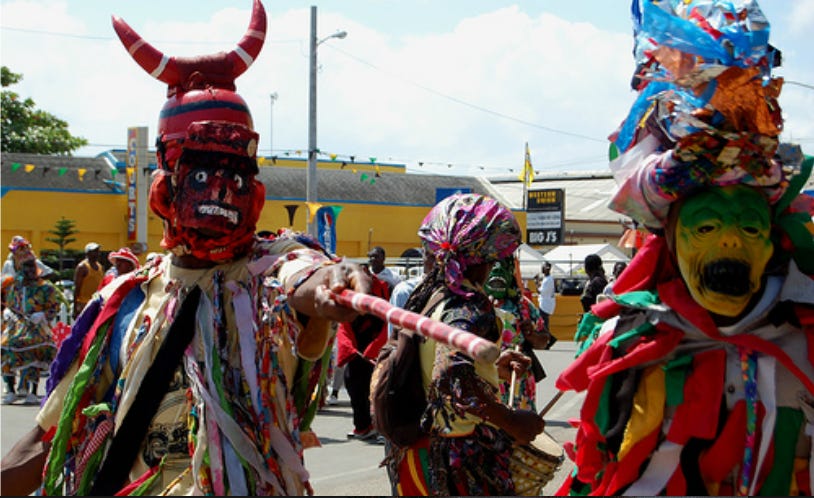
Jonkonnu, also known as Junkanoo, John Canoe, or John Kuner, symbolizes African cultural survival and resistance in the English-speaking Americas. This vibrant festival, rooted in the experiences of the enslaved, transcends celebration, embodying defiance, identity, and the enduring spirit of a displaced people.
Historical Roots
Originating during the colonial era, Jonkonnu was created by enslaved Africans in the Caribbean and Central America. It offered a cultural escape from plantation oppression and served as a powerful expression of resistance. The name “Jonkonnu” may derive from the French phrase gens inconnus (“unknown people”), reflecting the enigmatic and subversive nature of the masked performers. Over time, the festival merged African, European, and indigenous influences, evolving into a vital cultural tradition.
Features of Jonkonnu
Jonkonnu traditionally occurs during the Christmas and New Year season, featuring:
Masks and Masquerades: Central to the festival, masks symbolize transformation and challenge societal norms, allowing performers to express multiple identities.
Music and Dance: Drumming, singing, and dynamic dances create a fusion of African and European traditions, forming a unique cultural soundscape.
Elaborate Costumes: Performers wear vibrant outfits adorned with towering headdresses and symbolic designs, reflecting both African spirituality and local narratives.
Cultural Importance
For the enslaved, Jonkonnu was both a celebration and an act of defiance. Plantation owners often tolerated the festivities as a “safety valve” for tensions, but performers used the occasion to critique colonial power structures subtly. Today, Jonkonnu endures as a testament to African heritage and identity, preserving cultural values in a rapidly changing world.
Contemporary Revival
Though its practice has declined in some areas, efforts to reimagine Jonkonnu in modern contexts are ongoing. Projects like Olivia McGilchrist’s “Jonkonnu / Gens inconnus” use virtual reality to immerse audiences in the festival, while artists re-stage historical performances to engage with its rich history. These initiatives bridge tradition and innovation, ensuring Jonkonnu remains relevant.
Challenges and the Path Forward
Jonkonnu faces challenges from economic hardship and declining interest among younger generations. Revitalizing the festival through art, education, and performance spaces is crucial to preserving its legacy. Amid societal struggles, Jonkonnu stands as a celebration of cultural resilience, uniting communities and inspiring resistance through its enduring spirit.