


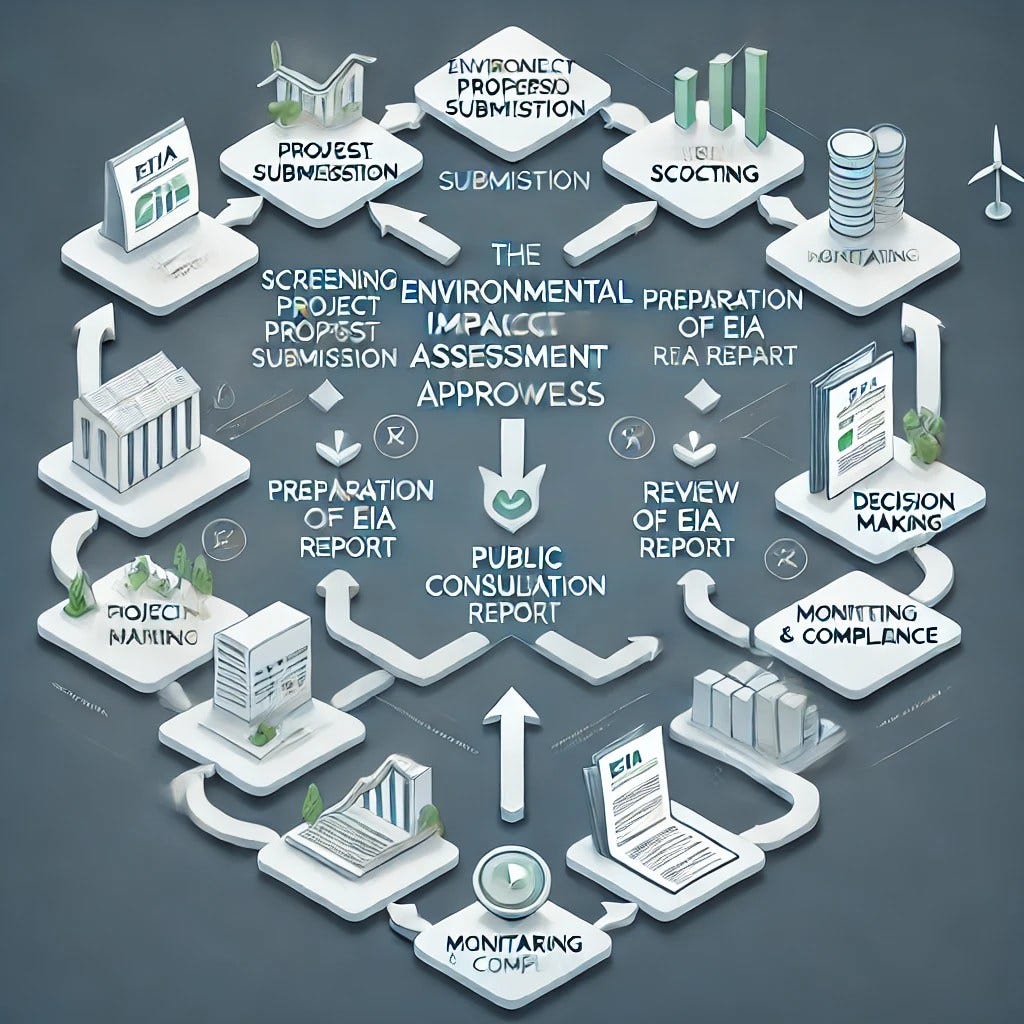
The Environmental Impact Assessment (EIA) Approval Process is a critical step in ensuring that proposed projects are environmentally sustainable and compliant with regulatory frameworks. This process evaluates the potential environmental consequences of a project before decisions are made, helping to prevent or mitigate negative impacts on natural ecosystems and local communities. The EIA approval process involves a series of stages, from initial project submission through public consultation and regulatory review, culminating in a decision that either allows the project to proceed with conditions or rejects it outright. This flowchart provides a clear and concise visual representation of each step involved, guiding stakeholders through the key phases of the EIA, from proposal submission to monitoring and compliance. Understanding this process is essential for developers, environmental consultants, and regulatory bodies to ensure that development projects align with environmental protection standards.
Here’s how the Environmental Impact Assessment (EIA) approval process generally unfolds in a map-like format:
Project Proposal Submission
➔
The project developer submits a project proposal to the relevant environmental authority (e.g., National Environment and Planning Agency – NEPA in Jamaica).Screening
➔
The authority screens the project to determine whether an EIA is required, based on the project’s scale, type, and potential environmental impact.Outcome:EIA Required
EIA Not Required (May proceed with mitigations or direct approval)
Scoping
➔
If an EIA is required, the authority and stakeholders define the scope of the assessment, identifying the key environmental concerns, study areas, and data requirements.Preparation of EIA Report
➔
The project developer or an appointed environmental consultant prepares the EIA report, addressing all identified issues, potential impacts, and mitigation measures.Public Consultation
➔
The EIA report is made available for public review, and consultations are held to gather feedback from stakeholders, communities, and interested parties.Review of EIA Report
➔
The environmental authority reviews the EIA report, considering both technical aspects and public input.Decision Making
➔
The authority makes a decision to either approve, request revisions, or reject the project based on the findings of the EIA.Outcome:Approval with Conditions
Rejection
Further Information Required
Monitoring and Compliance
➔
Once the project is approved, the developer must comply with all mitigation measures and monitoring plans outlined in the EIA. Authorities will monitor the project for compliance.