


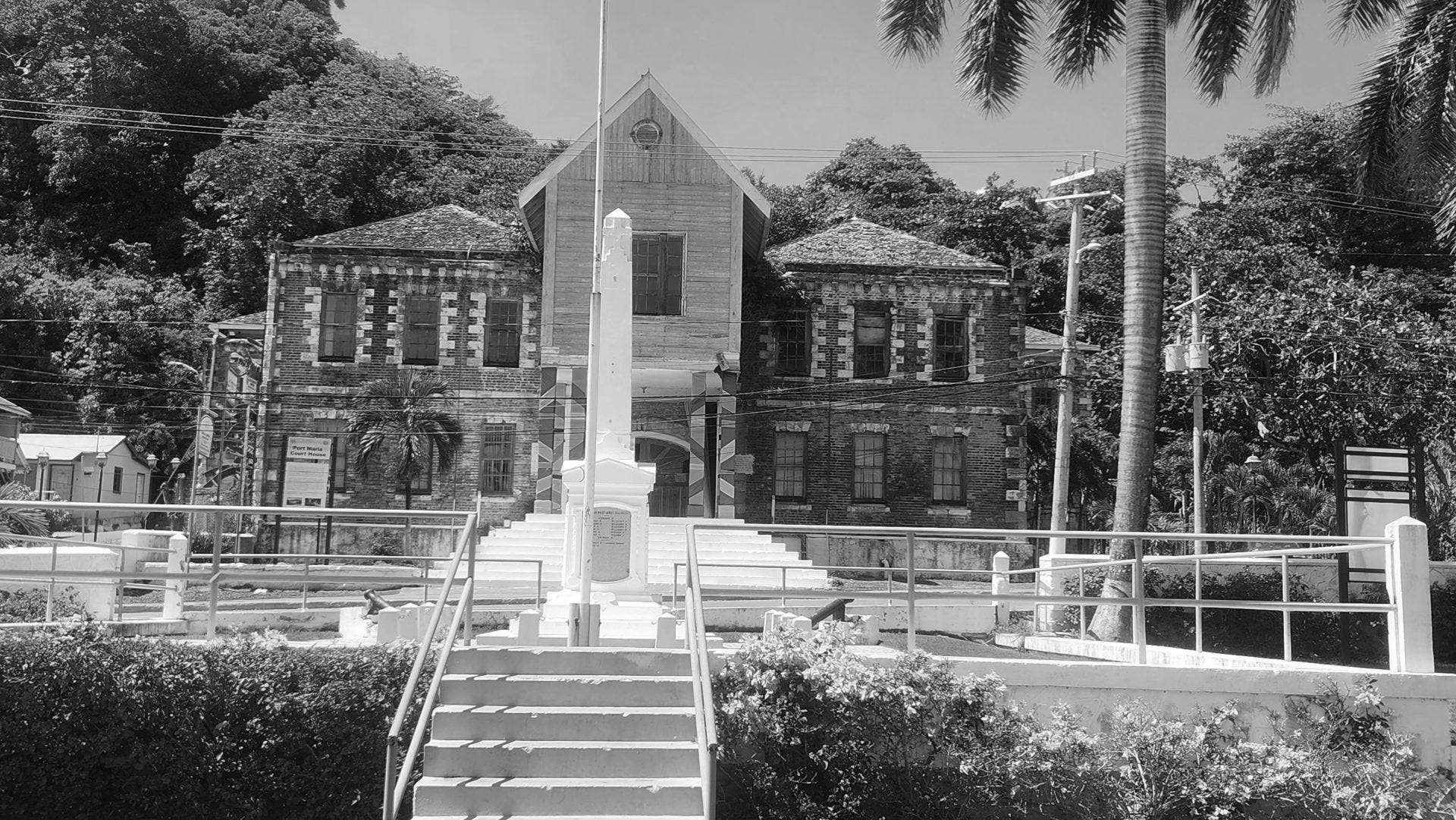
Located in the heart of Port Maria, opposite the Claude Stuart Park and the Port Maria Parish Church, the Port Maria Court House stands as a significant historical and architectural landmark in St. Mary. Originally constructed in 1821, this fine example of Georgian architecture served dual purposes as both the courthouse and police station for many years. However, tragedy struck in 1988 when the building was gutted by a devastating fire. Despite this, the structure was rebuilt and reopened as the Port Maria Civic Centre in 2000, thanks to the dedicated efforts of the Urban Development Corporation (UDC) and the Jamaica National Heritage Trust (JNHT), who ensured the building’s restoration adhered to its original Georgian style.
The historical significance of the Port Maria Court House extends beyond its architectural splendor. Prior to the establishment of this grand building, Port Maria had no public structure to house its civic functions. Public offices were often located in private residences, a costly arrangement for the parish which had to pay significant rents. In 1816, a turning point came when Thomas Manning bequeathed some land in the parish for the benefit of the poor, specifically to be used as the Vestry deemed fit. Later that same year, the Justices and Vestrymen, with the approval of an Act, were empowered to exchange a portion of this land – 90 acres at Trinity – for Nibbs Penn, a 54-acre property located in Port Maria. It was on this land that the municipal buildings, including the court house, were eventually erected.
The Port Maria Court House has long been a place of significant legal and political activity in Jamaica. Throughout its existence, it has hosted numerous trials involving some of the country’s most prominent politicians and public figures. One of the most notable cases in the building’s history took place in 1942, when National Hero Alexander Bustamante was tried for manslaughter. Having been recently released from detention at Up Park Camp, Bustamante was immediately charged with the offence. His popularity with the working class, particularly following his crucial role in the 1938 labour struggles, added to the immense public interest in his trial.
The case took a dramatic turn when Bustamante’s famous cousin and political rival, Norman Manley, decided to join the defence team, after other lawyers seemed to be struggling. The trial captivated the nation for several days, and the eventual not guilty verdict was met with great joy, especially by Bustamante’s supporters. This trial not only marked a pivotal moment in Jamaican political history but also underscored the significance of the Port Maria Court House as a place where key figures in the nation’s development were shaped by legal proceedings.
The legacy of the Port Maria Court House is further reinforced by its unique role in the local community. Over the years, it has served as a focal point for both legal matters and significant political events. The restoration of this historical building as the Port Maria Civic Centre in the early 2000s allowed it to retain its place as a hub for public and civic life in St. Mary, all while preserving its rich heritage for future generations.
Today, the Port Maria Court House stands not only as a testament to Jamaica’s colonial past but also as a symbol of resilience, having endured both fire and time. As one of St. Mary’s most notable landmarks, it continues to attract those interested in the history and development of the parish and Jamaica as a whole.