


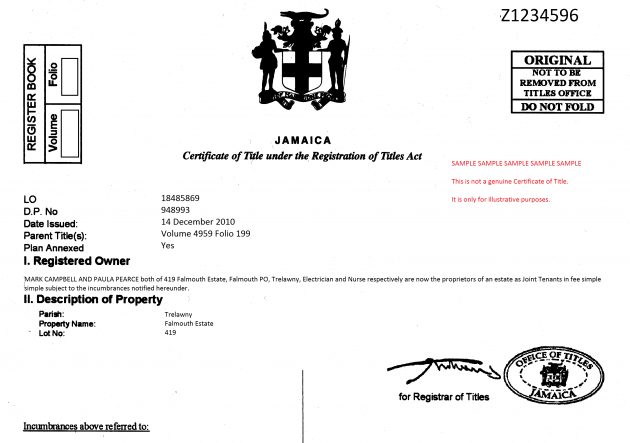
A title deed is like a special certificate that proves who owns a piece of land or a house. It’s a “proof of ownership” document that says, “This property belongs to this person.” In Jamaica, the title deed is very important when someone wants to buy or sell property because it shows who the official owner is. It may also include details like a map of the property’s borders, the history of past owners, and any debts or rules connected to the land. People sometimes just call it a “title,” which can be a bit confusing, but both “title” and “title deed” mean proof of ownership.
The word “deed” can also mean different kinds of legal papers. For example, when someone takes out a mortgage loan to buy a property, the lender (called the mortgagee) gives the borrower (called the mortgagor) a “deed of mortgage.” This deed of mortgage is a document that says the borrower owes the lender money for the property and promises to pay it back. Until the mortgage is fully paid off, the lender has certain rights to the property.
In Jamaica, the original title deed is kept safe by the National Land Agency (NLA), which acts like a central storage for ownership records across the country. This system helps prevent any mix-ups or fake ownership claims. In other countries, like the UK, property ownership is often recorded in a central computer system called the Land Registry, which tracks owners without needing individual title deeds for each property. But in Jamaica, each property has its own title deed, and it’s important to keep it accurate and up-to-date. Knowing the difference between a title deed and a mortgage deed helps people understand their rights and responsibilities, whether they’re buying, selling, or mortgaging a property.