


Originally published December 28, 2016
Updated May 2026
The redevelopment of the historic Stag Brewery site in Mortlake, South West London, became one of the most closely watched regeneration projects in the capital during the 2010s, reflecting the growing global appetite for large-scale riverside residential and mixed-use developments.
Located along the River Thames within the London Borough of Richmond upon Thames, the 22-acre former brewery site carried more than a century of industrial and cultural history. Brewing on the site dated back hundreds of years, with the brewery later becoming associated with Watney’s and eventually brewing Budweiser under Anheuser-Busch before production ceased in 2015.
In 2015, Singapore-listed City Developments Limited (CDL), through its subsidiary Reselton Properties Limited and represented by Dartmouth Capital Advisors, acquired the landmark site for approximately £158 million as part of a wider UK investment strategy focused on large regeneration opportunities outside Central London.
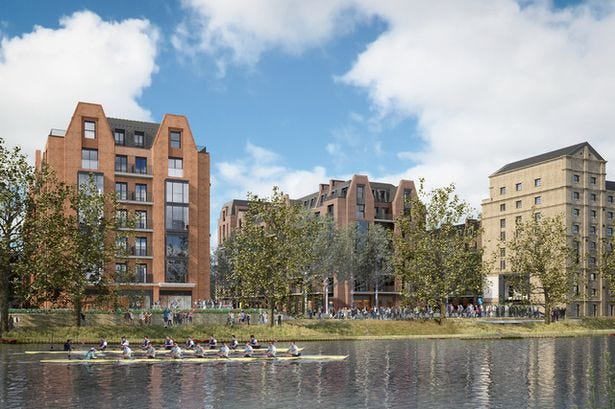
The proposed redevelopment quickly became one of West London’s most ambitious urban transformation projects, with plans eventually encompassing more than 1,000 homes alongside retail, hotel, office, education, leisure, and public realm elements. The masterplan also proposed major environmental improvements, riverside access enhancements, and significant infrastructure upgrades.
Dean Jones acted as construction advisor to Dartmouth Capital Advisors during the early stages of the redevelopment programme, contributing to the preparation of the construction management plan while also supporting elements of the Environmental Impact Assessment (EIA) and planning application process.
Projects of this scale require extensive coordination between architects, planners, engineers, environmental consultants, transport specialists, heritage advisers, and local authorities. In London particularly, major regeneration developments frequently involve years of consultation, environmental review, political scrutiny, and community engagement before receiving approval.
The Stag Brewery redevelopment became especially sensitive because of its historic significance and location within one of London’s most desirable residential boroughs. The site sits near the finishing point of the world-famous Oxford and Cambridge Boat Race and occupies a prominent stretch of the Thames riverside.
The project also reflected wider global trends taking place during that era:
• Growing international investment into London real estate
• Regeneration of former industrial waterfront sites
• Rising demand for mixed-use urban communities
• Expansion of high-end residential development outside Central London
• Increasing focus on sustainability and placemaking
Environmental considerations became central to the planning process. Like many large brownfield redevelopment schemes, the site required detailed studies involving transport impact, flood risk, heritage preservation, sustainability, public infrastructure, and ecological considerations.
Public consultation around the project extended over several years and generated significant local debate surrounding density, traffic, school provision, affordable housing, and the future identity of Mortlake itself.
The redevelopment would later become emblematic of wider tensions affecting major cities internationally, where former industrial land increasingly becomes the focus of luxury housing, regeneration policy, infrastructure pressure, and competing visions for urban growth.
For construction and real estate professionals, projects like Stag Brewery demonstrate the growing complexity of large-scale regeneration in global cities where planning, heritage, environmental policy, infrastructure, investment strategy, and community expectations increasingly intersect.
Editor’s Note: This article has been updated in May 2026 to provide additional historical, planning, and regeneration context relevant to the Stag Brewery redevelopment and wider international property trends.