


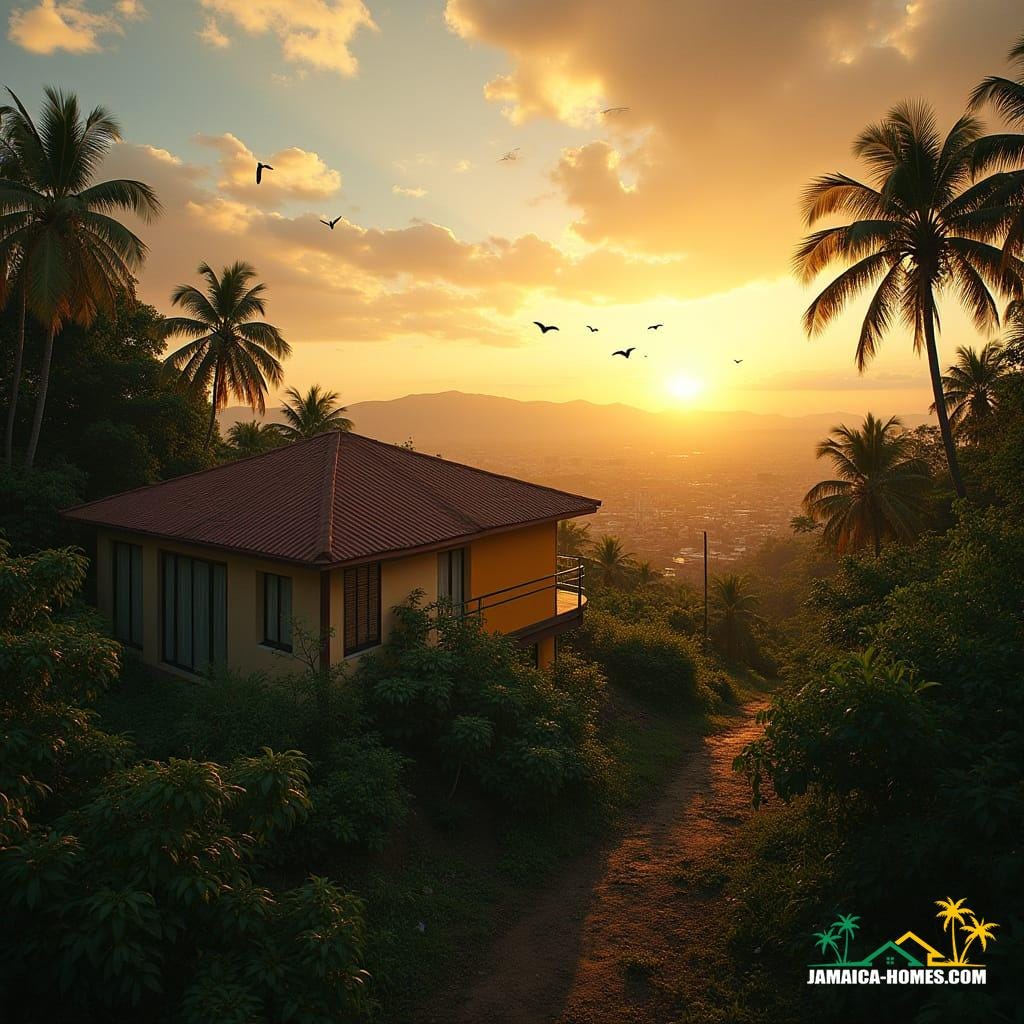
Jimmy Cliff was born into motion.
Born James Chambers on 30 July 1944, during a hurricane in St James Parish, he entered the world amid wind, rain, and disruption. It is difficult not to read symbolism into that beginning. From the start, his life would be shaped by forces larger than himself, and by a quiet determination to stand upright within them.
Like so many Jamaicans before and after him, Cliff’s story began in the countryside and moved toward Kingston. That journey—rural to urban, parish to capital—was never just geographic. It was economic. Psychological. Aspirational. It was the same movement that has shaped Jamaica’s housing patterns, its informal settlements, its formal developments, and its persistent hunger for land that could be called one’s own.
By the time The Harder They Come reached screens in 1972, Cliff was not inventing a story. He was reflecting a national reality back to itself.
And that reality can be read clearly through the song that carries the film’s name.
“Well, they tell me of a pie up in the sky…”: Deferred Promise and Deferred Ownership
“Well, they tell me of a pie up in the sky
Waiting for me when I die”
This opening line is not just spiritual skepticism. It is economic critique. It speaks directly to a lifetime of being told to wait—wait for better wages, wait for opportunity, wait for housing solutions, wait for reform.
In Jamaica, waiting has always been expensive.
For decades, working people were told that land ownership would come later, that formal housing would arrive eventually, that systems would correct themselves. Meanwhile, people built anyway—sometimes without title, sometimes without permission, often without choice.
“But between the day you’re born and when you die
They never seem to hear even your cry”
This is the sound of people excluded from formal systems: planning offices, mortgage institutions, policy tables. It is the voice of families whose housing needs were visible but not prioritised.
And yet, the song does not stay there.
“I’m gonna get my share now”: Agency, Land, and the Refusal to Wait
“So as sure as the sun will shine
I’m gonna get my share now, what’s mine”
This is the moral centre of the song—and of Jamaican real estate history.
Land ownership in Jamaica has never been about excess. It has been about security. About refusing to live permanently at the mercy of landlords, politics, or storms. About claiming something solid in a world that shifts.
The line “as sure as the sun will shine” is not bravado. It is certainty rooted in effort. It mirrors the mindset of generations who saved slowly, built incrementally, and accepted discomfort now in exchange for stability later.
The house might start as board.
Then concrete.
Then an extension.
One block at a time.
“The harder they come, the harder they fall”: Power, Property, and Pressure
“And then the harder they come
The harder they fall, one and all”
This line is often misread as a threat. In truth, it is an observation.
Jamaica has lived through cycles of systems that rose quickly and collapsed just as fast: post-independence optimism, 1970s political intensity, structural adjustment, austerity, debt. Each wave left marks on land, housing, and who could access both.
Formal developments rose beside informal settlements. Gated communities emerged alongside unrecognised yards. And yet, the people remained.
Real estate here has never been neutral. It has always reflected power—who holds it, who doesn’t, and who survives regardless.
“Trying to drive me underground”: Informality and Invisibility
“Well, the oppressors are trying to keep me down
Trying to drive me underground”
For many Jamaicans, “underground” was not metaphorical.
It was land without title.
Homes without recognition.
Communities without infrastructure.
Yet people stayed. They built. They resisted erasure by existing anyway.
“And they think that they have got the battle won
I say, forgive them Lord, they know not what they’ve done”
This is not bitterness. It is clarity. The song recognises systems that do harm without fully understanding the human cost.
Housing policy in Jamaica has often lagged behind reality. But reality has never waited for policy.
Hurricanes, Hard Times, and Holding Ground
“’Cause as sure as the sun will shine
I’m gonna get my share now, what’s mine”
Hurricanes have always tested Jamaica’s housing resolve. Gilbert flattened belief as much as buildings. Melissa, more recently, reminded the country that permanence here is always negotiated.
And yet, people rebuild.
Not because it is easy.
But because starting again elsewhere feels harder.
A Jamaican home is memory. Labour. Sacrifice. Remittances folded into concrete. It is not just shelter—it is proof of endurance.
“I’d rather be a free man in my grave”: Ownership as Freedom
“But I’d rather be a free man in my grave
Than living as a puppet or a slave”
This line carries deep meaning in a country shaped by enslavement, land dispossession, and later economic dependence.
Property ownership has often represented freedom in its most practical form: the ability to stay, to decide, to endure without asking permission.
That freedom has never been abstract. It has been measured in square footage, title deeds, and walls that withstand storms.
No Perfect Time: The Jamaican Property Ladder
There has never been a perfect time to buy property in Jamaica.
Not in the 1960s.
Not in the 1980s.
Not now.
Interest rates rise. Prices climb. Materials cost more. Waiting feels sensible.
But history tells a quieter truth: those who waited for certainty rarely moved. Those who acted amid uncertainty often did.
Dean Jones:
“In Jamaica, property ownership has never been about timing the market. It has been about deciding that your future deserves a physical place to stand.”
Just as Cliff rejected deferred reward, Jamaicans have repeatedly chosen action over delay.
From Reggae to Real Estate: A Shared Philosophy
Jimmy Cliff’s music carried principles that translate cleanly into property:
Take responsibility.
Expect resistance.
Keep moving.
Claim what is yours, honestly earned.
“You can get it if you really want it,” he sang elsewhere—not as fantasy, but as condition.
Property ownership still works that way.
Looking Forward: After Melissa, Toward Tomorrow
Today, Jamaican real estate stands at another turning point. Climate pressure. Rising demand. Diaspora investment. Young people questioning whether ownership is still possible.
The answer is not simple. But history reassures.
Jamaicans have always built under pressure.
They have always adapted.
Dean Jones:
“Every generation thinks the ladder has been pulled up behind them. And every generation, somehow, builds a new rung.”
Jimmy Cliff’s legacy is instruction, not nostalgia.
As Sure as the Sun Will Shine
Jimmy Cliff gave Jamaica language for refusing to wait. For insisting on now. For believing that effort becomes home.
Real estate, at its core, is the same story.
And as sure as the sun will shine, Jamaicans will keep building—block by block, title by title, generation by generation.
A Final Word: Tribute
Jimmy Cliff, born James Chambers on 30 July 1944 in St James Parish, rose from rural Jamaica to become a reggae pioneer, actor, and two-time Grammy Award winner (1984, 2012). In 1972, he starred in Perry Henzell’s The Harder They Come, introducing reggae—and Jamaican reality—to the world.
He died on 24 November 2025 in Kingston, aged 81, following a seizure and pneumonia. He leaves behind more than 30 albums and a philosophy Jamaicans continue to live by: endure, insist, and build.
Song attribution:
“The Harder They Come” — written and performed by Jimmy Cliff, released in 1972 as part of the soundtrack to the film The Harder They Come, directed by Perry Henzell.
Disclaimer
This article is intended for general informational, cultural, and reflective purposes only. It does not constitute legal, financial, investment, or real estate advice. References to historical events, individuals, music, films, and song lyrics are included for commentary, analysis, and educational discussion. All song lyrics and titles referenced remain the intellectual property of their respective rights holders. Readers should seek independent professional advice before making any real estate, financial, or property-related decisions.