


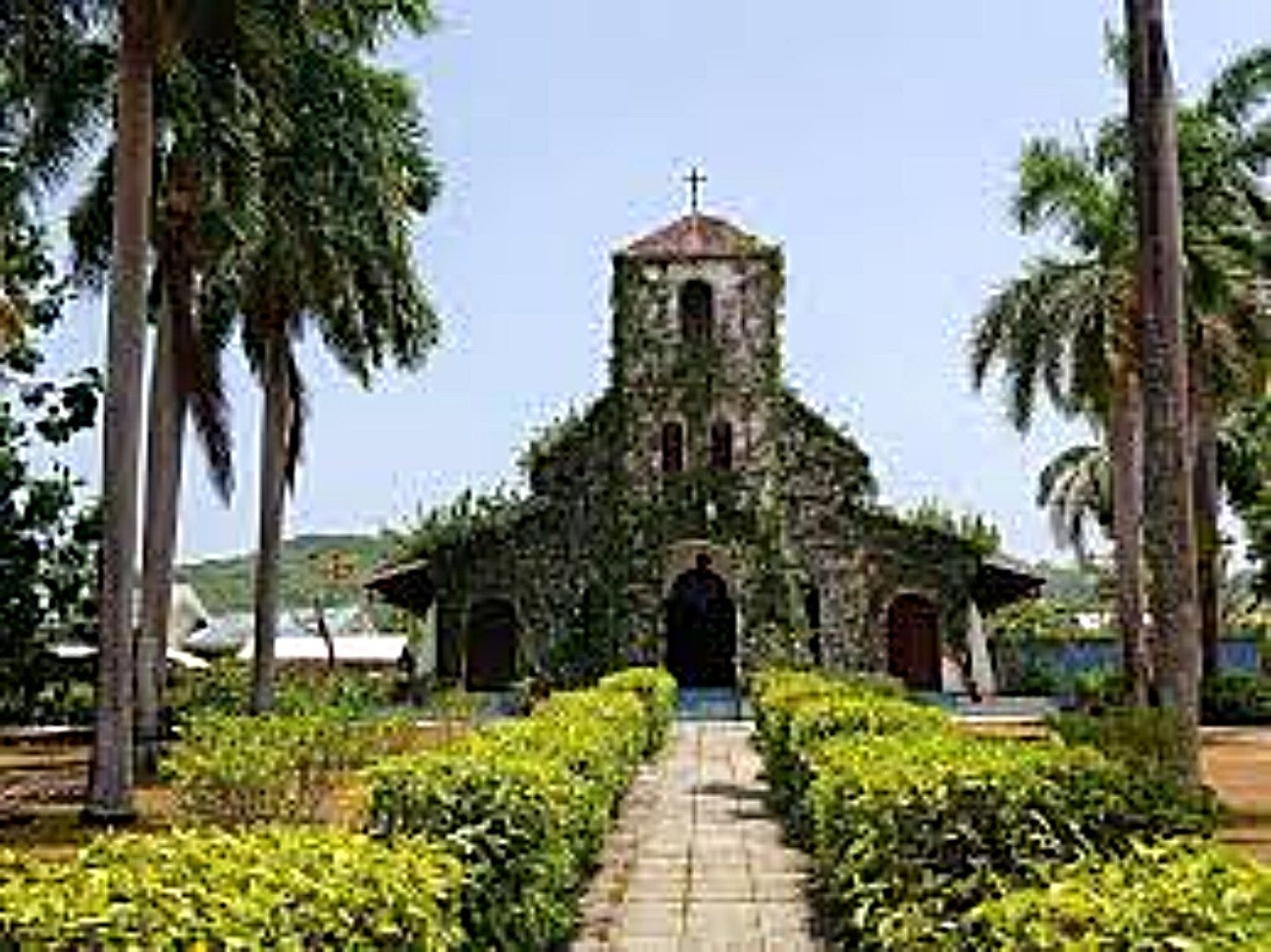
Our Lady of Perpetual Help Church in St. Ann carries a rich legacy that dates back to the early days of Jamaica’s Spanish colonization. Its origins trace to 1534, when the Spanish settlement of Sevilla la Nueva was relocated inland to higher ground. There, Abbot Peter Martyr of Angleria from Italy began constructing a cut-stone church known as the Peter Martyr Church. Though intended as a significant religious site, the church was left incomplete when the Spanish administrative center moved to Spanish Town later that same year. Historian Hans Sloane later described the unfinished structure as crafted from stone resembling marble, quarried from nearby hills, with intricate features like a fine west gate and a relief of Christ’s crowned head above the door. Over the years, however, neglect and shifting colonial priorities allowed the structure to fall into ruin, prompting British historian Edward Long in 1770 to criticize the lack of preservation for Spanish architectural contributions in Jamaica.
In 1925, William Hoskins, owner of the Seville Estate, transferred five acres of land containing the ruins of the Peter Martyr Church to the Catholic Church. Believing the historic site should return to its original custodians, he enabled the Catholic Bishop to reclaim this important part of Jamaica’s spiritual heritage. Father Raymond Sullivan, pastor for the area, launched a vigorous fundraising campaign to construct a new church. The use of local materials was prioritized, and Harold Brownlow, Superintendent of Public Works for St. Ann, designed the new structure. Between 1939 and 1943, a magnificent “Spanish-style” church, crafted from cut stone and native timber, was completed adjacent to the ruins. Named Our Lady of Perpetual Help, this new church incorporated stones from the original Peter Martyr Church, creating a profound link between the two eras. Today, the site embodies a deep connection to Jamaica’s sixteenth-century Catholic roots and stands as a testament to the enduring influence of the island’s early Spanish heritage.