


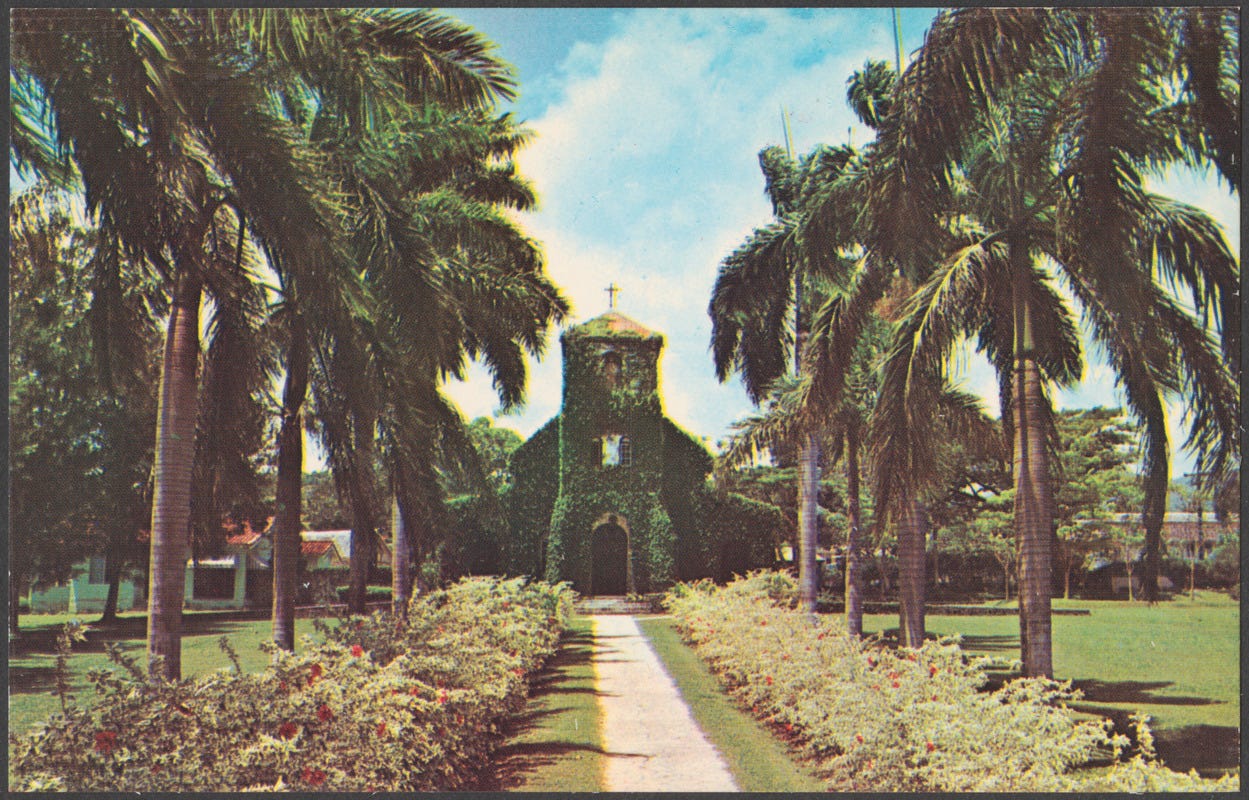
The National Shrine in St. Ann’s Bay, Jamaica, holds a significant place in the island’s religious and historical landscape. This remarkable church is recognized as Jamaica’s oldest, built on the site of the first church established by Christopher Columbus in 1509. The shrine’s location was confirmed by the Harvard Columbus expedition in 1940, led by Professor Samuel Eliot Morison, marking it as a site of historical and cultural importance. The National Shrine stands as a living testament to the introduction of Christianity to Jamaica during the early years of European contact, reflecting both the colonial heritage and the enduring influence of faith on the island.
Over the centuries, the church has likely undergone changes, evolving in architecture and function while maintaining its role as a spiritual center in St. Ann’s Bay. Today, visitors and locals alike view the shrine not only as a place of worship but as a symbol of Jamaica’s long and diverse history. Its designation as a National Shrine highlights its prominence within the cultural memory of Jamaica, drawing attention to the island’s role in early European exploration and the spread of Christianity in the Caribbean. As one of the landmark sites in the parish of St. Ann, it remains an enduring piece of Jamaica’s heritage, capturing the stories of the past and preserving them for future generations.