


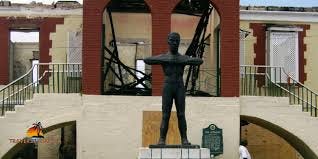
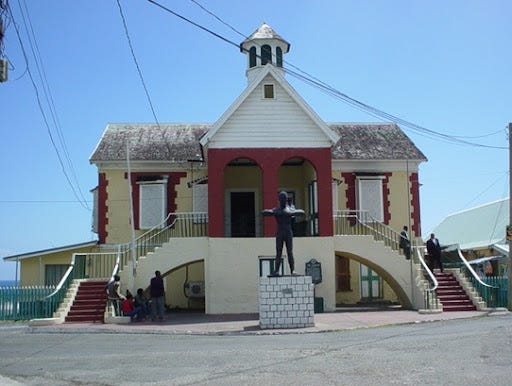
Morant Bay Fort, located behind the iconic Morant Bay Courthouse in St. Thomas, Jamaica, overlooks the town’s harbor and stands as a testament to Jamaica’s colonial military history. Constructed around 1758, this fort was strategically designed to house nine cannons, which were crucial for defending the bay against potential seaborne threats. Built with four-inch-thick brick and cut stone, the fort’s sturdy architecture reflects the robust defensive needs of the 18th century. The cannons, mounted on elaborate cast-iron carriages, highlight the British colonial commitment to fortifying important coastal towns.
Today, three of the original cannons remain on-site, each weighing 24 pounds and manufactured in the early 19th century. These cannons serve as powerful relics of the fort’s past and demonstrate the level of firepower once employed to safeguard the area. Historically, the fort also included a magazine, where gunpowder and ammunition were stored, as well as barracks to house soldiers.
Morant Bay Fort gained lasting significance in 1865 during the Morant Bay Rebellion, a pivotal moment in Jamaica’s history. The rebellion, driven by widespread social and economic injustices faced by freed Jamaicans, led to clashes between local protestors, led by Paul Bogle, and colonial forces. The fort and courthouse became scenes of intense unrest, with the courthouse eventually set ablaze during the uprising. In response to the rebellion, British authorities launched severe reprisals, which transformed the Morant Bay Rebellion into a symbol of resistance and a catalyst for change in Jamaica’s colonial governance.
Today, Morant Bay Fort stands not only as a historical site but also as a monument to the resilience of the Jamaican people. Its remains provide visitors with a glimpse into Jamaica’s colonial past and the struggles that shaped the island’s path toward justice and equality. The site is a critical part of St. Thomas’s heritage, attracting both locals and tourists who wish to connect with Jamaica’s rich and complex history.