


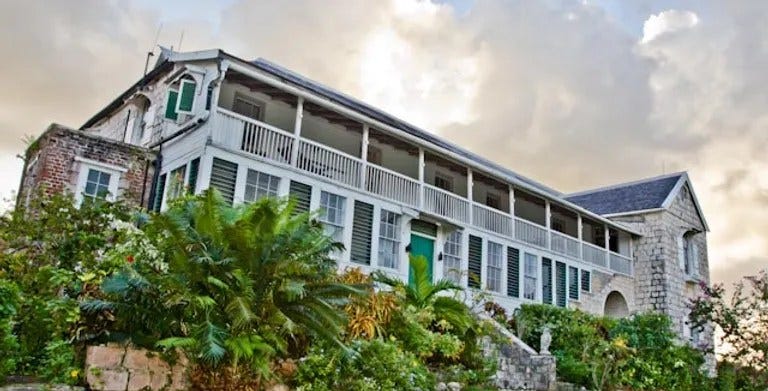
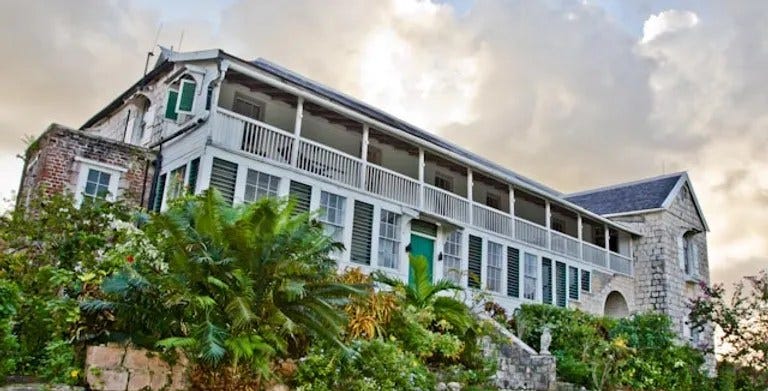
Located on a hill with breathtaking views of the Caribbean Sea, Greenwood Great House was built in the 1780s by Richard Barrett, a wealthy plantation owner. It was one of four great houses owned by the Barrett family, including nearby Cinnamon Hill, home to Elizabeth Barrett Browning’s great-grandparents. Greenwood stands as one of the best-preserved examples of Jamaican plantation homes, offering insight into the island’s colonial past, slavery, and the Barrett family legacy.
History and Construction
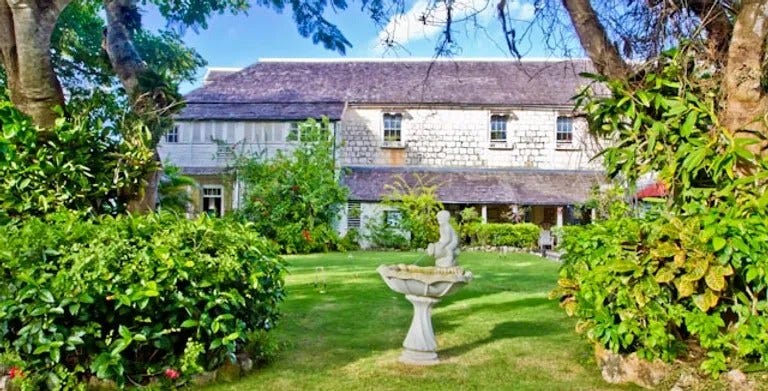
Richard Barrett, Speaker of the Assembly, built Greenwood as a grand home for entertaining. It survived the 1831 slave revolt, which destroyed many great houses, due to Barrett’s more humane treatment of enslaved people. Unlike many plantation owners, Barrett encouraged literacy among his workers, which helped protect the house during the revolt. Greenwood features typical plantation-era architecture with stone and wood construction, a cedar shingled roof, and expansive verandahs offering stunning sea views. The large rooms inside are filled with polished mahogany floors and antique furniture, showcasing the wealth of the Barrett family. The house’s external staircase leads to the second-floor living quarters, while the verandah’s breezes provide natural ventilation.
The Role of Slavery
Like other great houses, Greenwood’s wealth was built on the labor of enslaved Africans. Richard Barrett, while a slave owner, treated his workers with more kindness than most. He worked to educate them, which was illegal at the time, and represented plantation owners in the British Parliament, though his views seemed to lean toward abolition.
Barrett Family Legacy
The Barretts played a significant role in Jamaica’s development. Edward Barrett, Richard’s cousin, helped establish Falmouth as a major port in 1790. The Barrett family’s wealth and political connections also extended to England, where Elizabeth Barrett Browning, the renowned poet, was born into the family.
Greenwood Today
In 1975, Bob and Ann Betton purchased Greenwood, restoring it to its former glory. Now a museum, it displays the Barrett family’s history, plantation-era furnishings, and rare artifacts, including books from the family library and a piano that once belonged to King Edward VII. Greenwood Great House remains a valuable historical site, educating visitors about Jamaica’s colonial past, the plantation economy, and the Barrett family’s influence. Through careful preservation, it ensures that the island’s complex history is not forgotten.