


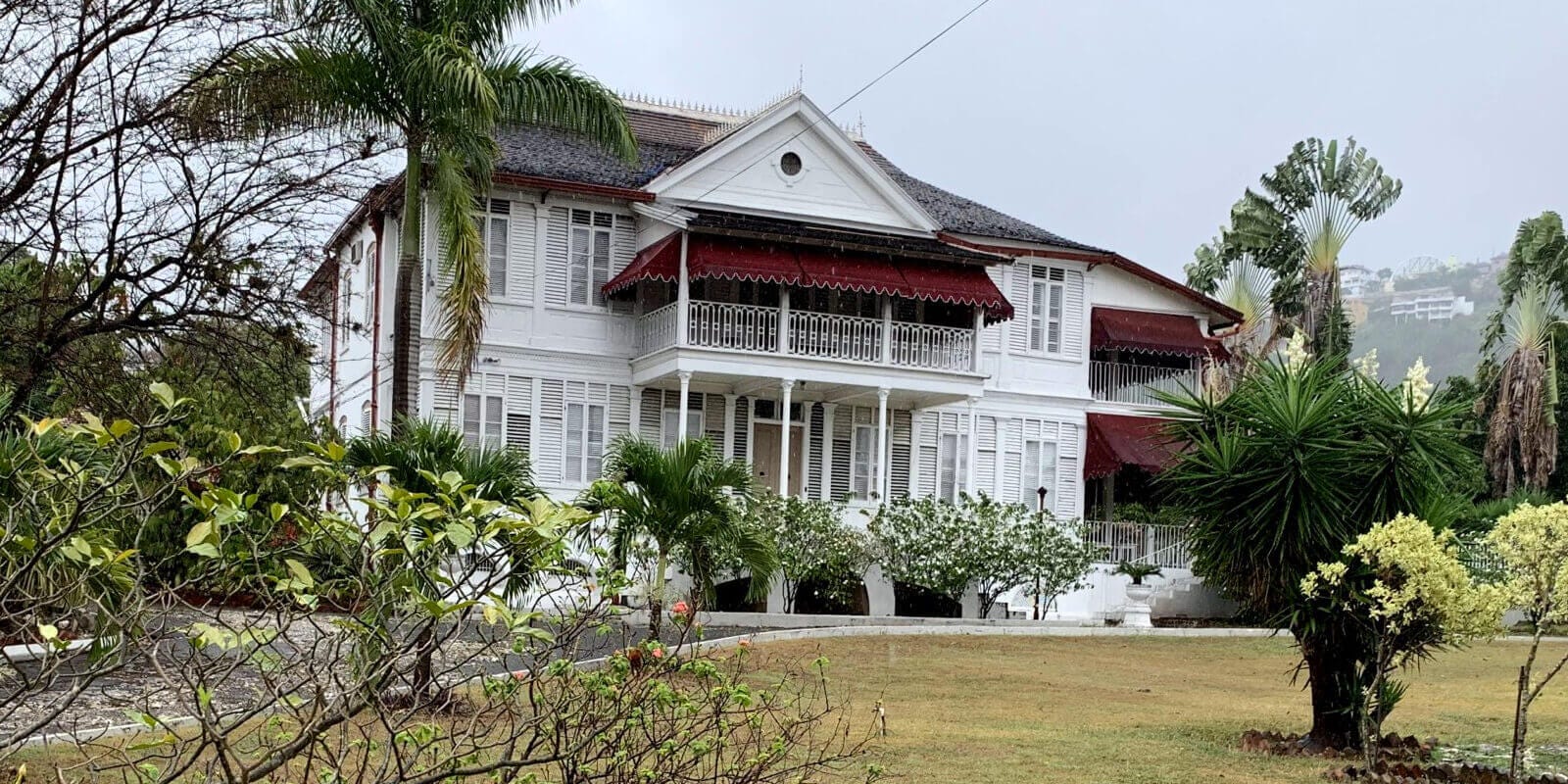
The Cherry Garden Great House, located in the parish of St Andrew, Jamaica, is a significant historical site that links Jamaica to important figures in both Jamaican and North American history. This estate was home to George William Gordon, one of Jamaica’s National Heroes, and long before him, it was tied to Jonathan Dickinson, a prominent businessman who eventually became the mayor of Philadelphia. Jonathan Dickinson was the brother-in-law of Mary Gomersall, the wife of Ezekiel Gomersall, who was the original owner of the house.
The Cherry Garden Great House sits on about 2 acres of land, a small portion of what was once a 300-acre sugar plantation. Ezekiel Gomersall, who lived from 1663 to 1734, was a powerful figure in Jamaica, owning a vast number of slaves and overseeing the infamous trial of the female pirates Anne Bonny and Mary Read. Over a period of 20 years, from 1694 to 1714, Gomersall expanded the plantation by purchasing additional parcels of land. Today, the house is surrounded by upscale residential properties, and the land is far smaller than its original size.
After Gomersall’s death, the property passed to his second wife, Elizabeth Garthwaite, and to his nephew, Ezekiel Dickinson, who continued to hold and manage the estate. During the years leading up to emancipation, the estate came under the control of Joseph Gordon, a Scottish attorney, who was the father of George William Gordon. Joseph Gordon was an important figure in Jamaica’s legal and political circles, eventually becoming a significant landowner himself. George William Gordon, in 1845, purchased the Cherry Garden estate, expanded it, and lived there until his tragic execution after his involvement in the Morant Bay Rebellion in 1865.
The Cherry Garden Great House is an architectural relic of the time, showing elements typical of plantation houses in Jamaica. The design of the house included jalousie windows along the main walls for proper ventilation and natural lighting, essential for the hot Jamaican climate. There were verandas on both floors that extended the living space into the outdoors, allowing for better air circulation. A practical feature was the location of the kitchen, which was built separately from the main house to reduce the risk of fire and to keep the house cooler.
The house and its grounds, once filled with lush gardens and tropical plants, now serve as a reminder of the wealthy landowners and the tragic history of slavery that shaped the island’s economy. The beauty of the estate and its surroundings was described by the British historian James Anthony Froude when he visited in 1888. Froude painted a picture of the location with its stunning views of the Blue Mountains and Kingston, which were visible from the estate’s grounds. He marveled at the landscape, describing the gardens filled with exotic plants such as oleanders, crotons, and orchids.
The Cherry Garden estate, especially under the ownership of George William Gordon, played a significant role in the social and political development of Jamaica. Gordon was a wealthy businessman and politician who supported the poor and underprivileged. He was known for subdividing his lands and offering them at low prices to people who needed land to farm. Gordon’s stance against the colonial government led to his arrest and execution, marking a significant moment in Jamaican history.
Through the generations, the Cherry Garden Great House has been tied to the legacies of individuals who shaped not only Jamaica but also had far-reaching impacts in North America. Jonathan Dickinson, for example, became an important figure in Philadelphia, helping to grow the city’s economy through his mercantile business and political career. His survival story after being shipwrecked and captured by Native Americans is an inspiring tale of resilience. His business dealings between Jamaica and Philadelphia, along with his personal letters, offer a glimpse into the economic and social exchanges between the two places.
Today, the Cherry Garden Great House stands as a historical monument, not just to the people who lived there but to the complex and often painful history of Jamaica, including the impact of colonialism, slavery, and the struggle for independence. Its architecture, its connection to major historical figures, and the role it played in shaping Jamaica’s past make it a significant site for anyone interested in understanding the history of the island.