


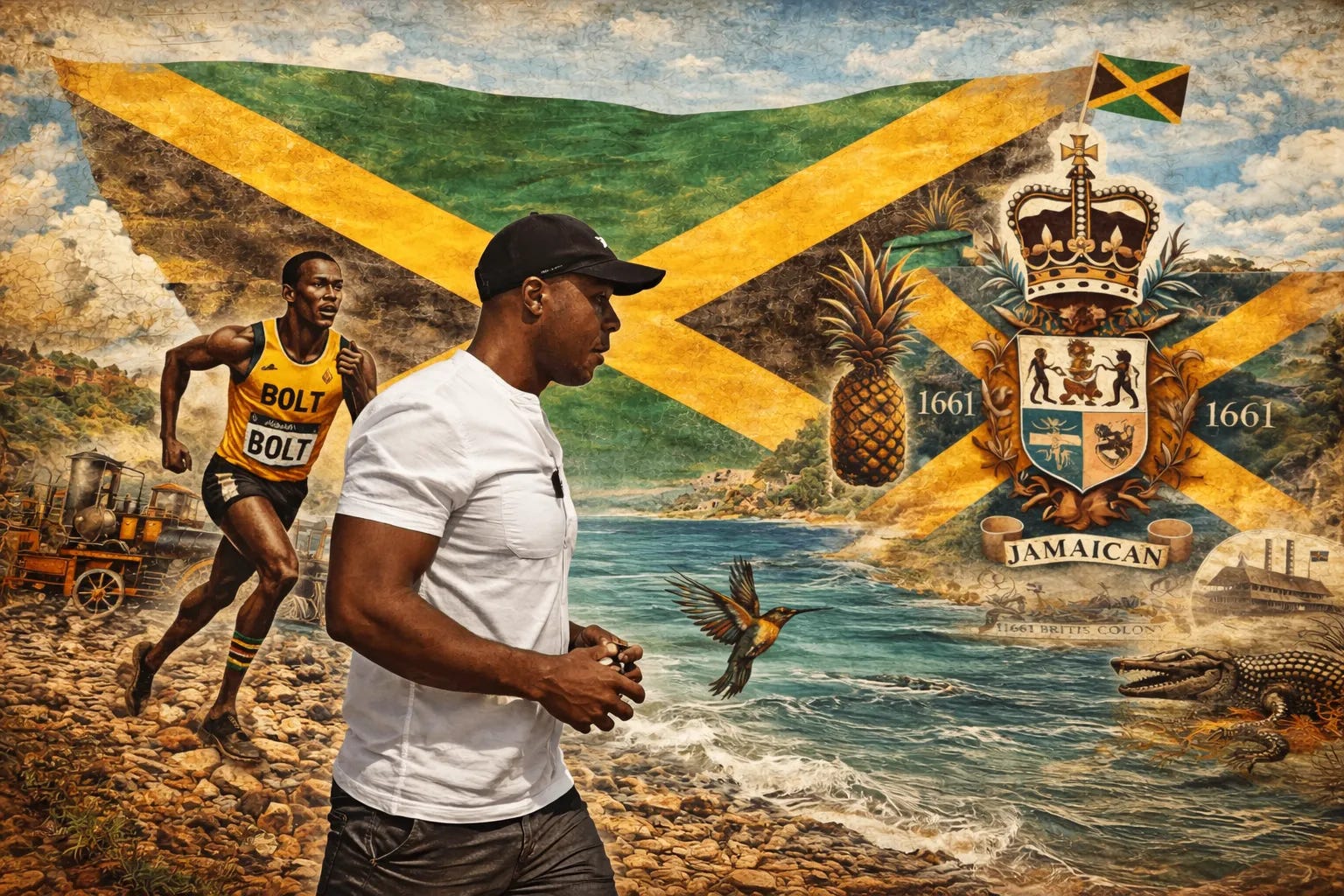
There is a story about real estate in Jamaica that too many people are afraid to tell plainly.
The polite version talks about property listings, gated communities, luxury villas, diaspora buyers, square footage and rental yields. It is neat, professional, and comfortable. It offends nobody.
It is also incomplete.
Because the real story of Jamaican real estate is not about square footage. It is about sacrifice. It is about migration. It is about grandparents. It is about family discipline, hard work, storms, rebuilding, and the stubborn determination of ordinary people who believed that a house was more than shelter.
A house was dignity.
A house was independence.
A house was a statement that said: we are building something that will outlive us.
If you want to understand investing in Jamaican real estate today, you must first understand the kind of people who built before the banks trusted them, who saved before they showed off, who partnered before financial institutions respected them, and who travelled across oceans only to endure humiliation while still quietly buying property and building for the future.
That is the real story.
And it begins with family.
The Jamaica That Built People
Once upon a time, the centre of the Jamaican family was not social media, not status, and not money.
It was the grandparents.
Grandparents were not decorative figures brought out for photographs. They were the authority. They were the moral compass of the household. They were the people everyone gathered around.
In many Jamaican homes, the rhythm of the week revolved around them.
Saturday if the family worshipped on the Sabbath.
Sunday if they worshipped on Sunday.
Children came. Their children came. And their children came too. Families gathered, ate together, laughed together, corrected each other, caught up on life, and quietly discussed the future.
Those gatherings were not just meals.
They were strategy sessions for life.
They were where children learned how adults behaved. They were where standards were enforced. They were where discipline, respect, responsibility, and ambition were quietly taught without anybody calling it a lecture.
And those homes were often the first place where young people heard conversations about land, property, and saving.
Because in the Jamaican tradition, a house was never just a house.
It was a platform.
The Platform of a Home
People misunderstand what a platform is.
A platform is not being born rich.
A platform is having somewhere stable to stand.
It is having a roof over your head. It is having someone who expects something from you. It is having a home where discipline exists, meals are shared, and the adults in the house believe in tomorrow.
That kind of home changes a child’s trajectory.
It does not guarantee success. But it gives you something priceless — footing.
And when you have footing, you can build.
The Windrush Generation: Builders Under Fire
The story of Jamaican real estate cannot be told honestly without talking about migration.
After the Second World War, Britain needed workers. Factories needed labour. Hospitals needed staff. Transport needed drivers and engineers.
Caribbean people travelled there to work.
But the welcome they received was often brutal.
Caribbean families were insulted, spat on, and humiliated in ways younger generations would struggle to imagine.
Bottles were thrown through windows.
Fire and alcohol were thrown into homes.
People were mocked and abused simply for existing.
But something remarkable happened.
While being insulted, they worked.
While being spat on, they saved.
While being told they did not belong, they bought houses.
That generation understood something modern society is slowly forgetting.
Property is protection.
Property is power.
Property is independence.
Many Caribbean families in Britain bought large houses and filled them with relatives, friends, and newcomers from Jamaica. Rooms were rented. Families shared expenses. People saved together.
It was community economics long before anyone used that phrase.
My grandfather believed deeply in that approach.
He used to say something that has stayed with me for life.
“A small house feeds only you.
A big house feeds the future.”
— Dean Jones, Founder of Jamaica Homes
He bought big.
Not for vanity.
For possibility.
The Jamaican Financial System Before Banks
Long before banks trusted Caribbean migrants, Jamaicans had already built their own financial system.
It was called partnering.
A group of people contributed money weekly into a shared pot. Each week or month someone received the draw.
That money built houses.
That money bought land.
That money funded migration.
That money created opportunity.
Partnering built thousands of Jamaican homes long before mortgage products existed.
The old generation did not wait for permission to build.
They organised themselves.
“When the banks wouldn’t lend, Jamaicans lent to each other.”
— Dean Jones
That is economic intelligence.
The Matriarchs Who Held Everything Together
Behind many successful Jamaican households stood formidable women.
The matriarchs.
My grandmother Mrs Isaacs was one of them.
In the community she was known simply as Sister I.
Her house was famous for cooking. Pastors visiting England came there. Church members gathered there. Family gathered there. Sometimes the house felt like half the congregation had arrived.
And she cooked like abundance was a philosophy.
Ten people.
Twenty people.
Sometimes more.
Yet she never wasted money.
She managed the household finances with quiet brilliance. My grandfather worked hard and gave her the money. She paid the bills. She saved. She stretched the budget without lowering standards.
That was trust.
That was partnership.
And that was the foundation of many Caribbean property stories.
The Discipline That Built Homes
The old Jamaican households ran on discipline.
Clothes prepared before Sabbath.
Haircuts neat.
The house clean.
Standards enforced.
Children corrected.
These things may sound small, but they are not small.
Structure builds stability.
And stability builds families.
And families build property.
You cannot separate the culture inside a house from the economic future of the people living in it.
The Jamaica I Remember
My childhood moved between two worlds — England and Jamaica.
But Jamaica left the deepest imprint.
I remember Hellshire Beach when it was still a wide natural beach. I remember floating around in the sea inside a truck tyre when I was three or four years old.
Festival and fish was a treat.
But the real joy was simply being there.
Riding on the back of pickup trucks.
Running around St Catherine.
Roaming Spanish Town.
Back then communities felt connected. People knew families. They knew the Isaacs family. They knew Gregory Isaacs. Everyone seemed linked through community and history.
There was respect.
There was identity.
There was belonging.
The Lesson Poverty Teaches
Jamaica also teaches you something else very early.
It shows you poverty.
Not as an abstract concept.
But as a reality.
And seeing poverty does one of two things.
It either discourages you or it motivates you.
For me it created a determination to work harder.
To build something.
To ensure my life would not be defined by limitation.
My Own Journey
My own journey was not straightforward.
I struggled with a learning disability in my early years. But family support changed everything.
A stable home environment gives children the space to grow.
That foundation allowed me to pursue education seriously. Eventually I studied design at Central Saint Martins in London. At the time I was the only Black student in that programme.
I kept pushing.
More study.
More qualifications.
Project management. Surveying. Leadership. Chartered development. Years of learning and experience.
None of that happens without support.
Without family.
Without a home and without faith in a higher power.
That is why I believe deeply in building platforms for the next generation.
The Problem We Must Face
Today Jamaica faces a challenge.
The breakdown of the family structure is affecting long-term thinking.
This is not an attack on single mothers. Many single mothers raise excellent children under enormous pressure.
But we must still recognise something obvious.
When two responsible adults pull in the same direction, the economic possibilities expand.
Two incomes.
Two minds.
Two sources of support.
Two people carrying the load.
That matters when buying property.
That matters when raising children.
That matters when planning the future.
“Two disciplined people building together can turn a dream into a blueprint.”
— Dean Jones
The Problem of Bad Mind
There is another obstacle holding Jamaica back.
Bad mind.
Envy.
The desire to pull down someone who is doing well instead of learning from them.
Bad mind destroys cooperation.
And cooperation is essential for building wealth.
Four families can buy land together.
Two families can develop property together.
Communities can build together.
But bad mind stops it.
“Bad mind has buried more Jamaican opportunity than poverty ever could.”
— Dean Jones
If someone near you is succeeding, that should inspire you.
Not anger you.
Stop Complaining
Jamaicans complain too much about returnees and foreign investors.
But complaining builds nothing.
Returnees bring money into the economy. They hire workers. They build homes. They invest in communities.
Foreign investors negotiate the best deals for themselves. That is normal. It is not their job to love Jamaica more than Jamaicans do.
It is our responsibility to plan strategically for our country.
Stop complaining.
Start planning.
Invest Together Again
The old generation built through cooperation.
Families partnered.
Friends pooled money.
Communities invested together.
That culture can return.
Two families can buy land.
Four families can build gradually.
People can partner again.
Real estate has always been a long game.
But it remains one of the strongest tools for building generational stability.
The Real Choice
Jamaica stands at a crossroads.
We can continue complaining, envying, and drifting.
Or we can rebuild the mindset that built this country in the first place.
Discipline.
Family.
Cooperation.
Long-term thinking.
Saving.
Building.
Helping each other.
Thinking beyond ourselves.
Because in the end, property is not only about land.
It is about legacy.
“Land remembers who builds on it.”
— Dean Jones
The old generation understood that.
And now the choice is ours.
Build.
Or be left behind.