

Tallest Buildings in Jamaica (2025) Rising Above the Caribbean: Jamaica’s Reach for the Sky

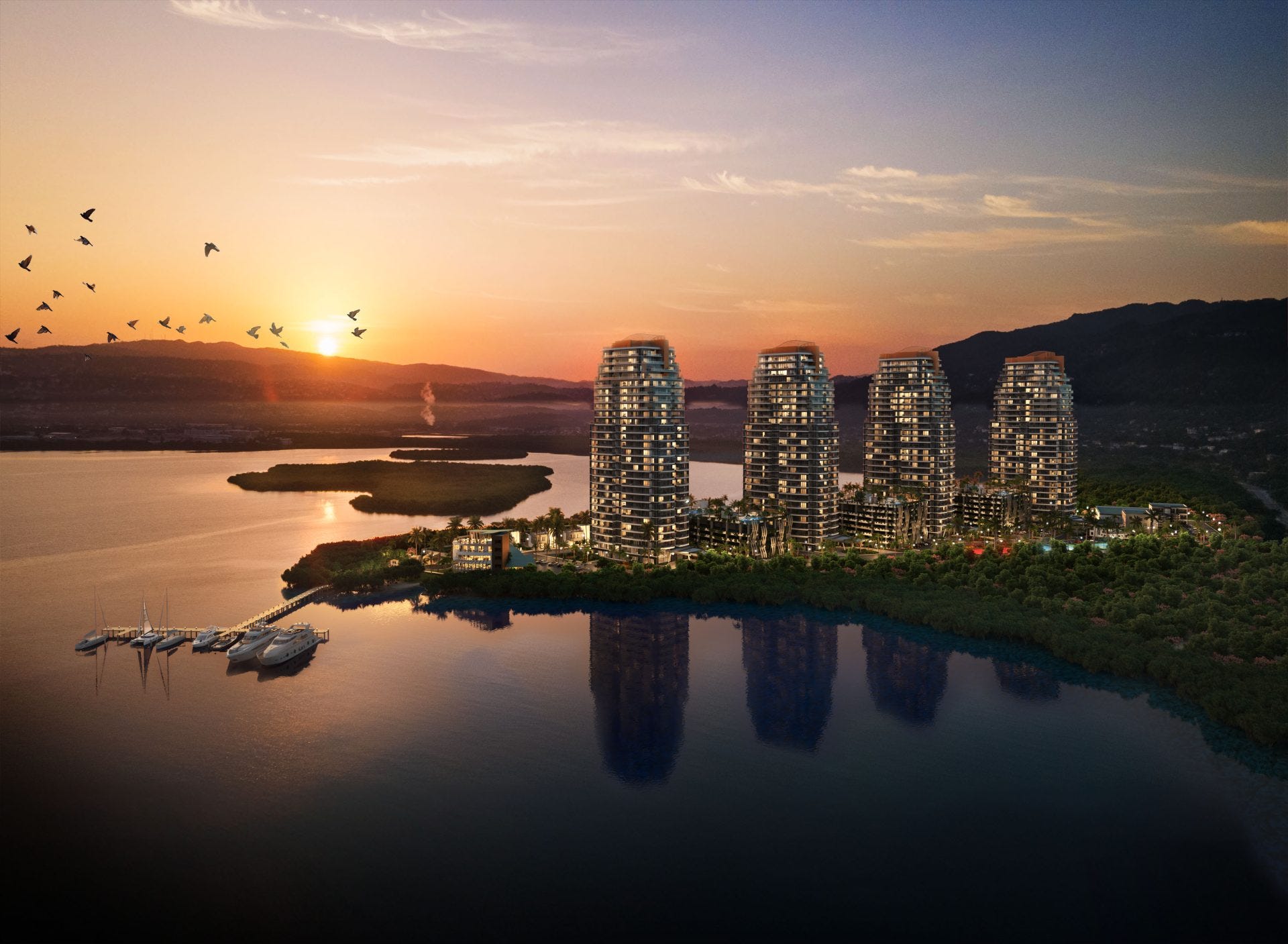
There’s something poetic about watching a building rise.
From the cracked soil of a long-forgotten lot to a gleaming glass façade stretching toward the clouds—every beam, every bolt is an act of ambition. And in Jamaica, that ambition is becoming contagious.
I’ve spent two decades immersed in the reality of foundations, rooflines, and regulations. But lately, I’ve been watching something else stir. Not just homes or houses. But a skyline—an identity—beginning to take shape. Slowly. Cautiously. And with more than a little grit.
Now, this isn’t Dubai. And we’re certainly not Manhattan. But that’s precisely what makes it interesting. Jamaica is a place where buildings don’t just scrape the sky for spectacle—they do so with purpose. Here, concrete is expensive, land is precious, and every floor must justify its existence. Our vertical ambitions are grounded in deeply Caribbean concerns: space, resilience, sun, wind, and the ever-present threat of hurricanes.
So why go up?
Because the ground, quite literally, is running out. In Kingston, particularly New Kingston and Barbican, the logic is plain. Densification is no longer optional. A new generation of Jamaicans—tech professionals, returning residents, upwardly mobile creatives—are demanding homes and workplaces that match their aspirations. And so, from behind zinc fences and cranes, new forms are emerging.
Take The Pinnacle, now rising above Montego Bay’s horizon. Fourteen stories of unapologetic modernism, poised to become Jamaica’s tallest building when complete. A decade ago, such a project would have felt wildly out of place in this tourism heartland. Today, it feels like a sign of the times. Montego Bay is no longer just for short-stay tourists. It’s increasingly for long-term investors and residents too.
Then there’s One Belmont, sleek and slightly coy in its confidence, underway in Kingston. Or Via at Braemar, which flirts with elegance while providing high-end city living. The Hampshire and 876 Residences join the growing list, reflecting a broader shift in how Jamaicans view urban life—not just as somewhere to pass through, but to truly inhabit.
The heights themselves may not yet be staggering—twelve, thirteen, fourteen floors at most—but they mark a sea change in mindset. In a land long defined by bungalows, verandas, and the romantic spread of the yard, we are witnessing a quiet evolution.
Of course, not all tall buildings are icons. And not all that rises is wise.
There’s a danger, always, in conflating height with progress. A bad tower is just a bad idea on stilts. Good architecture must speak to climate, culture, and community. It must breathe. It must shade. And it must feel Jamaican. This, I believe, is our greatest challenge—and our greatest opportunity.
You see, the tallest buildings in Jamaica today are not yet remarkable in global terms. But in context, they are profound. They represent not just vertical ambition, but civic hope. A desire to live better, work smarter, and build something lasting. They ask, very quietly, whether our cities can grow without losing their soul.
It will take time. Perhaps decades.
Downtown Kingston’s long-awaited rejuvenation has been spoken of in coffee shops and boardrooms for years. Plans are drawn, revised, paused, and redrawn again. But the seeds are there—government intent, private curiosity, and local creativity all aligned in the shadow of cranes and scaffolds. One day, I believe, a great tower will rise there too. And when it does, it will do more than reflect the sun—it will reflect who we are becoming.
So where does this leave us?
Jamaica is still a low-rise nation, architecturally and culturally. But we are no longer afraid of height. That’s a profound shift. And as more developers, designers, and dreamers take to the drawing board, the question is not if we will build higher—but how.
Will we be bold or banal? Generous or greedy? Will we honour the land beneath our feet, even as we stretch toward the heavens?
These are not technical questions. They are philosophical ones. And they will shape the Jamaica our children inherit.
As for me? I remain hopeful. As a realtor, project manager, a builder, and a citizen of this island, I believe we can rise—deliberately, responsibly, beautifully.
Because in Jamaica, even the sky is not the limit.
Tallest Buildings in Jamaica (2025)
Tallest Completed Buildings in Jamaica
RankBuilding NameLocationHeight (ft / m)FloorsNotes1The Ascent at The R HotelKingston (New Kingston)210 ft / 64 m12Part of The R Hotel development.2The Residences at Terra NovaKingston (Waterloo Road)200 ft / 61 m12Luxury residential tower near Half Way Tree.3The Lofts ApartmentsKingston (New Kingston)190 ft / 58 m11Residential apartments popular with expats.4The Business DistrictKingston (New Kingston)180 ft / 55 m10Mixed-use commercial and office complex.5The Liguanea Club TowerKingston (New Kingston)175 ft / 53 m10Offices and hospitality facilities.6876 Residences (Block A & B)Kingston (Barbican area)170 ft / 52 m10Modern condos.
Tallest Buildings Under Construction or Proposed
RankBuilding NameLocationHeight (ft / m)FloorsNotes1The PinnacleMontego Bay, St. James275 ft / 84 m14Will become Jamaica’s tallest building upon completion.2One BelmontKingston (New Kingston)230 ft / 70 m12–13Luxury residences and commercial suites.3Via at BraemarKingston (Braemar Ave)220 ft / 67 m12High-end residential and commercial mix.4The HampshireKingston (Surbiton Road)200 ft / 61 m11Modern apartment tower.5Ocean Pointe Tower (proposed)Montego Bay (Ironshore)250 ft / 76 m13Awaiting final approvals – likely a hotel/residence combo.6Downtown Kingston Rejuvenation TowerDowntown KingstonTBDTBDPart of GOJ’s revitalization initiative.
Honourable Mentions & Older High-Rises
– Scotia Centre, Downtown Kingston – ~12 floors, one of the earliest tall commercial towers.
– Jamaica Pegasus Hotel, Kingston – ~17 floors, but not especially tall by modern standards (~165 ft).
– CIBC FirstCaribbean International Building, Kingston – ~10 floors, older financial tower.
Growth Trends
Jamaica’s skyline is rapidly evolving, especially in Kingston and Montego Bay, where demand for vertical development is driven by:
– Land scarcity in urban centers
– Investment in tourism and hospitality
– Growing expat and upper-middle-income population
– Government push for urban renewal (especially in Downtown Kingston)
Disclaimer:
The views expressed in this article are those of the author, Dean Jones, and do not necessarily represent the views of any affiliated organizations or development partners. Information provided is based on publicly available data and personal industry insights as of July 2025. While every effort has been made to ensure accuracy, building heights, statuses, and project details may change over time. Readers are advised to conduct independent research or consult with professionals before making any real estate or investment decisions.