


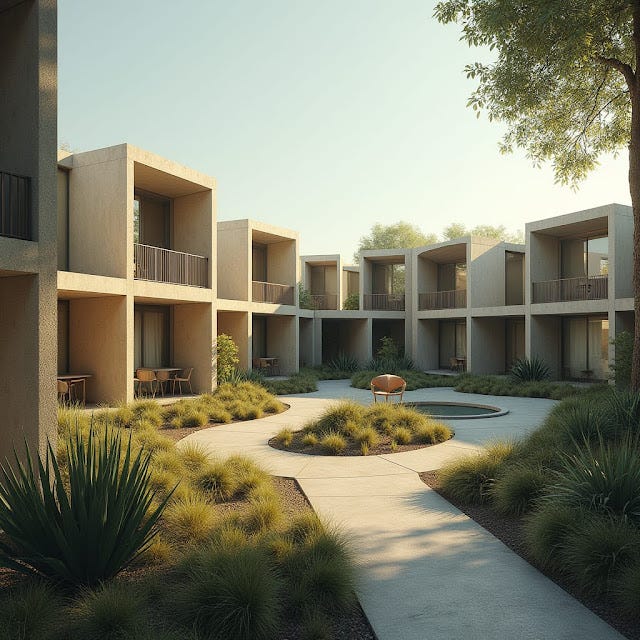
A January 2026 analysis of rebuilding, cost pressure, and the quiet reshaping of access
Kingston, Jamaica — January 2026
Jamaica is rebuilding.
Not as a slogan, not as a policy headline, but as a lived, uneven process unfolding across parishes, construction sites, and family decisions.
In the months following Hurricane Melissa, the country has entered a phase that is often misunderstood, both locally and internationally. There is a tendency, particularly in global commentary, to assume that disruption creates opportunity through falling prices. That logic does not hold here.
If anything, the opposite is now clearer than ever.
As first outlined in earlier reporting , housing in Jamaica is not simply an asset class. It is security, identity, and long-term survival. What has emerged since then is not a softening market, but a tightening one shaped by rebuilding demand, structural constraints, and a quiet reordering of who can realistically access homeownership.
The Misreading of “Affordability”
Globally, the housing conversation entering 2026 is dominated by interest rate cycles. In the United States and parts of Europe, analysts are debating whether cooling inflation and stabilising rates will unlock affordability through price corrections.
Jamaica operates on a different logic.
This is not a market weighed down by excess inventory. It is a supply-constrained island economy where:
Developable land is finite
Construction inputs are largely imported
Demand is reinforced by diaspora capital
New stock is absorbed rapidly, often before completion
In that context, “affordability” does not emerge from falling prices. It emerges, if at all, through structure.
As Dean Jones puts it, “Real affordability isn’t about cheaper houses. It is about structured access, disciplined development, and knowing who the homes are actually being built for.”
That distinction has become more pronounced since late 2025.
Post-Hurricane Reality: Demand Before Price
In the immediate aftermath of Hurricane Melissa, the housing conversation shifted from ownership to shelter.
Rehousing became the priority.
Government focus moved toward:
Replacement housing programmes
Accelerated approvals
Resilience standards
Preventing prolonged displacement
This is where the role of the National Housing Trust has sharpened. The NHT is no longer just a financing mechanism. It has become a central organising force in determining how housing supply is distributed in the recovery phase.
Developers understand this.
Projects aligned with NHT demand carry lower risk. They are easier to finance, easier to sell, and quicker to absorb. In a market defined by speed, that matters.
The result is subtle but significant: affordability is being prioritised, but not universally. It is being channelled.
Construction Costs: The Structural Ceiling
Any serious analysis of affordability must confront the constraint that defines the market: cost.
As of early 2026, there is no credible evidence that construction costs in Jamaica are easing in any meaningful way.
Key pressures remain:
Imported materials exposed to global shipping volatility
Currency fluctuations affecting input pricing
Regional rebuilding demand across the Caribbean
Rising insurance and compliance costs
Persistent shortages in skilled labour
Rebuilding efforts have, in many cases, intensified these pressures rather than relieved them.
This is the uncomfortable truth: Jamaica cannot build significantly cheaper homes at scale under current conditions.
So affordability is not being created through cost reduction. It is being engineered through:
Smaller unit sizes
Higher density developments
Structured financing
Land partnerships
Policy alignment
The house itself may not be cheaper. But access to it may be reconfigured.
The Shift Toward “Targeted Affordability”
What has emerged in the months since the hurricane is a move away from broad affordability toward targeted affordability.
In practical terms, this means:
1. NHT Contributors at the Core
Those within the NHT system are the most strategically positioned.
They benefit from:
Established financing pipelines
Predictable allocation frameworks
Strong developer alignment
Faster transaction pathways
This is not accidental. It reflects a deliberate effort to stabilise access for working Jamaicans already contributing to the system.
2. Developers Following Demand, Not Headlines
There has been a quiet recalibration among developers, including international entrants.
The focus is shifting away from high-end speculative builds toward the middle market.
Why?
Because the data is clear:
Mid-tier housing sells faster
Absorption rates are higher
Demand is consistent
Financing is more accessible
Luxury developments may dominate marketing narratives. But affordability, or near-affordability, is where the volume sits.
“The smartest developers aren’t chasing headlines,” Jones notes. “They’re chasing homes that sell before the paint dries.”
3. Diaspora Demand Remains a Wild Card
Jamaica’s diaspora continues to play a stabilising, and at times inflating, role in the housing market.
Returning residents and overseas buyers often:
Purchase with stronger currencies
Move faster on decisions
Accept higher price points
This reinforces demand at a time when supply remains constrained.
It also complicates affordability for local buyers operating within tighter financial margins.
Speed as the Defining Constraint
If scarcity once defined the Jamaican housing market, speed now sits alongside it.
Affordable or near-affordable units do not linger. They move through:
Pre-launch allocations
Developer networks
Professional referrals
Word-of-mouth channels
By the time a property is publicly visible, it is often already effectively sold.
This creates a new barrier to entry. Not just financial readiness, but timing.
Buyers are no longer competing only on price. They are competing on preparedness.
Affordability as a Process
Perhaps the most important reframing for 2026 is this:
Affordability is not an event.
There will be no moment when prices suddenly fall and opportunity opens universally.
Instead, affordability in Jamaica is a process shaped by:
Policy direction
Institutional frameworks
Developer strategy
Individual readiness
It appears in windows, not waves.
And those windows tend to favour those already positioned within the system.
A Market Rebuilding, Not Resetting
There is a temptation, particularly in external commentary, to describe post-disaster markets as “resetting.”
That is not what is happening in Jamaica.
Communities are not starting over. They are rebuilding from where they stood.
Families are not re-entering the market fresh. They are adjusting under pressure.
Developers are not experimenting freely. They are navigating constraints.
The housing market, therefore, is not being reset. It is being reshaped.
What Jamaicans Should Understand Now
The signals as of January 2026 are clear:
Prices are unlikely to fall materially
Construction costs remain elevated
Affordable units will be limited
Demand will remain strong
Speed will continue to define outcomes
The appropriate response is not panic, but positioning.
That means:
Staying financially organised
Understanding NHT pathways where applicable
Engaging experienced professionals early
Monitoring policy shifts closely
Being ready to act when opportunities emerge
The Bottom Line
Housing affordability in Jamaica is not improving because of Hurricane Melissa.
What is emerging instead is a more structured, more selective, and more disciplined pathway to access.
Opportunities exist. But they are not evenly distributed.
They are shaped by systems, timing, and preparedness.
And in a country rebuilding itself, that may be the most honest definition of affordability available today.