


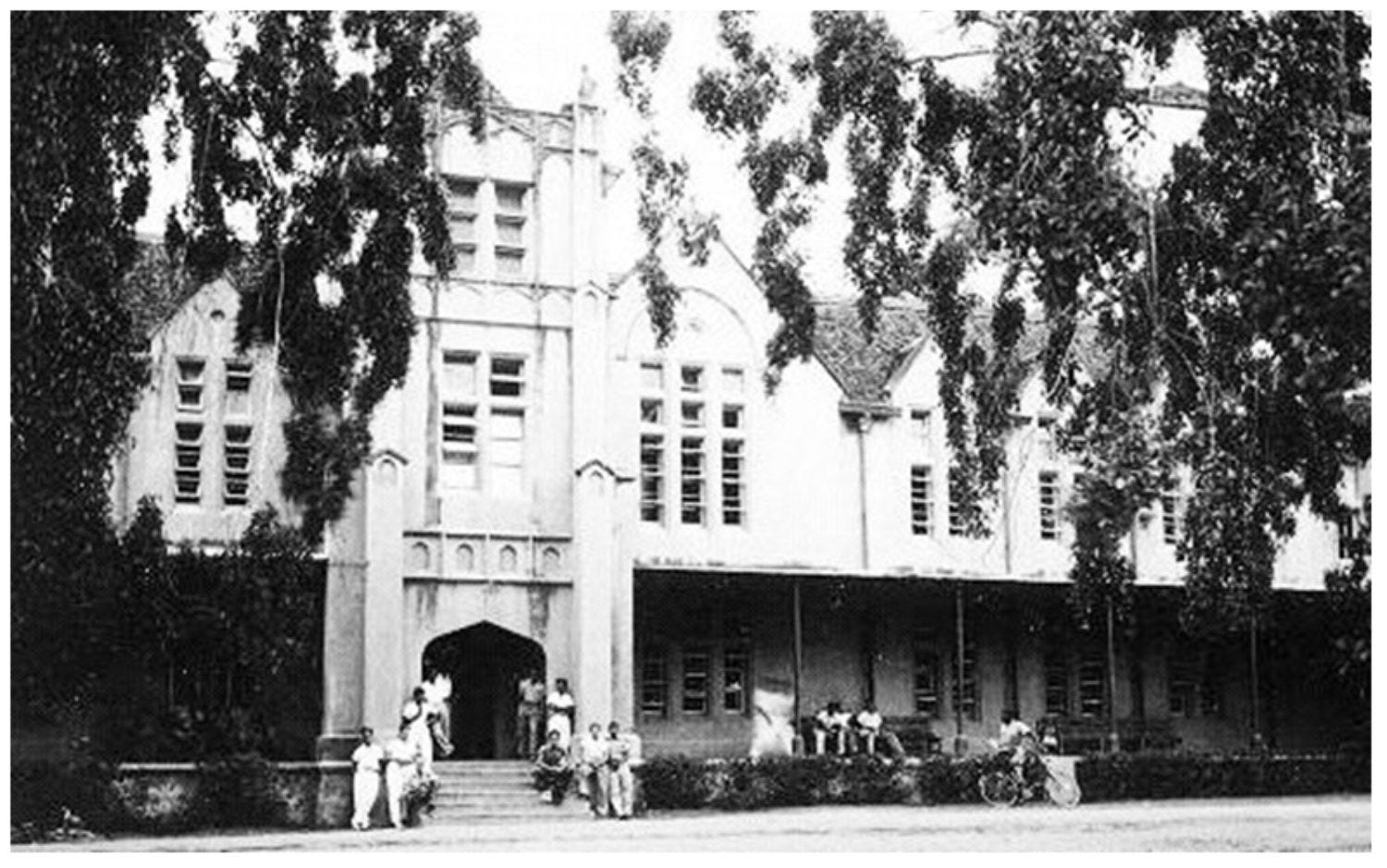
Parish: St. Andrew
Jamaica College, one of Jamaica’s most prestigious educational institutions, boasts a rich history and notable architectural legacy. Evolving from its beginnings as the Drax Free School in St. Ann, the college has preserved its heritage through its historic buildings, which reflect diverse architectural styles.
Simms Hall
Year Built: 1885
Simms Hall exemplifies a blend of Gothic and Georgian architecture. Its central tower and wings show Georgian symmetry, while pointed arches, vertical lines, and griffin motifs highlight Gothic elements. Initially a dormitory, it now houses administrative offices, the staff room, and sixth form classrooms.
Assembly Hall
Year Built: 1913
This concrete and steel structure features an arcaded verandah, ensuring cool interiors. Its hipped cedar-shingled roof, partly hidden by parapet walls, combines elegance and functionality. Originally an assembly space, it now serves as classrooms.
Scotland Building
Year Built: 1889
The Scotland Building showcases a mix of architectural influences, including Palladian windows, arcaded verandahs, and a steep cedar-shingled roof. Built with brick, mortar, and wood, its iron balcony detailing adds charm. Once a dormitory, it is now used for classrooms.
The Chapel
Year Built: 1924
The Chapel, a spiritual landmark, is constructed with reinforced concrete and breather blocks for ventilation and light. A stepped roof adds a clerestory level, enhancing airflow. Its stained-glass windows, including a replica of St. Dunstan’s window at Canterbury Cathedral, are key highlights.
A Brief History of Jamaica College
Founded through a 1721 bequest by Charles Drax to educate poor boys in St. Ann, the institution became the Drax Free School and later the Jamaica High School, relocating to St. Andrew in 1883. Settling on Hope Road in 1885, it was renamed Jamaica College in 1902 after merging with a University College.
These enduring structures reflect the school’s commitment to education and its architectural heritage, serving generations of Jamaican students.