


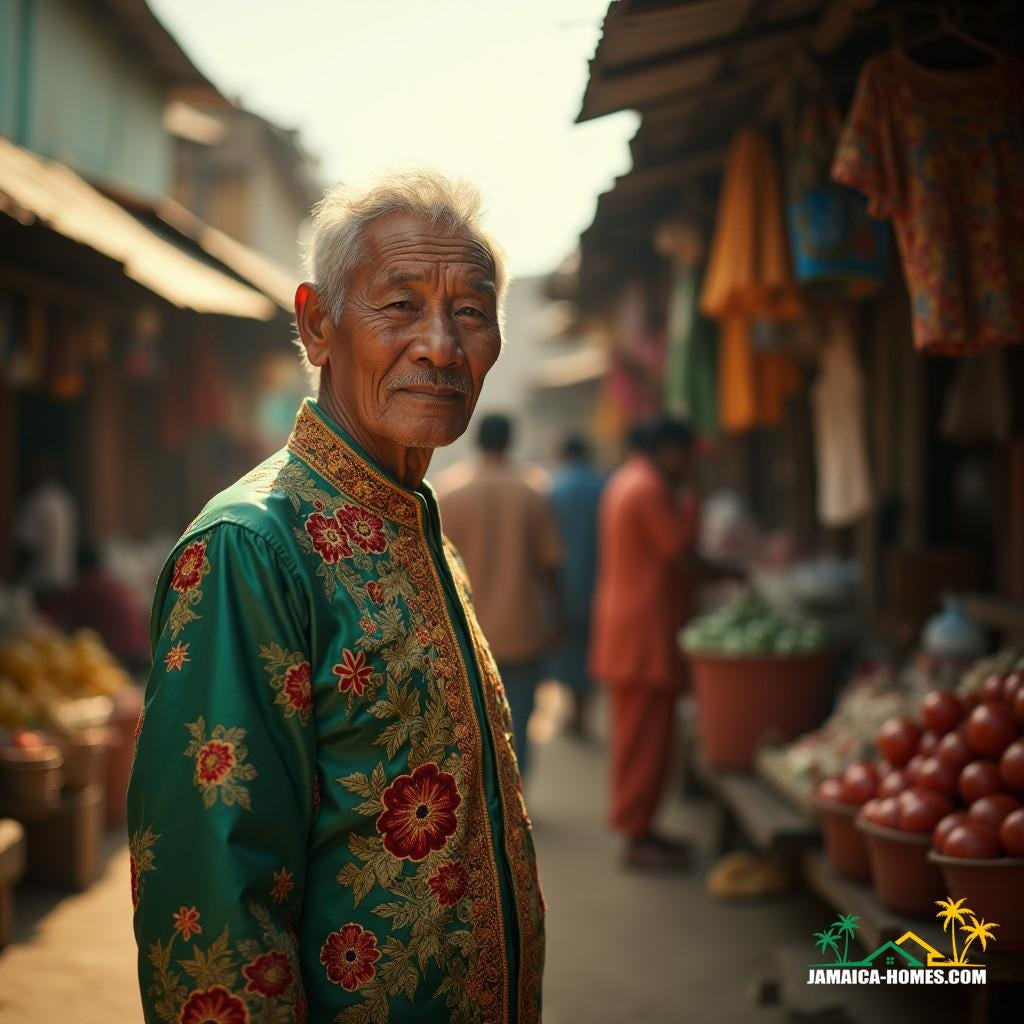
Chinese Jamaicans, people of Chinese ancestry in Jamaica, have a rich and complex history marked by waves of migration and cultural integration. As of the 2011 census, the population of Chinese Jamaicans was recorded at over 50,000, with most residing in regions such as Saint Andrew, Saint James, and Kingston Parish. While most Chinese Jamaicans speak Jamaican English and Patois, recent immigrants also use Mandarin.
Migration History
Chinese migration to Jamaica began in the 19th century. The first groups of Chinese indentured laborers arrived in 1854 to fill labor shortages on plantations following the abolition of slavery. Early arrivals, mainly Hakka people from Guangdong, included both contracted workers and free immigrants. By 1884, a significant wave of Chinese migrants arrived, leading to the establishment of early Chinese communities. Many early male migrants formed relationships with Afro-Jamaican women, contributing to a mixed heritage within the Chinese Jamaican community.
In the early 20th century, restrictive policies imposed literacy and financial tests on Chinese immigrants. The 1943 census recorded over 12,000 Chinese Jamaicans, making them the second-largest Chinese population in the Caribbean. By the 1960s, Chinese Jamaicans had established a strong presence in retail, controlling much of Jamaica’s dry goods stores and supermarkets. However, the 1970s saw a wave of migration due to inter-ethnic tensions, with many Chinese Jamaicans relocating to Canada, the U.S., and other countries. In the 1980s and 1990s, another wave of Chinese entrepreneurs from Hong Kong and Taiwan came to Jamaica, focusing on textiles for export.
Community Organizations
The Chinese Benevolent Association (CBA), founded in 1891, became a central institution for Chinese Jamaicans, offering support services, a Chinese cemetery, and a public school. It has maintained a strong connection between Chinese Jamaicans and their heritage. Additionally, Chinese-language newspapers and other publications were established, reflecting the community’s effort to preserve its culture. In the early 20th century, the Miss Chinese Jamaica pageant was a celebrated event that highlighted Chinese Jamaican identity until it was discontinued in 1962 due to racial tensions.
Interethnic Relations
Historically, Chinese Jamaicans faced challenges, including anti-Chinese sentiment and violence. In 1918, anti-Chinese riots spread across several parishes. Chinese Jamaicans were sometimes accused of unethical business practices and, in the 1930s, were linked to opium issues, heightening xenophobic attitudes. Despite these challenges, Chinese Jamaicans continued to thrive as entrepreneurs, establishing grocery stores and other businesses throughout Jamaica.
Religion
While early Chinese migrants practiced traditional Chinese folk religions, Christianity became predominant among later generations, with most adherents in the Catholic and Anglican churches. Catholic schools, including the Chinese Public School, helped integrate Chinese Jamaicans into local society. Recent immigrants from mainland China and Hong Kong are less likely to practice Christianity and have minimal interaction with earlier Chinese Jamaican communities due to language barriers.
Cultural Syncretism
Chinese Jamaicans have significantly influenced Jamaican culture, notably in music. Chinese Jamaicans like Vincent Chin, who founded VP Records, contributed to reggae’s global reach. Additionally, while English or Patois is now the primary language among Chinese Jamaicans, aspects of Chinese culture, including cuisine, remain integral to their identity. Common Chinese Jamaican surnames include Chin, Chang, and Wong, reflecting the community’s ancestral roots.