


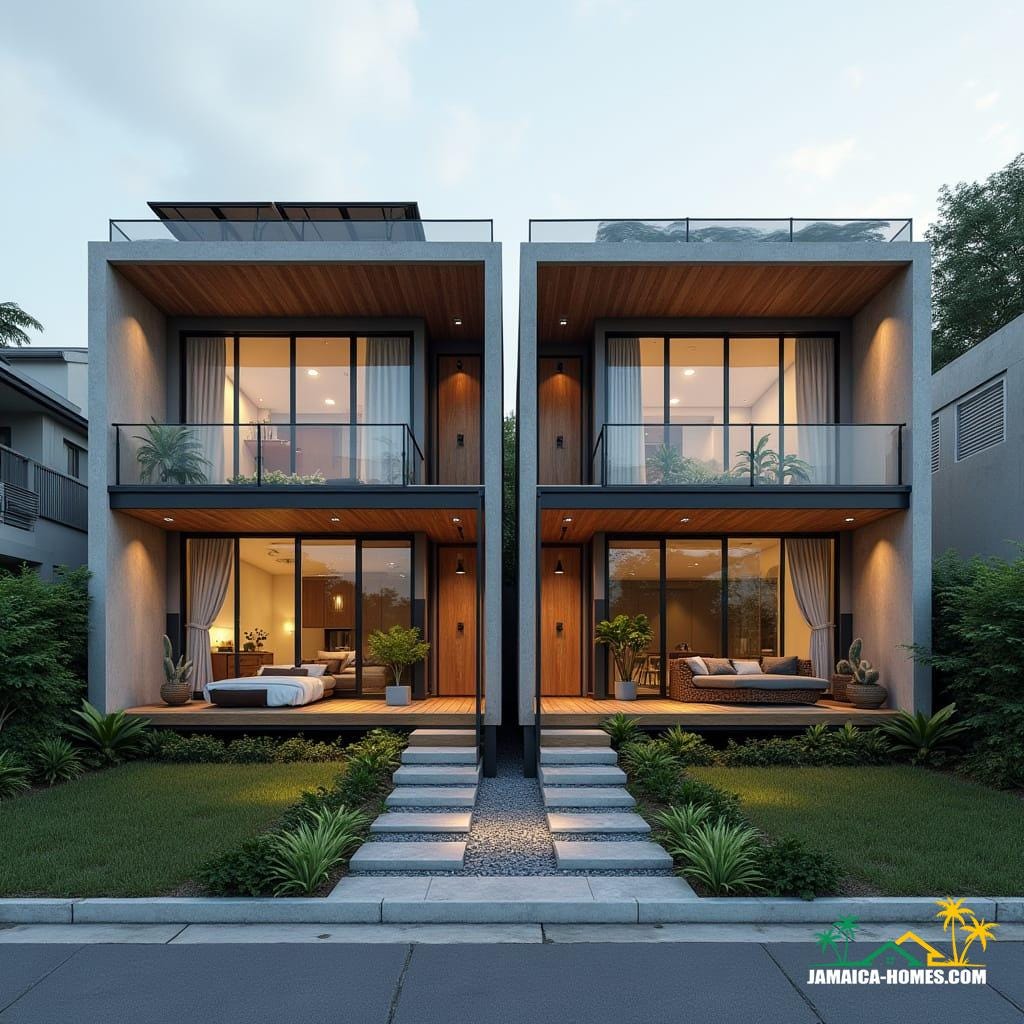
There is something quietly revealing about the homes we choose.
Not just their size, or whether they sit on a hillside catching the breeze, or tucked into a developing scheme on the edge of town — but the decision behind them. The calculation. The courage. The compromise.
In Jamaica today, the question of renting versus buying is less about spreadsheets and more about identity. It is about how we see ourselves in the landscape of our own lives. Are we passing through? Or are we planting something that will outlast us?
Renting can feel wonderfully uncomplicated. You sign a lease. You move in. The walls are painted, the roof is someone else’s responsibility, and the lawn — if there is one — may or may not concern you. There is an ease to it. A certain lightness.
And in moments when the country itself is recalibrating, when families are restoring order and steadying foundations, that lightness can feel not only practical but wise.
But here is the intriguing twist: ease often comes at a cumulative cost.
The rent rises. Gradually at first. Then with more confidence. And you begin to realise that the money you are transferring each month, faithfully, reliably, is building something. Just not for you.
As Dean Jones, Founder of Jamaica Homes and Realtor Associate, observes:
“Rent buys you shelter. Ownership builds your stance.”
That difference — between shelter and stance — is subtle but profound.
The Seduction of Flexibility
Renting in Jamaica, particularly in urban centres like Kingston or Montego Bay, offers flexibility in a rapidly shifting market. Careers evolve. Parishes develop. Infrastructure reshapes entire corridors of the island. To rent is to remain mobile — able to pivot without the weight of a mortgage contract.
For young professionals, returning residents, or families regrouping and rebuilding, this flexibility can feel like a gift.
There is no deposit in the millions. No valuation report. No anxious wait for mortgage approval. You hand over your security deposit, collect your keys, and life proceeds.
But flexibility is not free.
Rental prices across Jamaica have risen steadily over recent years, particularly in areas experiencing commercial expansion or increased demand. A modest two-bedroom apartment in the Corporate Area can now command sums that would once have purchased land outright in rural parishes.
And here is where the arithmetic grows interesting.
Each rental payment secures occupancy — not ownership.
You are, in effect, financing the durability of someone else’s asset.
It is rather like watering a garden that you will never harvest.
The Jamaican Numbers — A More Nuanced Story
The narrative that buying is unattainable has gained momentum in many parts of the world. But Jamaica’s market behaves differently.
Mortgage rates here, though influenced by global forces and domestic monetary policy, remain comparatively structured. Financial institutions compete. Credit unions offer alternatives. Building societies design packages to attract first-time buyers.
Meanwhile, the rental market — driven by demand, urban migration, and limited supply in prime districts — has continued to tighten.
In certain segments of the market, the monthly cost of servicing a mortgage on an entry-level property may not be dramatically higher than rent for a comparable unit.
That statement requires caution.
Ownership includes additional obligations: property tax, insurance, maintenance, strata fees. These are not decorative footnotes; they are realities. A roof will eventually need attention. A boundary wall may protest. Pipes, like all things mechanical, possess a flair for inconvenient timing.
But renting carries its own unpredictability. Annual increases. Lease renegotiations. The gentle reminder that permanence is conditional.
As Dean Jones puts it:
“In Jamaica, property is never just about price. It’s about position — where you stand five, ten, twenty years from now.”
And that is where the comparison deepens.
Parish by Parish: The Geography of Possibility
One cannot speak of Jamaican real estate as a singular entity. Kingston is not St. Elizabeth. Portmore is not Portland. Montego Bay operates on its own confident rhythm.
Some parishes are experiencing infrastructure upgrades that quietly elevate land values. Others remain more accessible, offering entry points for buyers willing to see potential rather than polish.
To rent in a premium enclave may cost nearly as much as owning in an emerging district.
To buy in a prime urban centre may require formidable capital.
The decision becomes not merely financial but geographical. Where do you see your future unfolding? In the pulse of the city? Along a coastal corridor? In a parish poised for development?
Real estate, after all, is a story about direction.
The Great Barrier: The Deposit
For many Jamaicans, the greatest obstacle to ownership is not the monthly mortgage — it is the deposit.
Five to ten percent of a property’s value can feel mountainous. On a $30 million home, even 5% demands serious savings discipline. Add legal fees, valuation costs, and closing expenses, and the initial outlay becomes undeniably substantial.
It is here that many potential buyers retreat.
And yet, what is often overlooked is the character of that deposit. It does not vanish into abstraction. It converts into equity. It becomes the cornerstone of ownership.
When you rent, your deposit returns — if all goes well — precisely as it left you.
When you buy, your deposit begins to anchor an asset.
Dean Jones reflects:
“Land in Jamaica carries memory. The question is whether your effort is building someone else’s legacy or your own.”
There is something quietly stirring about that idea.
Equity: The Invisible Architect
Equity is rarely discussed in everyday conversations, yet it is one of the most powerful forces in property ownership.
As mortgage payments reduce your principal, and as property values adjust over time, your ownership stake increases. This widening gap between what you owe and what your property is worth becomes financial leverage.
It may fund a business venture. Support education. Enable relocation. Provide security in later years.
Renting does not create this invisible architecture.
Of course, equity is not guaranteed to grow dramatically or immediately. Markets fluctuate. Development patterns shift. But historically, land in Jamaica — particularly in expanding areas — has demonstrated resilience.
Ownership positions you within that resilience.
Responsibility: The Unavoidable Reality
It would be disingenuous to portray homeownership as purely romantic.
The leaking pipe will not wait politely. The exterior paint will fade. The roof may one day require more than optimism.
Owning a home is not simply acquiring a building; it is entering a relationship with maintenance.
And yet, there is dignity in that responsibility. A sense that when something falters, you are restoring your own foundation — not protecting someone else’s return on investment.
Renting, in contrast, shields you from many of these burdens. In seasons when stability and liquidity are paramount, that shield can be invaluable.
The key is discernment.
The Cultural Undercurrent
In Jamaica, ownership carries symbolic weight. It is spoken of in family conversations with a certain reverence. To “own yuh yard” is not merely a financial milestone; it is a declaration of rootedness.
Parents speak of passing land to children. Of ensuring that future generations have something tangible to stand upon.
But aspiration must be matched with preparedness. Purchasing prematurely, without sustainable income or savings, can strain the very stability ownership is meant to provide.
The wise approach is measured. Analytical. Reflective.
Not impulsive.
The Conversation Worth Having
The point is not to persuade every renter to rush toward a mortgage application.
It is to challenge the assumption that renting is always safer or more economical.
In some cases, renting remains entirely sensible — particularly during transitional phases. In others, buying may be more attainable than imagined, once the numbers are examined locally and realistically.
A thoughtful discussion with a knowledgeable agent or lender can illuminate pathways that online commentary obscures.
Sometimes clarity begins not with a contract, but with a conversation.
A Final Reflection
There is something almost architectural about this choice between renting and buying. It shapes not only your finances but your relationship to place.
Renting offers flexibility — a lightness of touch.
Buying offers permanence — a stake in the landscape.
As Dean Jones wisely concludes:
“A home is not simply where you live. It is where your long-term thinking becomes visible.”
The numbers, when studied within Jamaica’s unique context, may indeed surprise you.
But beyond the numbers lies a deeper question:
Are you occupying space — or are you shaping it?
And perhaps that is the most revealing blueprint of all.