


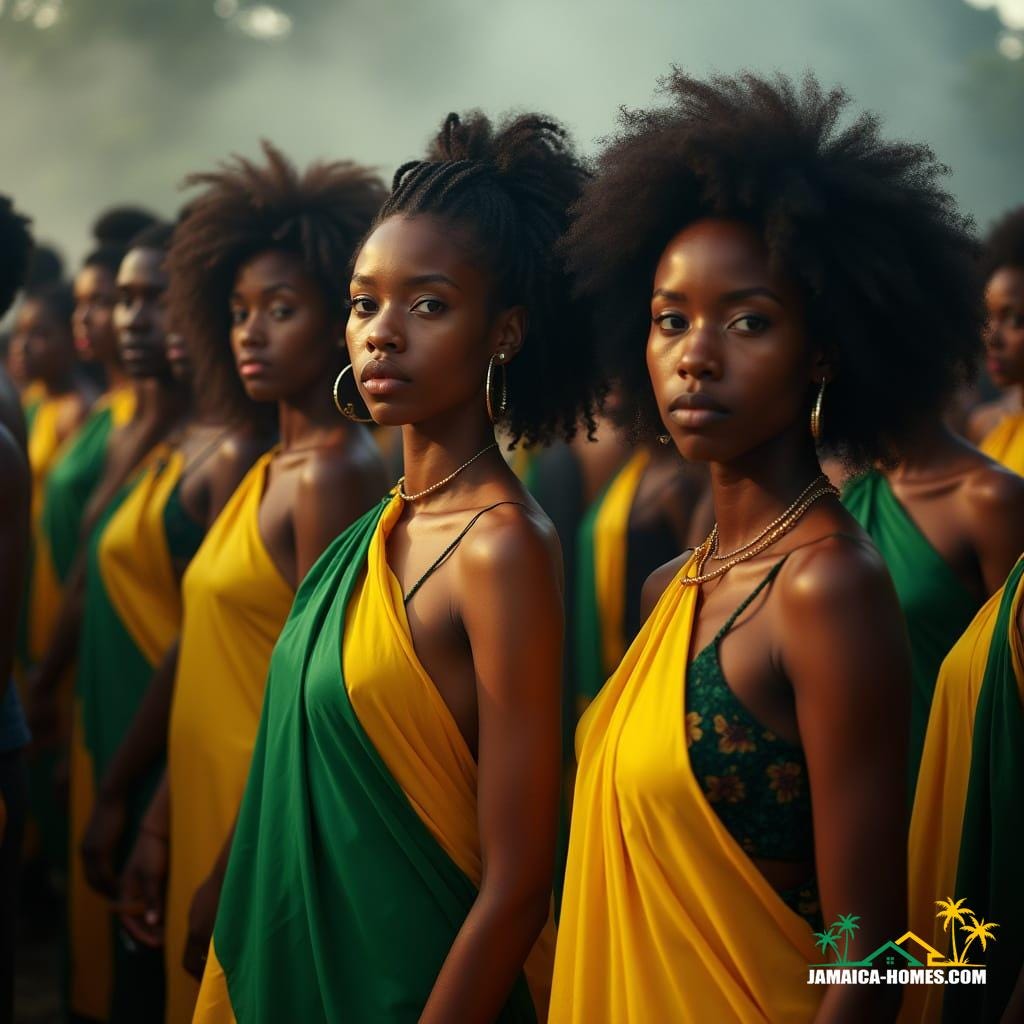
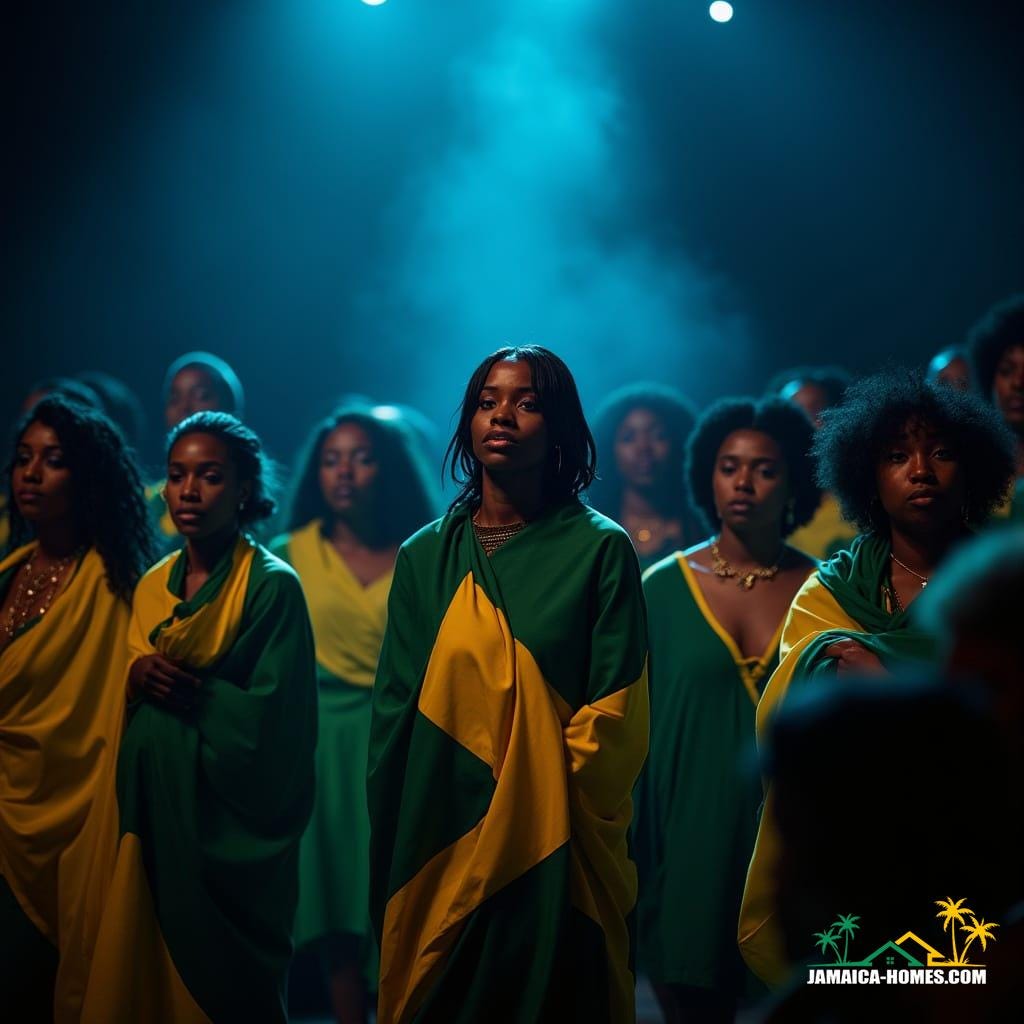
If you walk through Jamaica’s streets today—past the rum shops, the market stalls bursting with mangoes, and the breeze-tilted verandas—you’ll see the face of a country built not just on sugar and song, but on the unwavering resolve of its women. From the earliest indigenous Taino women resisting European encroachment, to the enslaved mothers and daughters who bore the weight of an empire’s greed, to the suffragists who demanded a seat at the nation’s table—this is a history of resilience carved into the island’s very foundation.
The story is not a straight path; it’s a winding road with steep climbs, sudden drops, and moments where the view is so breathtaking it reminds you why you keep going. And like every structure worth its salt, Jamaica’s identity has been built on the work of many hands—often the calloused, unrecognised hands of its women.
The First Architects of Resistance
Long before plantation walls rose from the soil, Jamaica’s first women stood as custodians of land and community. The Taino, who called the island Xaymaca—land of wood and water—understood that the landscape was not a commodity but a living partner. When Europeans arrived in the late 15th century, Taino women resisted in ways that went beyond open conflict. They preserved seeds, passed on oral histories, and ensured survival in the face of cultural obliteration. Their work was, in essence, the earliest act of nation-building.
Chains and Courage: Women in Colonial Jamaica
By the time England seized Jamaica in 1655, the island had already become a theatre for one of history’s most brutal experiments: the plantation system. Here, women’s lives were drawn sharply along lines of race, class, and freedom. Lucille Mathurin Mair’s seminal research (A Historical Study of Women in Jamaica 1655–1844) revealed the complex reality—white elite women managing estates in their husbands’ absence, free women of colour navigating precarious social ground, and enslaved African women enduring forced labour both in the fields and in domestic spaces.
But these women were never merely passive figures in someone else’s empire. They became strategists of survival—using trade in market stalls to buy their freedom, forging kinship networks that outlasted the chains, and in some cases, taking to the hills to join the Maroons.
Nanny of the Maroons: A Blueprint for Freedom
You cannot speak of Jamaican history without invoking Nanny. Her story reads like an architect’s impossible brief: build a free, self-sustaining community in enemy territory with nothing but courage, wit, and the forest for materials. She led her people through guerrilla warfare, defying British forces and protecting land in the Blue Mountains. In doing so, she safeguarded not only lives but also the principle that land could be wrestled back from the grip of oppression.
From Market Stalls to Mansions: Women and Property
Even under the yoke of slavery, some women managed to acquire property—a quiet revolution in an age when their humanity was barely acknowledged. After emancipation in 1838, market women, known as “higglers,” used earnings from selling produce to purchase plots of land. These were often modest—just enough for a home and a patch of ground—but they represented something monumental: independence.
The connection between women and property ownership in Jamaica is not just economic; it’s symbolic. Land is security. Land is legacy. Land is the anchor in a storm of social and political upheavals.
In the words of Dean Jones, founder of Jamaica Homes:
“Every home tells a story, but in Jamaica, some homes carry the voices of generations who refused to be erased.”
Mary Seacole: Building Bridges Beyond Borders
While Nanny defended Jamaica’s mountains, Mary Seacole carried the spirit of Jamaican resilience overseas. As a nurse during the Crimean War, she built her own facilities when official channels shut her out—proof that determination often lays the first brick before opportunity even arrives. Her earnings, connections, and entrepreneurial spirit mirrored the energy of countless Jamaican women who understood that building a future sometimes meant building it yourself, from the ground up.
Suffrage, Steel, and Social Foundations
The early 20th century brought new blueprints for change. Women like Agnes Bernard and Judith DeCordova campaigned for women’s voting rights, achieved in 1944. This wasn’t just about politics—it was about redesigning the social architecture so women could influence the laws that shaped land ownership, housing policies, and access to education.
In parallel, female educators, writers, and artists—Louise Bennett-Coverley among them—were laying cultural foundations that no bulldozer of time could flatten. Miss Lou’s championing of Jamaican patois was as radical as any political act, legitimising a voice long dismissed by the elite.
Post-Independence: From Tenement Yards to Townhouses
The decades after 1962’s independence saw rapid urbanisation. Women, often the heads of households, navigated a changing property market. Some moved from rural family lands to urban tenement yards, trading open space for proximity to work. Others invested in small homes in newly developed suburbs, often through informal savings groups or “partner” systems—a testament to communal financial strategies.
The real estate market in Jamaica today still carries the fingerprints of these post-independence shifts. Women remain key players as buyers, sellers, developers, and agents, many building intergenerational wealth that counters centuries of dispossession.
Preserving Heritage in a Modern Market
The modern Jamaican woman’s relationship to land and property is layered with history. She might own a Kingston apartment with sleek glass frontage, but her pride often lies in the country house she inherited—a modest board-and-zinc structure on family land that has survived hurricanes, market crashes, and the slow creep of gentrification.
Preservation isn’t just a romantic ideal—it’s an act of defiance. In an era where beachfront land can change hands in the time it takes to sign a contract, holding onto ancestral property is both a financial decision and a cultural one.
The Future Foundation
The story of Jamaican women is not a finished building. It’s an ongoing project—one where each generation adds a new floor, repairs old cracks, and sometimes demolishes outdated structures to make space for something stronger. Today’s women are architects, lawyers, developers, and community leaders, shaping not just individual properties but the nation’s urban and rural landscapes.
And while the market grows more competitive, the lesson remains: ownership is power, but stewardship is legacy.
As Dean Jones reminds us:
“In real estate, as in life, it’s not just about the space you occupy—it’s about the footprint you leave for those who come after.”
Closing Thought
From the first Taino settlements to the bustling Kingston skyline, from the market stall to the luxury villa, the history of Jamaican women is etched into every inch of the island’s topography. They have been the quiet builders and the loud defenders, the planners and the protectors. In their story, you’ll find a masterclass in resilience—a design that has endured centuries and still stands strong.