


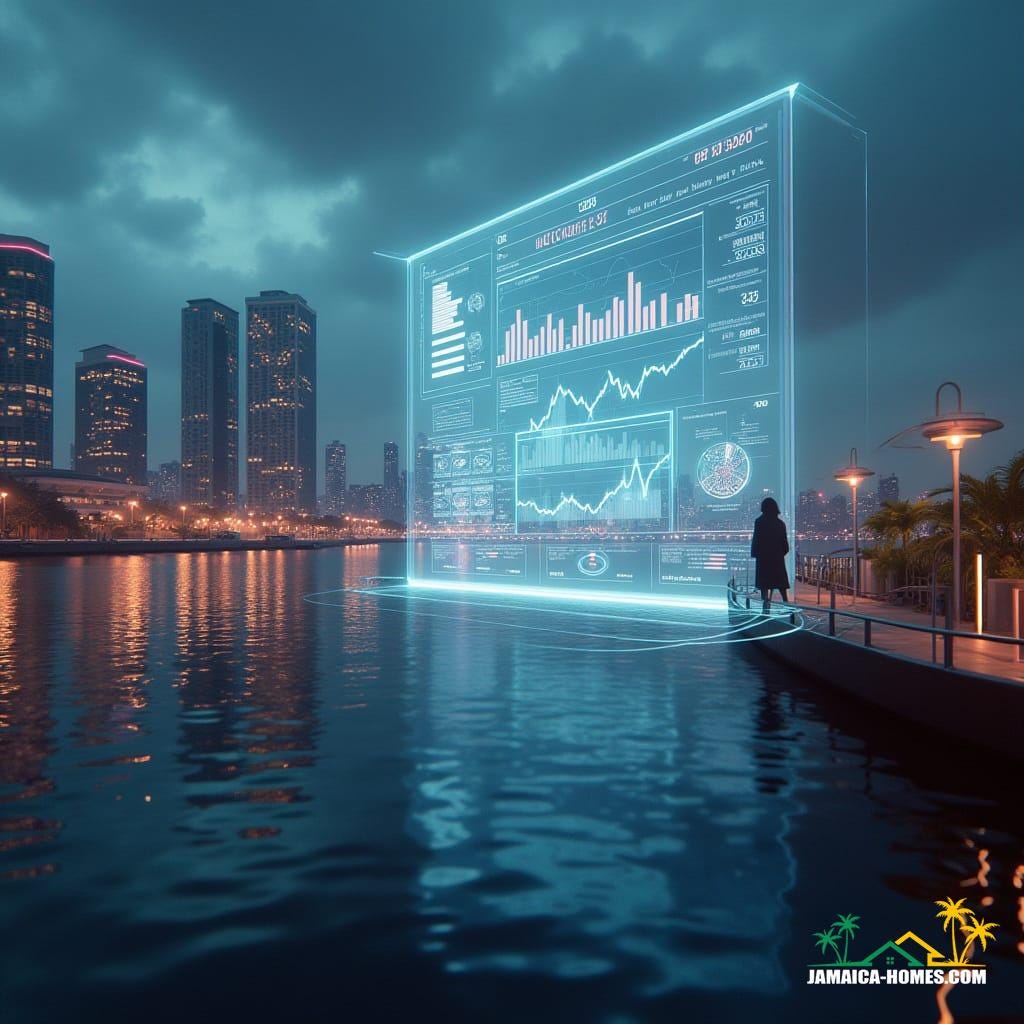
This article presents a visionary and hypothetical scenario intended to encourage national dialogue on Jamaica’s digital resilience and future planning. References to Black River as a potential “digitally enabled” or “third city” are conceptual and not based on any official government announcement or current project. All descriptions of infrastructure, policy ideas, and projected outcomes are illustrative and meant to spark discussion about how Jamaica can strengthen its energy, communications, and disaster-preparedness systems under the Vision 2030 Jamaica framework. Historical information about Black River’s electrification in 1893, its port activity, and other milestones is drawn from publicly available records and should be verified for accuracy before citation. The article’s intent is not to predict, but to provoke thought — to highlight how lessons from Jamaica’s past innovation could inspire a more connected, resilient future.
Dear Reader,
Across the world, nations are rethinking how cities live, move, and connect. Jamaica, too, has been tuning into this global rhythm — building toward a more connected, sustainable future. Much of that conversation has so far centred on Kingston, where the first steps toward a “smart city” have begun, supported by private and public sector collaboration. The initiative demonstrates how technology can strengthen urban life, improve energy efficiency, and enhance national resilience.
But while Kingston rightly takes the lead as the country’s innovation hub, perhaps now is also the time to look outward — to consider Black River as a fresh testing ground for what Jamaica’s next generation of towns could become: digital, self-reliant, and resilient.
A New Kind of Outage
Imagine the island at dawn — and half the country still can’t communicate. Not because of protest or apathy, but because power lines are down, towers damaged, and the internet has gone dark. Screens stay blank; children can’t log into school; small businesses can’t reach their customers. The hum of industry, once steady, fades into silence.
It’s not business as usual. It won’t be until the power and the internet return.
In this moment, we see how deeply Jamaica depends on two invisible lifelines — electricity and connectivity. Without them, schools stall, jobs disappear, and livelihoods collapse. The longer the outage, the greater the cost. And if another storm or earthquake were to strike before these systems are rebuilt stronger, much of the country could grind to a halt.
This is a serious time for Jamaica.
Why This Feels Different
For generations we’ve prepared for hurricanes, floods, and earthquakes. Yet today’s threat is as much digital as it is physical. A downed fibre line now carries consequences similar to a blocked road or broken bridge.
And the impacts are unequal. Some parishes stay online with backup generators or satellite links; others remain cut off. The gap between those connected and those left behind is widening — a silent divide that mirrors economic inequality. Half the country offline means half the country excluded from modern life.
Jamaica cannot afford that split. The time for decisive planning is now.
Kingston Leads — But Let’s Build in Parallel
Kingston has long been the focus of smart-city ambitions, with forward-thinking partnerships already shaping its transformation into a digital capital. That effort should continue and expand.
Yet national resilience also depends on diversity — on creating more than one hub of progress. Black River, the quiet parish capital of St Elizabeth, could serve as a complementary pilot: smaller, more flexible, and grounded in community innovation.
History gives the town a fitting head start. In 1893, Black River became the first town in Jamaica to have electricity, when a generator at Waterloo House lit up the harbour. That early spark of progress symbolised a nation reaching for the future. Today, it could do so again — not by competing with Kingston, but by complementing it.
Why Black River?
Heritage of innovation: The town’s electrification legacy makes it a natural candidate for a second leap forward.
Right scale: Manageable enough for pilot projects, but large enough to model future standards.
Space for design: Less congestion allows planners to experiment with renewable grids, smart housing, and resilient infrastructure.
Symbolic reach: Turning a historic town into a modern digital district would signal that progress in Jamaica belongs to every parish, not just the capital.
Building a Digitally Enabled Town
To imagine a “digitally enabled” Black River is to picture a community where essential systems stay alive even under strain:
Reliable power: Solar and wind micro-grids keeping lights on when the national grid falters.
Continuous connectivity: Fibre, wireless, and satellite links working together to maintain communication.
Smart infrastructure: Sensors tracking water levels, road safety, and bridge integrity.
Digital literacy: Residents trained and supported to use technology confidently.
Disaster-ready governance: Local “situation rooms” managing rapid response across all sectors.
These are not distant dreams; they’re achievable with planning, policy support, and investment.
Tying into Jamaica’s Vision 2030
Jamaica’s Vision 2030 plan already calls for digital transformation, sustainable infrastructure, and climate resilience. Black River could serve as a small-scale model for these goals — a local proving ground aligned with national direction.
By developing Kingston and Black River in parallel, Jamaica would demonstrate both urban and regional capacity for digital innovation. The capital would showcase metropolitan scale; the southern coast would test adaptability and community-based resilience. Together, they could set a benchmark for the Caribbean.
From Panic to Preparation
The outages we’ve endured are a reminder that resilience cannot be reactive. Power grids, water systems, and communication networks must be stress-tested and backed by redundancies. Each parish should know who leads its emergency response and how digital systems will operate if connections fail.
National stability now depends on a web of preparedness rather than a single line of defence.
The Bright Side — A Vision of 2035
Picture Black River a decade from now: energy self-sufficient, internet steady through storms, classrooms online regardless of the weather.
Smart buildings monitor their own safety, while residents manage water, transport, and security through local apps. When rivers rise, automated alerts route through backup networks to every phone and radio in town.
It’s not a fantasy. It’s what can happen when foresight meets design.
A Call to Act Together
Government, private enterprise, and local leadership all have roles to play. Kingston’s transformation is proof that Jamaica can deliver smart infrastructure when sectors collaborate. Let’s apply that same energy to rural and coastal areas, making sure no parish is left behind.
This is not a criticism of current efforts, but an invitation to widen the circle of innovation. Black River could complement Kingston’s momentum and prove that progress is not confined to the capital.
Closing Thought and Disclaimer
From crisis emerges opportunity. From outage, innovation. Black River’s story reminds us that progress begins when we dare to re-imagine the familiar.
This article outlines a conceptual proposal, not a government plan. Its purpose is to encourage discussion, collaboration, and foresight about Jamaica’s digital and physical resilience.
When the lights return, may they illuminate more than bulbs — may they light the path to a smarter, stronger, more connected Jamaica.
Black River’s Legacy of Firsts
1893 – Electricity Arrives at Waterloo House
Black River becomes the first town in Jamaica to receive electricity when the Leyden family installs a generator at their home, Waterloo. The lights visible from ships anchored offshore symbolise Jamaica’s leap into the modern age.
Early 1900s – A Thriving Port
The town serves as one of Jamaica’s busiest shipping ports, exporting logwood, rum, and pimento, and importing manufactured goods. Wealth from trade fuels early adoption of modern technology.
1910s – The Island’s First Motor Car
Historical records suggest that Black River residents owned one of the first motor cars in Jamaica, continuing the town’s reputation for embracing innovation.
Today – A Heritage Town with Future Potential
Now a quiet parish capital, Black River retains the wide Georgian streets and riverside charm that once made it an economic hub. Its history of innovation makes it an ideal test case for Jamaica’s next great leap — digital transformation.