


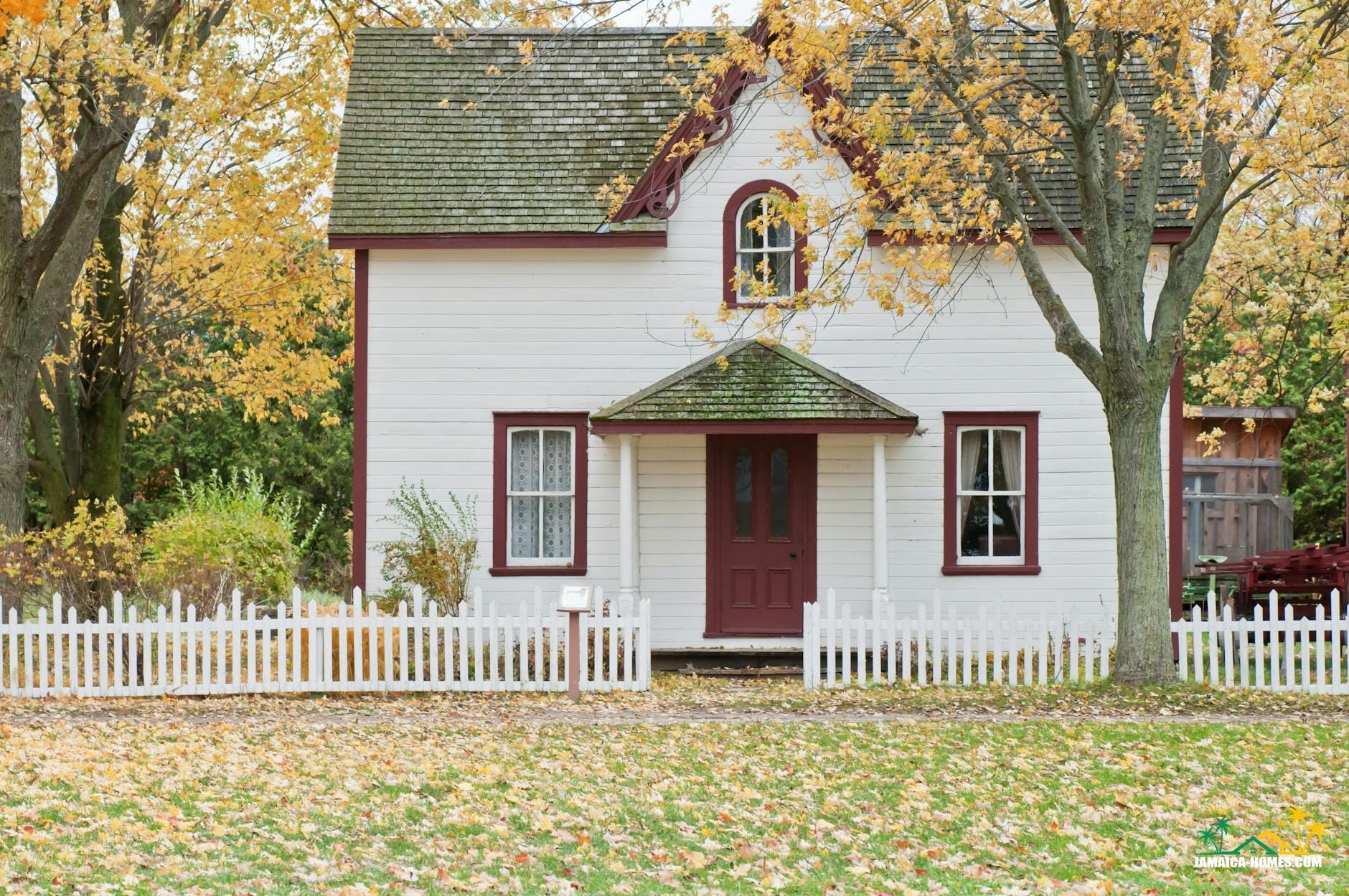
There comes a moment in the life of a building when it stops asking for attention and starts offering something back. Not a new kitchen. Not another extension. But release.
In England, thousands of homes are reaching that moment now. They were bought with hope, held with discipline, and lived in with the kind of ordinary persistence that never makes headlines but quietly shapes lives. These houses have sheltered families through winters and wage rises, redundancies and recoveries. They have absorbed decades. And in doing so, they have stored something rather remarkable.
Time.
Time, translated into equity.
And for a growing number of homeowners, that stored time is beginning to whisper a question that is less about property and more about direction. What if the house has finished its work here?
Not because it has failed. Quite the opposite. Because it has succeeded.
For some, the answer to that question points south. Far south. Across an ocean, to an island that is itself in the process of remembering how to rebuild, how to re-anchor, how to move forward again after the blunt interruption of Hurricane Melissa. Jamaica is not waiting. It is recovering. And there is a dignity in that which demands respect.
This is not a story about escape. It is a story about transition.
In England, equity is often discussed as a financial abstraction. Percentages, ratios, valuations. But in truth, equity is emotional archaeology. It is the residue of years lived carefully. Each mortgage payment shaving away a little more uncertainty. Each year of ownership quietly compounding value. Each decision not to move, not to overextend, not to cash out too early.
Houses are patient. They reward patience.
What many homeowners don’t quite realise is how profound that reward can be after fifteen, twenty, twenty-five years. The house you once stretched to afford may now hold a sum that feels almost implausible, even slightly unreal. And yet it is real. Very real. Solid enough to be measured, released, redirected.
This is where the story becomes less about markets and more about meaning.
Because releasing equity is not the same as selling a house. Selling is transactional. Releasing is philosophical. It asks what you want the next chapter to be made of.
For those with Jamaican roots, or simply a long-standing relationship with the island, the pull is not abstract. It is textured. It smells of rain on hot earth. It sounds like conversation drifting across a yard in the evening. It looks like land that still remembers what it is to be land.
But Jamaica is not a blank canvas. It is a place of memory, complexity, and resilience. Especially now.
After Hurricane Melissa, the landscape tells the truth more plainly. Buildings reveal whether they were thoughtfully made. Drainage shows whether it was respected. Communities show what matters when systems are tested. Anyone thinking of bringing capital, plans, or ambition into this environment must first bring humility.
This is not about arriving with answers. It is about arriving with care.
The quiet power of UK housing equity is that it allows for care. It allows for patience. It allows for decisions that are not driven by panic or leverage. A home in England, once sold or refinanced, can fund land outright in Jamaica. It can allow a build to proceed slowly, deliberately, properly. It can absorb the pauses that good construction requires, especially in a climate that insists on being taken seriously.
There is something deeply architectural about that. Good buildings are never rushed. They listen to site, to weather, to context. So should lives.
The symbolic journey from Clapham to Clarendon is not about trading one postcode for another. It is about trading velocity for intention. One is dense, connected, brilliant in its urgency. The other is expansive, grounded, and unafraid of stillness. Neither is superior. They simply serve different phases of a life.
Many people reach a point where proximity to everything becomes less important than belonging somewhere.
And here is the quiet irony. Often, the house that made everything possible in England was never meant to be the final destination. It was the enabler. The scaffold. The structure that allowed education, careers, confidence to be built. Now, its greatest gift may be letting go.
There is a particular grace in that.
Of course, none of this is simple. There are legal frameworks to navigate, tax implications to understand, inheritance questions to think through, and the very real difference between owning property in a highly systematised environment and one that relies more heavily on relationships, professional guidance, and local knowledge.
But complexity does not mean impossibility. It simply means the work must be done properly.
In Jamaica, property rewards those who move slowly, ask questions, and respect process. It punishes haste. This has always been true. It is even more true now.
And perhaps that is the point.
A life built on equity is not a life built on speed. It is built on accumulation, restraint, and timing. Releasing that equity to begin again somewhere else is not a retreat. It is a considered advance.
There is also something profoundly human in the idea that a house can finish its work. That walls can say, quietly, you’re ready now.
Not ready to stop. Ready to choose.
In the end, this is not about England versus Jamaica. It is about recognising when a structure has served its purpose and allowing its value to be transformed into something that reflects who you are now, not who you were when you first picked up the keys.
Good architecture does that. It evolves with us.
And sometimes, the most elegant design decision you can make is knowing when to begin again—with respect, patience, and just enough courage to trust that what you’ve built so far is strong enough to carry you forward.