


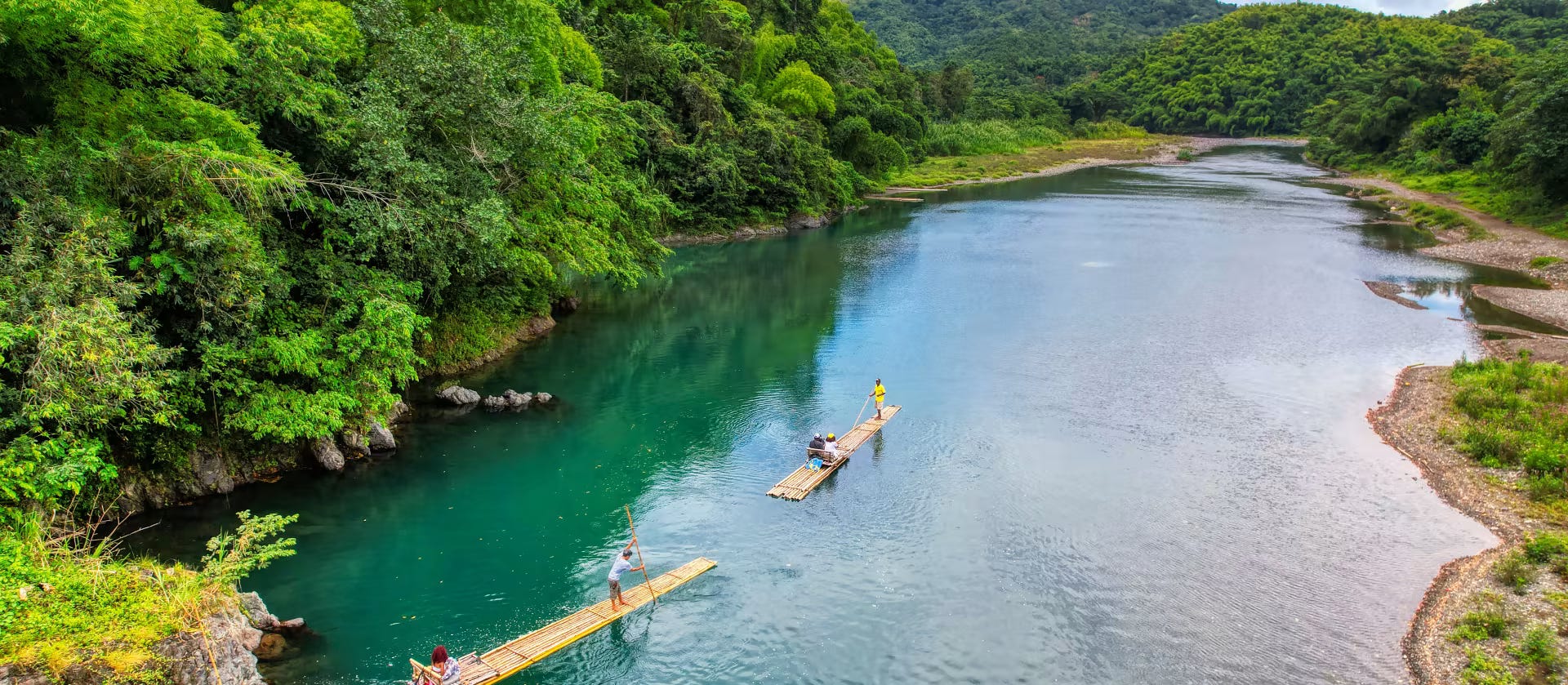
Black River, a quiet town on Jamaica’s south coast, has re-entered the national spotlight with the government’s recent declaration that it will become the island’s third official city. In a country where Montego Bay and Kingston dominate the political and economic landscape, this bold move has ignited both optimism and skepticism in equal measure. For some, it’s a long-overdue recognition of the historical, cultural, and geographic value of southern Jamaica. For others, it’s political theatre dressed in the language of progress, lacking the infrastructure, investment, and population density to justify the title. So the question emerges: is this a real turning point for Jamaica’s development, or simply another well-packaged promise that could take decades — if not longer — to materialize?
Black River’s historical credentials are indisputable. In the late 1800s, it was the first town in Jamaica to be electrified. It boasted a telephone system before many parts of the United States and was once among the busiest seaports in the Caribbean. The export of logwood, used in textile dyeing, and the bustling trade of rum, pimento, and cattle made it an economic hub in colonial Jamaica. Mansions of wealthy merchants, a courthouse that still commands architectural admiration, and a river once plied by European ships all speak to a heritage that once placed Black River at the forefront of island commerce. But as sugar estates dwindled, logwood lost relevance, and the economic winds shifted northward, Black River faded into relative obscurity — a sleepy parish capital where time seems to have slowed.
The announcement of its elevation to city status, therefore, feels like a historical reckoning. But can historical relevance alone justify the leap from town to city, or is there more at play? The government’s rationale includes strategic development goals: stimulating economic activity in underdeveloped regions, decentralising growth from the overburdened Kingston Metropolitan Region, and encouraging population spread in light of climate change, over-urbanisation, and infrastructure fatigue in the capital. These are legitimate objectives. However, when one considers the present state of Black River — limited public transportation, no universities or major industrial base, basic health services, and a population of just over 4,000 — it’s difficult to envision a city without the requisite urban scaffolding.
Some argue that Jamaica needs to reimagine what a city can be. Instead of aspiring to glass towers and congested roadways, perhaps a 21st-century Caribbean city can prioritise sustainability, digital innovation, agro-industrial hubs, and regional balance. On paper, Black River could fit this mold. It sits on a major river, has flat, buildable land, is near tourist attractions like the Appleton Estate and YS Falls, and lies within a parish often described as “the breadbasket of Jamaica.” These natural and economic assets could be harnessed for agricultural innovation, eco-tourism, and heritage preservation, positioning the town as a model of smart, green development.
Yet, the road from designation to delivery is notoriously long and winding in Jamaica. Portmore, the second-largest urban settlement in the country, only achieved city status in 2022 after years of demographic expansion, infrastructure growth, and civic lobbying. Even then, critics argued that Portmore lacked basic elements like a town centre, hospital, or formal economic identity. If Portmore — with its population of over 100,000 — struggled to make the leap, then what of Black River?
Transforming a town into a city is not merely about political will or ceremonial pronouncements. It requires years — if not decades — of sustained investment in infrastructure, education, health, housing, and governance. It means upgrading road networks, expanding broadband access, creating job opportunities, and encouraging migration without overwhelming the town’s ecological balance. It involves crafting a new identity that is both aspirational and grounded in reality. In this regard, the vision for Black River may be noble, but the timeline is murky. Urban development does not happen in five-year political cycles — it unfolds over generations. If this transformation is to succeed, it must transcend partisan agendas and embed itself in a long-term national development strategy backed by consistent funding, accountability, and citizen engagement.
Moreover, there is the issue of equity. Jamaica has long been plagued by regional disparities. The north coast thrives on tourism dollars while the south often grapples with underinvestment and neglect. Declaring Black River a city may symbolically address this imbalance, but without concrete and inclusive planning, it risks becoming a hollow gesture. What will happen to the surrounding farming communities? Will they benefit from the development, or will they be displaced and marginalised by land speculation and gentrification? Will Black River’s existing residents see their quality of life improve, or will they be priced out of their own town as land values rise? Who will be the architects of this new city — the people who live there or external investors chasing incentives?
Jamaica’s history is filled with projects that began with fanfare and ended in dust. From stalled highway developments to abandoned public housing schemes, from ill-conceived urban renewal projects to ghost towns with infrastructure but no people, the country has seen its fair share of grand ideas that never quite took root. Therefore, any pronouncement of city status must be met not just with applause, but with probing questions. What is the economic plan? Who is responsible for implementation? What funding mechanisms are in place? How will local voices be included in the process? These are not cynical questions — they are necessary ones.
To be fair, there are signs that the government is thinking more strategically about urban growth. Initiatives around digital transformation, broadband expansion, and climate-resilient infrastructure have been gaining traction. The push for public-private partnerships and diaspora investment also signals a shift toward more sustainable financing models. But the track record remains mixed, and the challenges are complex. The very nature of city-making involves navigating competing interests — between conservation and construction, tradition and innovation, local autonomy and national oversight.
There’s also the matter of public perception. Jamaicans are famously skeptical of political promises, especially in rural areas where progress often feels like a rumour. Announcing city status may excite planners and policymakers, but it must resonate with the people who call Black River home. They are the ones who will experience the dust of construction, the pressure on public services, and the disruption of longstanding ways of life. They must be made to see the benefit — not just through brochures and press releases, but through real, tangible improvements in their daily lives.
So where does that leave us? Black River as Jamaica’s third city is both plausible and problematic. It offers a chance to rebalance development and honour a place with rich historical roots. But it also exposes the risks of premature celebration. True urban transformation is not declared — it is earned, built, and sustained. It is a process that requires more than ribbon-cuttings and rebranding. It requires planning departments that function, local authorities that are empowered, budgets that are honoured, and communities that are not just consulted, but central to the vision.
It would be a mistake to dismiss the idea outright. Jamaica does need to think differently about growth, especially as climate change, housing shortages, and digital economies reshape how we live and work. In that sense, Black River could become a case study in 21st-century Caribbean city-making — if done right. But let us be clear-eyed about the scale and timeline. This is not a five-year plan. It is a 30-year undertaking at minimum, requiring patience, discipline, and above all, integrity.
In the end, perhaps the real value of this announcement is that it forces us to re-engage with questions we often avoid: What is a city? Who is development for? And how do we create spaces that reflect not just growth, but justice, memory, and hope? If Black River can answer those questions — not just in policy papers but in lived reality — then maybe, just maybe, it won’t just become Jamaica’s third city in name. It will become a new kind of city altogether. One worth waiting for.