

Jamaica’s Beautiful Women: Structure, Story, and the Architecture of Identity

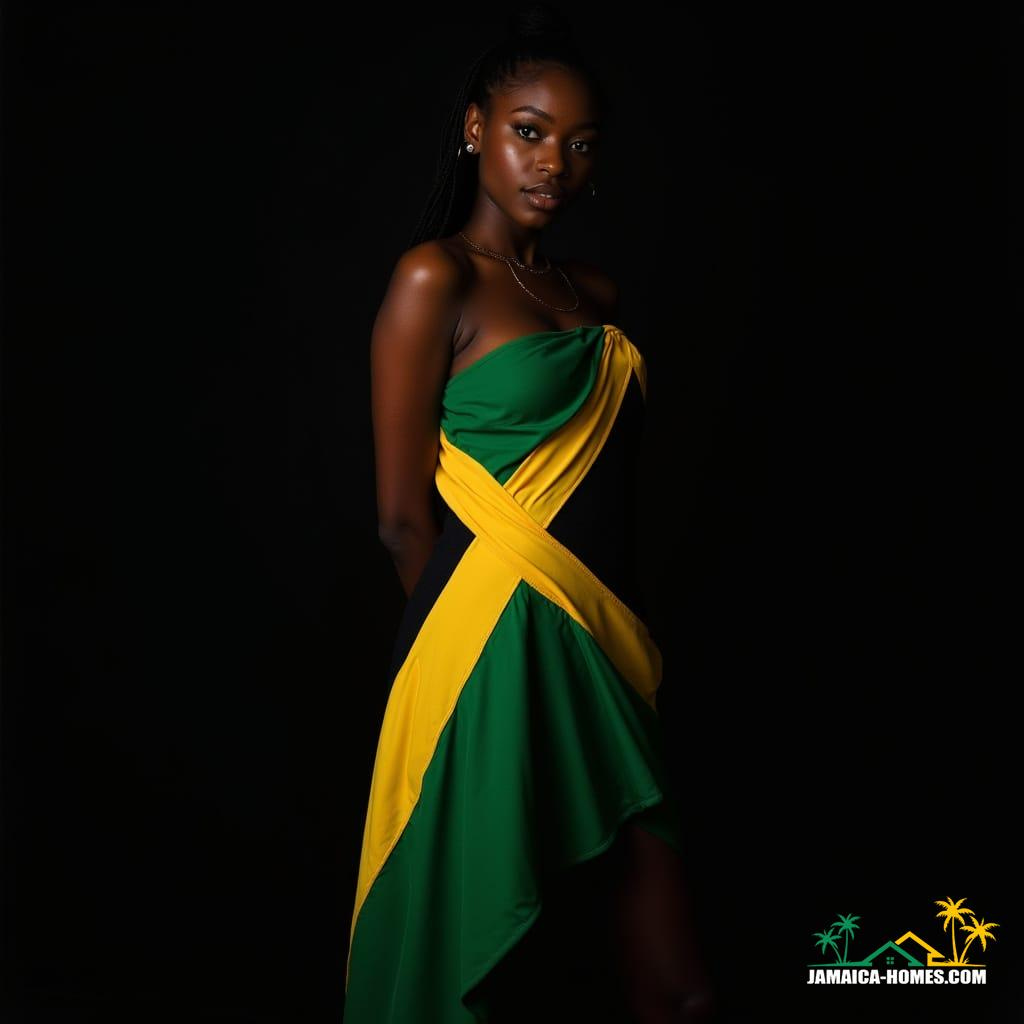
There are places where beauty is applied. And there are places where beauty is constructed—layer by layer, generation by generation, under pressure. Jamaica belongs firmly in the second category.
To understand Jamaican women purely through appearance is to misunderstand the entire design. What we see—the posture, the confidence, the effortless command of space—is only the façade. Beneath it lies a complex structure: history piled upon history, cultures fused rather than replaced, resilience acting as the load-bearing wall.
In an age defined by artificial intelligence, global anxiety, cultural acceleration, and the unsettling sense that everything is becoming smoother, flatter, more uniform, Jamaican women stand as something resolutely human. They are not manufactured. They are inherited.
A Small Island, Densely Layered
Jamaica is not large, but it is profoundly dense—culturally, historically, emotionally. Few places on Earth have absorbed so many people, under such different conditions, and produced a single, coherent culture without erasing its components.
The island was shaped by:
Indigenous presence
Violent rupture through slavery
Indenture and enforced labour
Colonial order and its collapse
Adaptation, survival, intimacy
This was not a neat process. It was improvisational. And Jamaican women are the living evidence of how that improvisation held.
The African Foundation: The Structural Core
Every structure has a core that carries the weight. In Jamaica, that core is African.
Women descended from West and Central Africa arrived with nothing that the colonial system recognised as valuable—and yet they carried everything that mattered: rhythm, memory, healing, spirituality, and an understanding of community as infrastructure.
Their legacy is visible in:
Language and cadence
Spiritual systems that refused extinction
Music, movement, and embodied confidence
A physical presence that feels grounded rather than decorative
Visually, African Jamaican women often present strong lines, coiled hair, deep skin tones, and an unyielding posture. But this is not about aesthetics. It is about balance. About knowing where you stand.
They did not simply survive history. They organised it.
Asian Jamaican Women: Precision Within the Frame
After emancipation, Jamaica turned outward again, importing labour from India and China. What arrived were not just workers, but philosophies of endurance.
Indian Jamaican women brought continuity—family structure, ritual, and foodways that quietly rewrote the national palate. Their beauty often carries softness, length, flow—but always anchored by discipline.
Chinese Jamaican women arrived in smaller numbers, yet left an outsized imprint. Commerce, education, and quiet excellence became hallmarks. Their presence is often understated, their influence anything but.
What both groups share is restraint. A beauty that does not insist, but endures.
European Jamaican Women: Complexity in the Materials
European ancestry in Jamaica is not a single story. Some arrived with power. Others arrived with nothing. Over time, boundaries blurred.
Today, white Jamaican women are defined less by origin and more by fluency—of language, humour, posture, rhythm. In Jamaica, authenticity is behavioural. You cannot perform it. You must live it.
Their beauty, often mixed beneath the surface, reflects adaptation rather than dominance. The island reshaped them as much as they reshaped it.
Creole Jamaica: Where Design Becomes Expression
This is where Jamaica becomes remarkable.
African and European.
African and Indian.
African and Chinese.
African and Middle Eastern.
The result is not confusion, but coherence. A society where difference does not fracture identity, but enriches it.
Creole Jamaican women display:
An extraordinary range of skin tones
Hair textures that defy categorisation
Facial symmetry born from diversity
Expressiveness that feels instinctive
Importantly, most Jamaicans do not move through daily life obsessing over race. The structure is already settled. The building stands.
Beauty as Function, Not Ornament
Across Jamaica, beauty is not fragile. It works.
Jamaican women are often recognised for:
Confidence that fills space
Language that cuts cleanly
Emotional intelligence sharpened by history
Spiritual grounding rather than spectacle
Style that balances boldness with control
This is beauty with purpose. Beauty that knows what it is supporting.
Land, Memory, and the Feminine Hand
Jamaican women’s beauty is also tied to land—quietly, persistently.
Before titles and surveys, land was communal. Colonisation turned it into property, estates, boundaries. Yet through emancipation, fragmentation, and legal complexity, women became the stabilising force.
They held:
Family land together
Memory when paperwork disappeared
Continuity when systems failed
Even now, Jamaican real estate carries centuries of layering. Boundaries make sense only if you understand the people who lived them. Women were often the unseen planners.
Jamaican Women in the Age of Algorithms
We now live in a world that rewards sameness. Algorithms prefer predictability. Filters smooth difference. Jamaican women resist all of it simply by existing.
Their beauty is not optimised.
It is not curated.
It is not asking for approval.
It is African-rooted, globally influenced, culturally Jamaican—and structurally sound.
In an unstable world, Jamaican women remain remarkably well-built.
And perhaps that is the point: when everything else feels temporary, they feel enduring.