Port Royal is a historic town located at the end of a narrow peninsula in southeastern Jamaica, known for its significant role in the island’s colonial history. Founded in 1494 by Spanish explorers and later developed by the English, it was once a bustling center of trade and commerce, often referred to as the “wickedest city on earth” due to its reputation for piracy, vice, and opulence. In the late 17th century, Port Royal was devastated by a massive earthquake in 1692, which submerged much of the town into the sea, leading to its decline. Today, Port Royal is renowned for its rich historical legacy, archaeological remains, and its role as a pivotal maritime hub during Jamaica’s colonial era. The town is also noted for its maritime museum and ongoing efforts to preserve and study its submerged and above-ground heritage.
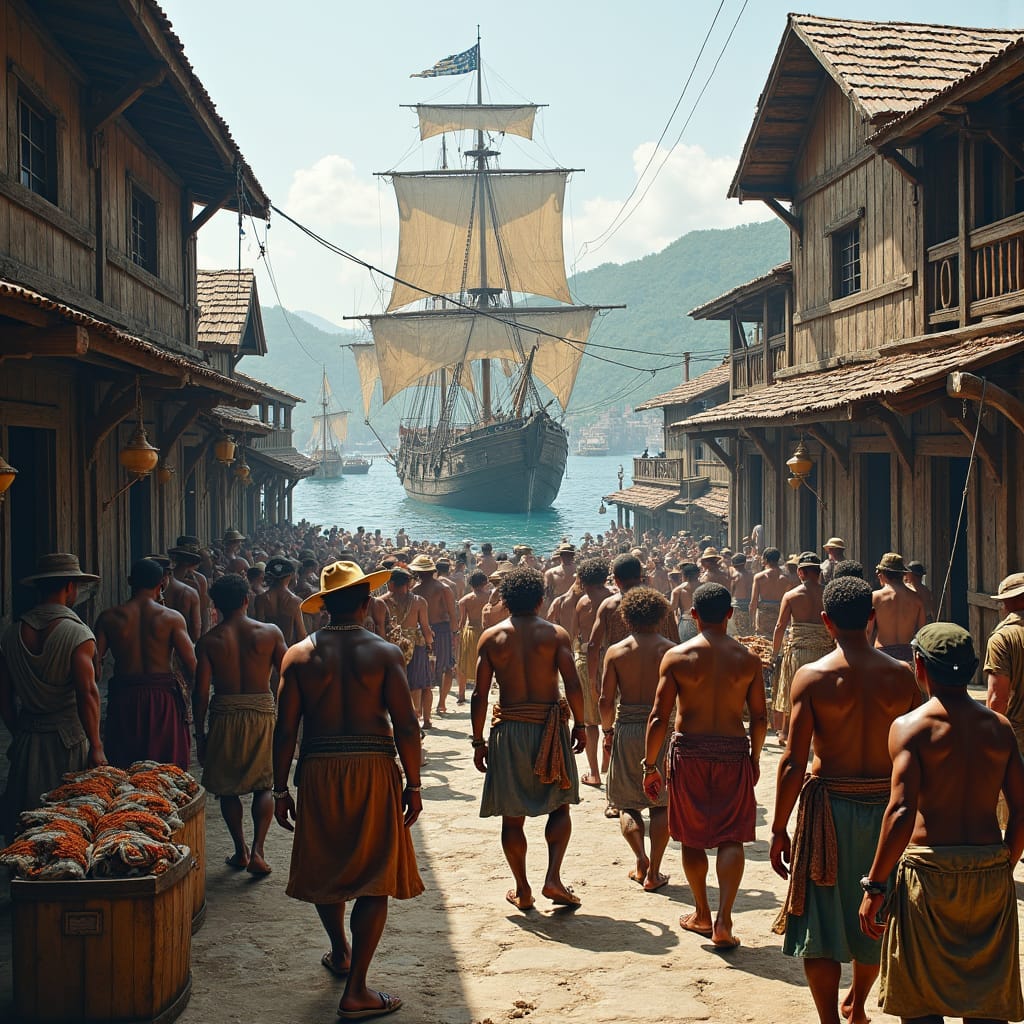
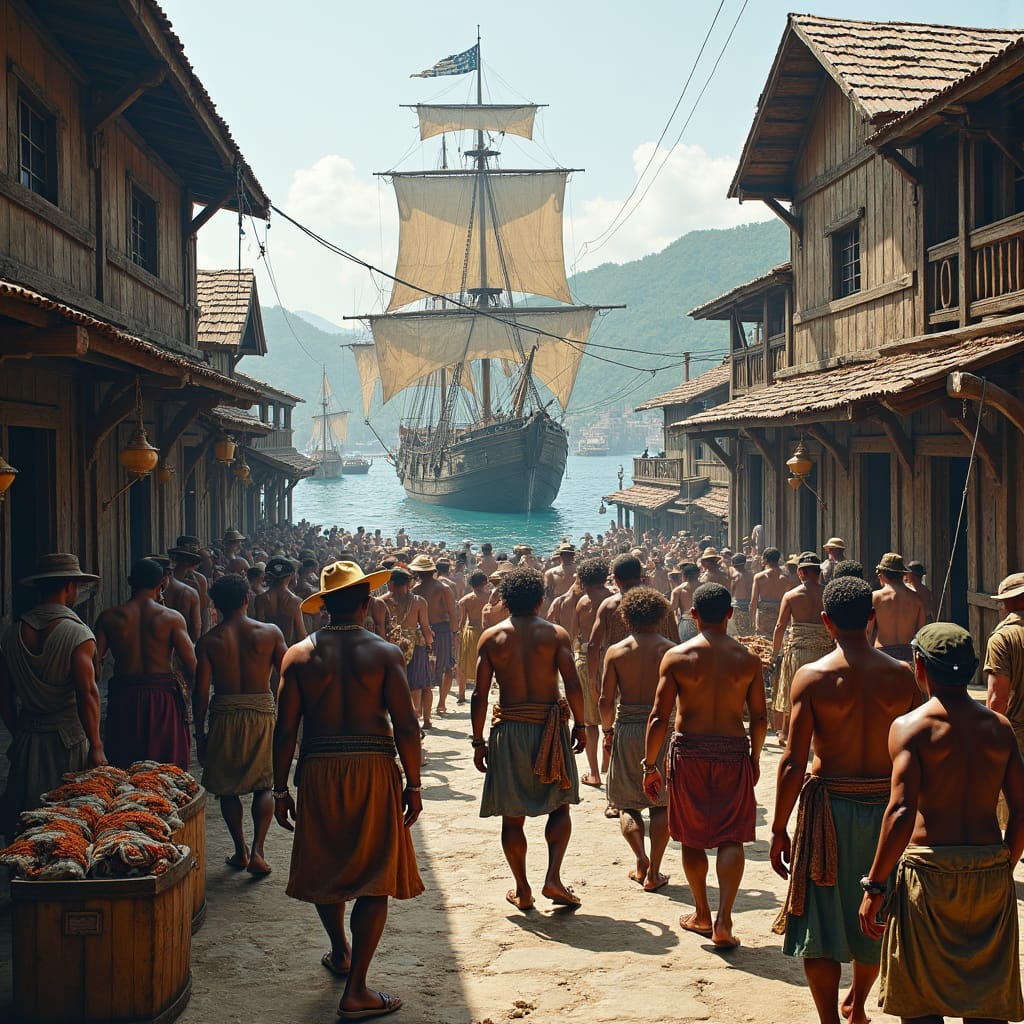
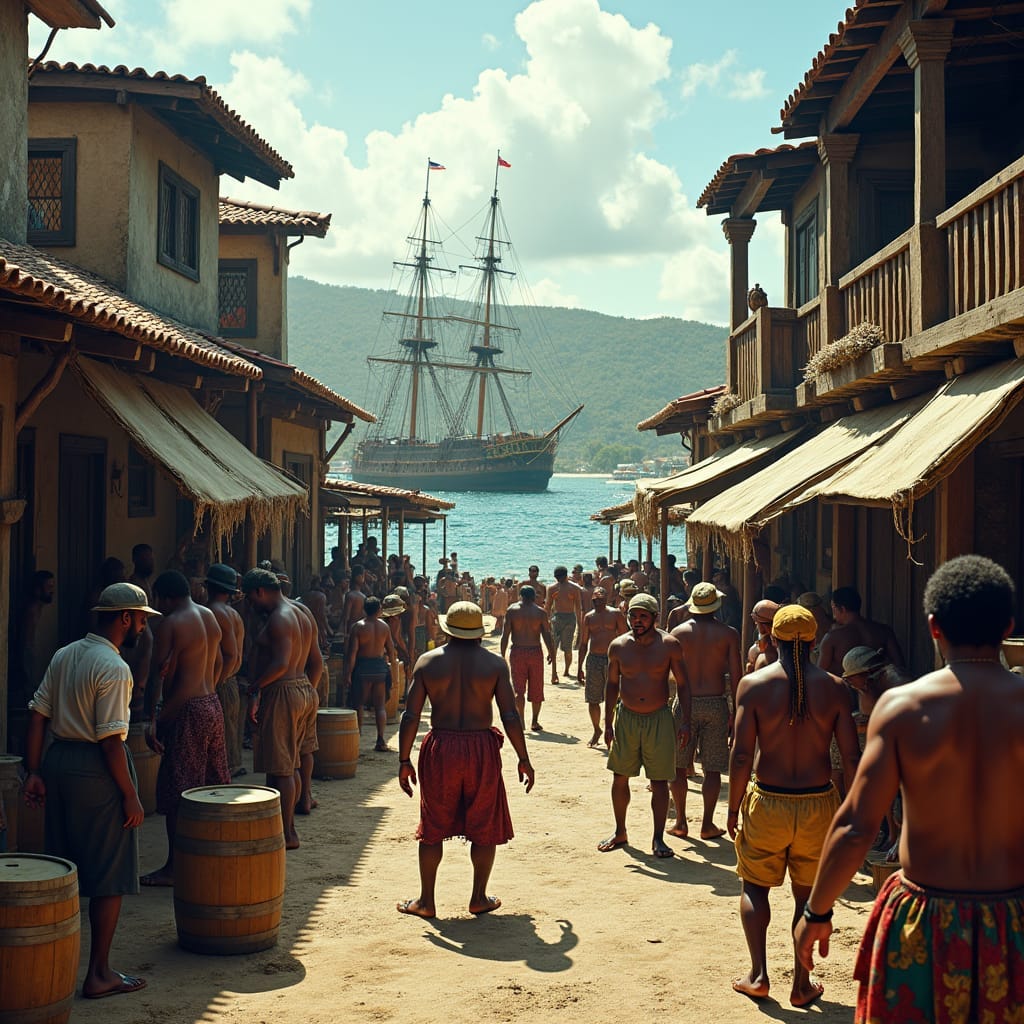
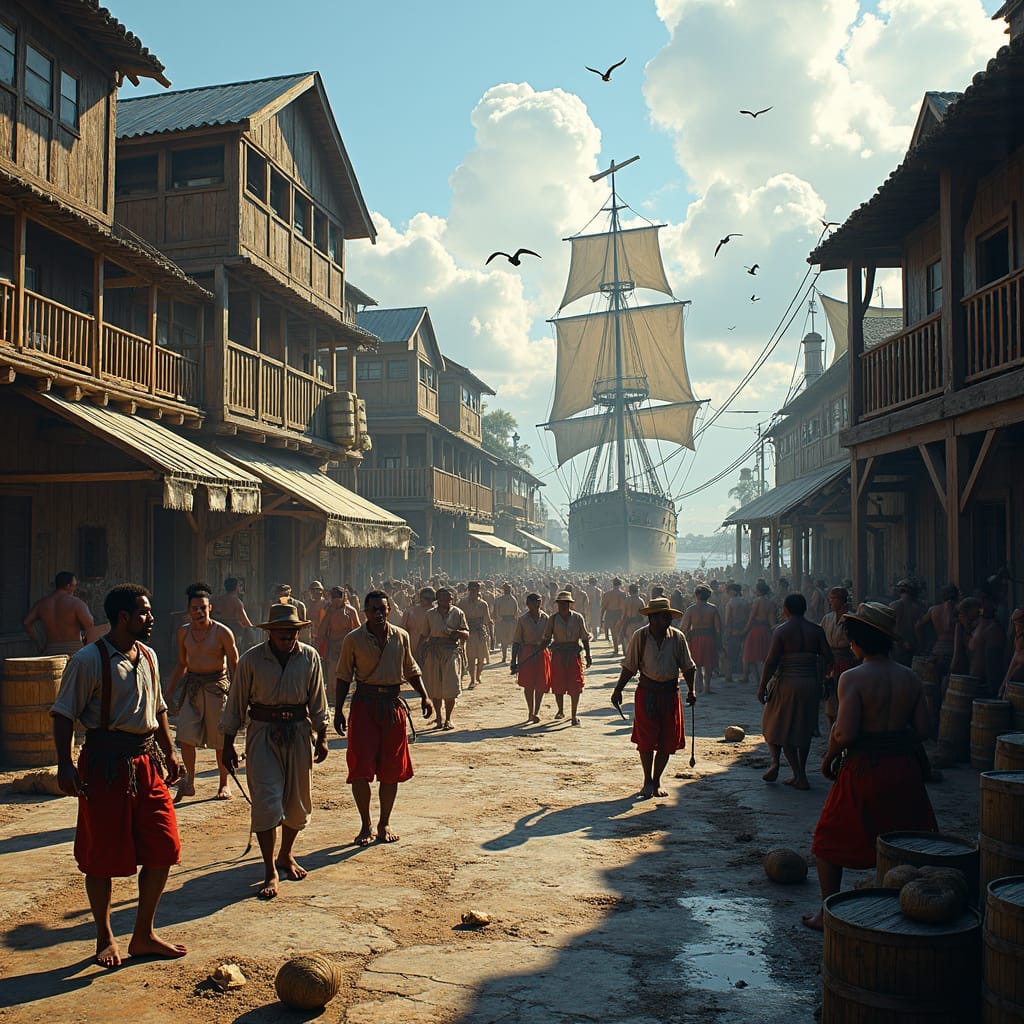
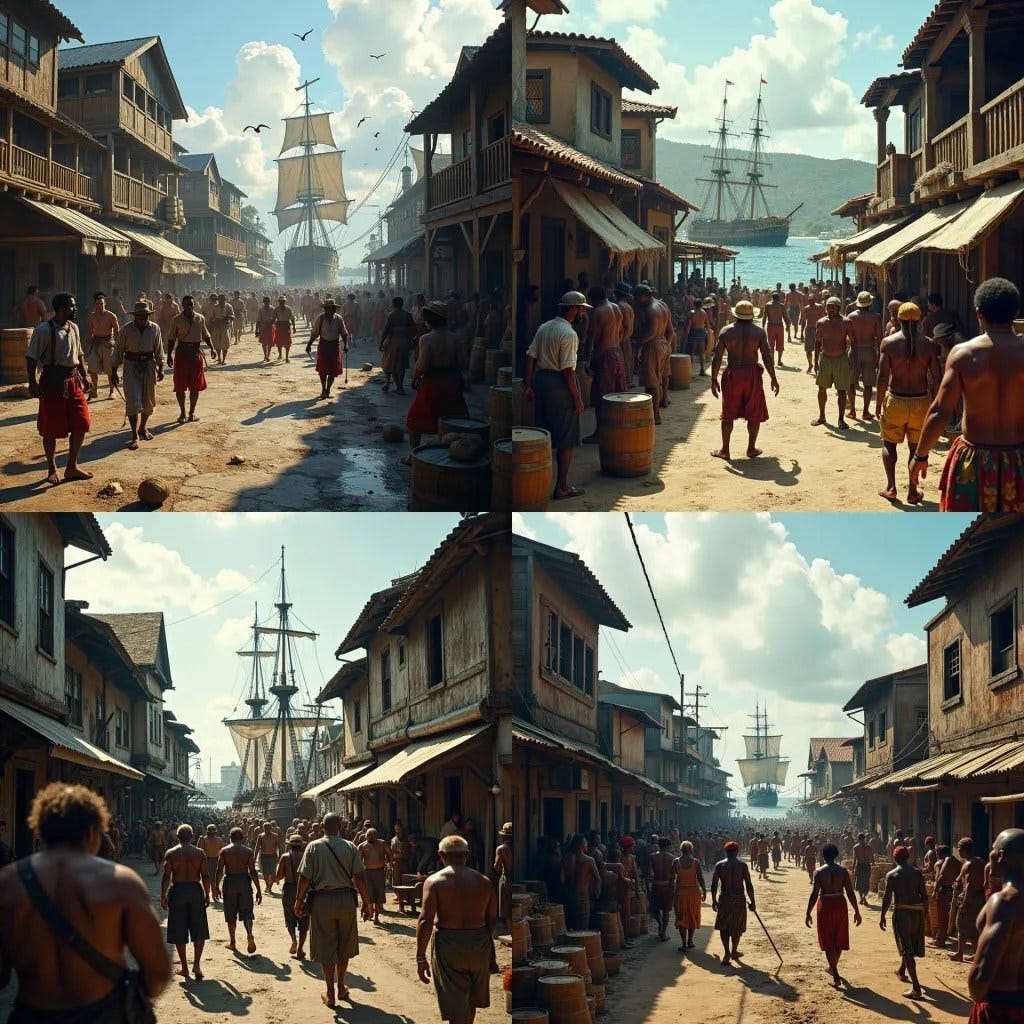
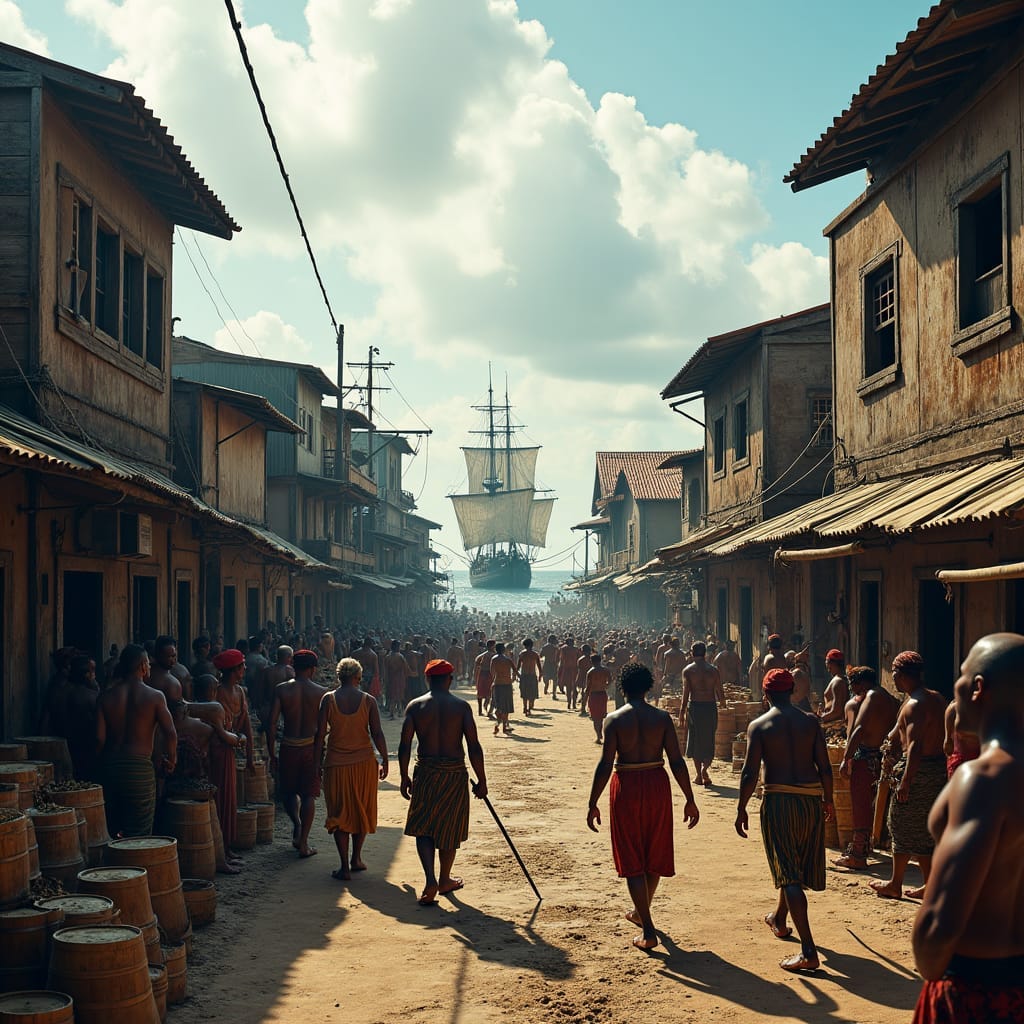
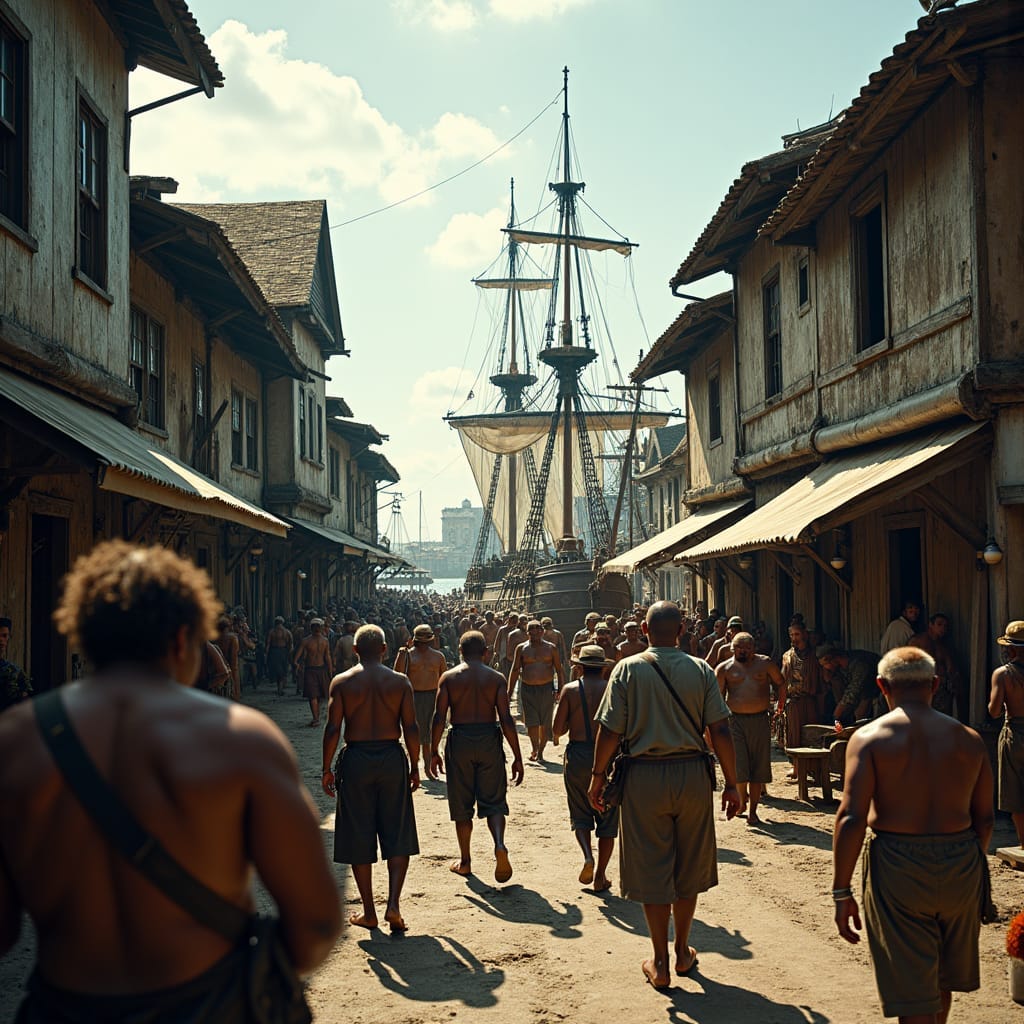
In the heart of 17th century Port Royal, Jamaica, a vibrant and tumultuous scene unfolds. Amidst the crowded streets, merchants in fine attire, naval officers with ornate uniforms, and laborers of diverse backgrounds in worn, earth-toned clothing hurry about, showcasing the city’s melting pot. The harbor teems with majestic wooden sailing ships, their intricate rigging and billowing sails a testament to the era’s maritime prowess. Busy dockworkers unload precious cargo: wooden barrels of amber rum, fragrant spice crates, and colorful textile bundles. Laborers, some bare-chested and others clad in loose-fitting shirts, struggle under heavy loads, their sweat-glistened faces set in determination, as overseers watch with a keen eye, whips, chains, and iron collars at the ready, casting a somber shadow over the bustling scene. The architecture is a rich tapestry of European-style wooden buildings, rustic taverns, and imposing warehouses, their weathered facades bearing witness to the city’s storied past. The atmosphere is electric, with activity bursting from every corner: merchants haggling over goods, sailors hauling cargo, and the clang of hammers ringing out from shipwrights at work. The setting sun casts a warm, golden glow, imbuing the scene with a sense of urgency and importance, as if the very fate of the city hangs in the balance. Inspired by the works of the Old Masters, such as J.M.W. Turner and Francisco de Goya, with a touch of the dramatic lighting of Caravaggio, and the vivid colors of a cinematic film still, this scene is a masterful blend of historical accuracy and artistic flair, captured with the gritty texture of 35mm film, the soft focus of a cinematic lens, and the evocative grain of a classic film stock.
In the heart of 17th century Port Royal, Jamaica, a vibrant and tumultuous scene unfolds.
In the heart of 17th century Port Royal, Jamaica, a vibrant and tumultuous scene unfolds.
In the heart of 17th century Port Royal, Jamaica, a vibrant and tumultuous scene unfolds.
In the heart of 17th century Port Royal, Jamaica, a vibrant and tumultuous scene unfolds.
In the heart of 17th century Port Royal, Jamaica, a vibrant and tumultuous scene unfolds.
An authentic, bustling scene of Port Royal, Jamaica, at its peak in the late 17th century. The streets are filled with merchants, naval officers, and laborers from diverse backgrounds. The harbor is busy with large wooden sailing ships anchored along the docks, unloading goods like barrels of rum, spices, and textiles. Some laborers are carrying heavy loads, while overseers stand nearby with tools like whips, chains, and iron collars, historically used to control forced labor. The architecture is a mix of European-style wooden buildings, taverns, and warehouses, showing Port Royal as a thriving, chaotic port city. The atmosphere is tense, with activity everywhere, from trade exchanges to tools stacked against buildings. The scene captures the intensity and historical significance of Port Royal as a center of commerce and a reflection of the harsh realities of labor during the period.