

Beneath the Surface: Why Many Jamaicans Struggle to Recognise Racism – And What It Means for How We Build Our Future

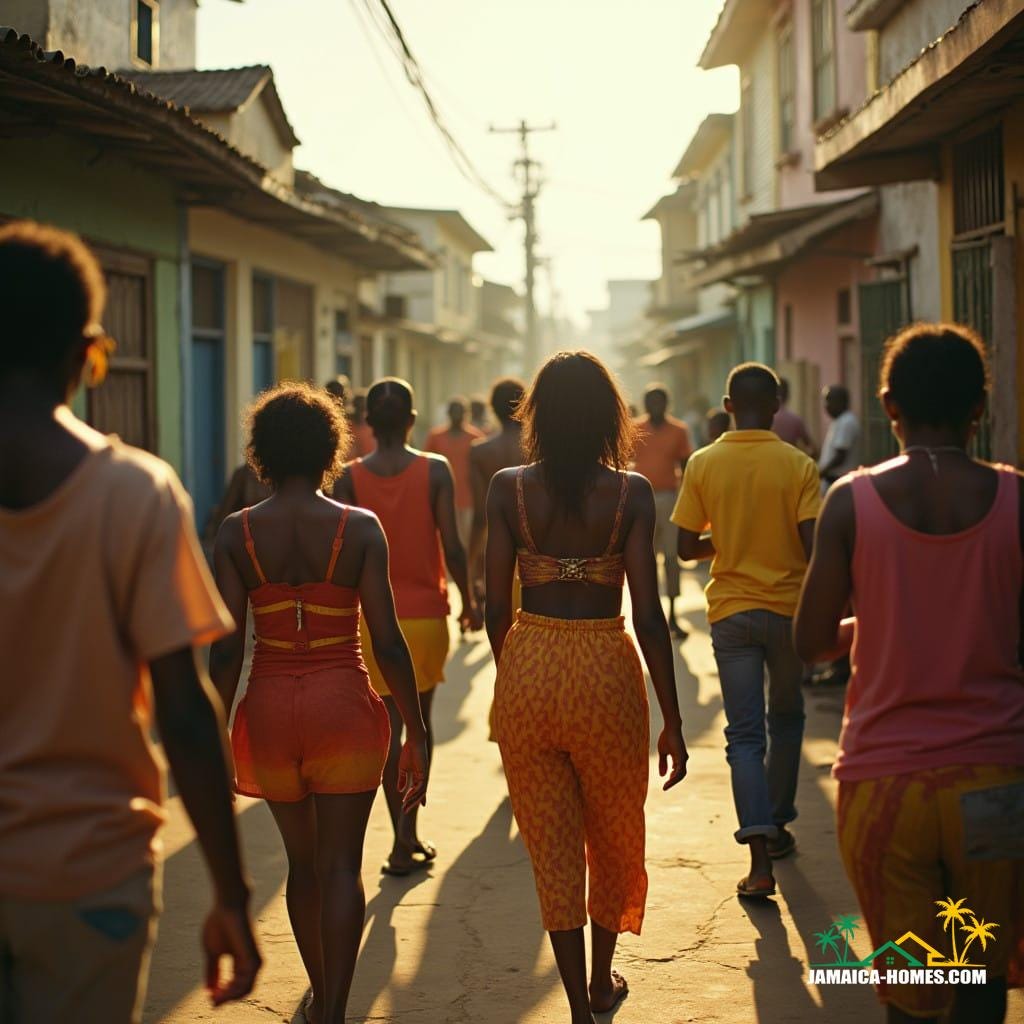
There’s a point, in any great design journey, where you have to stop admiring the surface and start interrogating the foundations. It’s easy to look at Jamaica—sun-soaked, defiant, bursting with colour—and believe the national motto, Out of Many One People, is a truth entirely realised. But if you’ve ever stood inside a half-finished home and seen hairline cracks zig-zagging across the plaster, you’ll know: appearances can deceive.
And so it is with race in Jamaica. We are a majority-Black nation, confident in our culture, proud of our history. Yet in the same way a home can be structurally unsound despite its fresh coat of paint, inequality can exist here—unseen by many—because we’ve been conditioned not to look for it.
The Majority Illusion
In a place where most people share the same skin tone, race is not the first difference we notice. It’s not the creak in the staircase or the damp in the corner—it’s simply not part of our immediate inspection. Inequality is more often explained as a matter of class, not colour. And because of that, many Jamaicans only truly understand racism when they step into another country and suddenly become “the minority” themselves.
The Motto and the Mask
Out of Many One People is a beautiful aspiration—like the architect’s render before the build. But as any seasoned builder knows, the render hides the wiring, the plumbing, the scaffolding that holds it all together. The promise of unity, while inspiring, can also be used to smooth over conversations that need to happen—about who gets to occupy the penthouse and who’s kept at the basement level.
Class, Colour, and the View from the Top
Walk through Jamaica’s most exclusive gated communities, and you’ll notice something. The higher the property value, the lighter the average skin tone of its residents. It’s not always deliberate—sometimes it’s legacy, sometimes it’s systemic bias—but it’s there. A sort of inherited elevation, where privilege stacks up like floors in a tower, leaving others staring at the skyline from street level.
Comfortable Denial
There’s a strange comfort in saying, “We have no racism here—only classism.” It’s like ignoring the subsidence because the kitchen has just been redone. That comfort allows society to avoid tearing up the floorboards and confronting the rot beneath. Yet for investors, planners, and developers, this denial carries a risk—because ignoring underlying issues can destabilise the market just as surely as ignoring poor foundations can bring down a house.
History in the Walls
Our education system, still leaning toward colonial ideals, subtly encourages detachment from African heritage. Standard English is prized, Patois often sidelined. These preferences, like inherited architectural styles, say a lot about who designed the original blueprint for the nation—and who they were building it for.
Racism as a Structure
Racism in Jamaica isn’t always an open wound—it’s often structural, woven into the very framework of our economy, politics, and land ownership. You can renovate the façade, but if the frame was designed to advantage some over others, the imbalance persists. This matters deeply for anyone investing in Jamaica, because you can’t truly regenerate a neighbourhood if the social scaffolding is flawed.
Art, Theatre, and Demolition Work
In construction, demolition is often the first step to building something better. In society, art and theatre often perform that demolition—breaking down old narratives, challenging invisible hierarchies. Groups like the Sistren Theatre Collective confront class, gender, and race, stripping back the plaster so we can see the brickwork beneath.
A Build Still in Progress
The truth is, Jamaica is still under construction—not in the physical sense, but in the moral and social one. Like any ambitious project, the final form depends on whether we’re willing to address the structural imbalances now, rather than wait until the cracks are too deep to ignore.
For property, for investment, for communities—acknowledging the realities of race in Jamaica isn’t just a moral exercise. It’s about building a nation where every floor, from the basement to the penthouse, is equally strong, equally valued, equally accessible.
Because in design, as in society, what you don’t see can be just as important as what you do.