
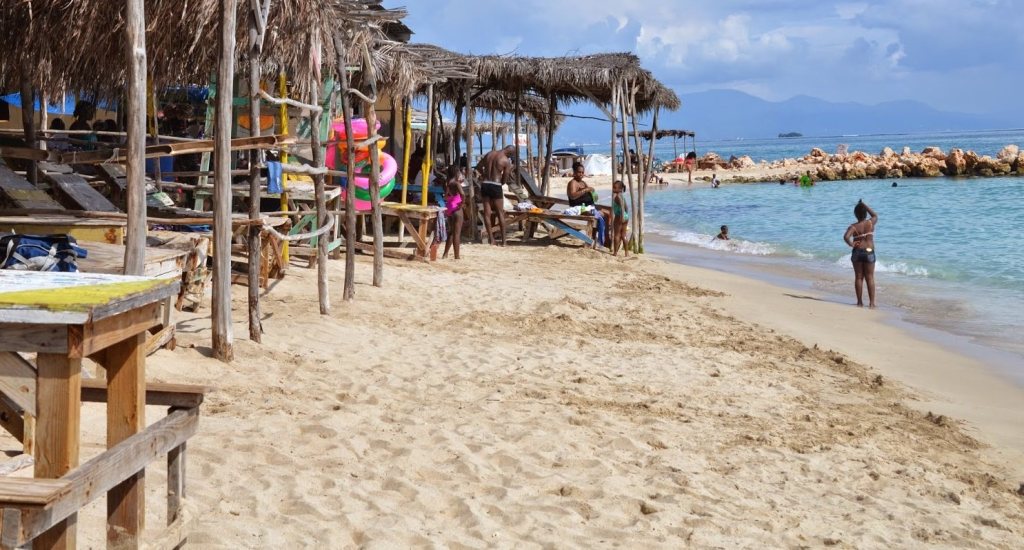
Hellshire is located in St. CatherineSt. Catherine, established in 1664, is one of Jamaica’s seven oldest parishes. Spanning 459.7 square miles, it became ... More ParishIn Jamaica, a parish is a unique blend of community, culture, and history. Each of the 14 parishes serves as a local gov... More, on the southern coast of JamaicaJamaica, with its vibrant culture and stunning landscapes, has a unique position in the global real estate market. The i... More, just west of PortmorePortmore, located approximately 24 km from Jamaica’s capital, Kingston, is a major urban settlement in St. Catherine. ... More and southeast of Spanish TownSpanish Town is a historic town located in St. Catherine Parish, Jamaica, and was once the island's capital during the S... More. Known today for its beaches, fried fish vendors, and proximity to KingstonKingston, the capital city of Jamaica, embodies a dynamic fusion of historical depth and contemporary vitality. Establis... More, Hellshire has a deep and fascinating history that weaves together maroonA Maroon is a member of a group of descendants of enslaved Africans who escaped from plantations in the Americas and est... More resistance, colonial developmentIn Jamaica, the term "development" can refer to various contexts, each with its unique focus and implications. Real esta... More, social shifts, and urban expansion.
Full Historical Overview of Hellshire, St. Catherine
1. Name Origin & Early Colonial Period (17th Century)
The name “Hellshire” is believed to have originated as a corrupted form of “Healthshire,” due to the area’s dry climate and sea air, which were once thought to have health benefits. Over time, pronunciation and local dialects morphed “Healthshire” into “Hellshire,” possibly influenced by its remote and rugged nature, which outsiders found inhospitable.
During the 17th century, Hellshire was largely unsettled and part of Jamaica’s early colonial frontier, lying on the edge of SpanishThe Spanish first arrived in Jamaica in 1494, marking a significant European influence that shaped the island’s early ... More Town—the capitalCapital refers to the financial resources, whether in the form of equity, debt, or other assets, that individuals or bus... More under both Spanish and early British rule.
2. Maroon HeritageHeritage, in the context of Jamaica, real estate, and the rest of the world, refers to the tangible and intangible asset... More and Rebellion (18th Century)
Hellshire played a quiet but strategic role during Jamaica’s Maroon Wars.
- The nearby Waltham Forest and Port RoyalPort Royal is a historic town located at the end of a narrow peninsula in southeastern Jamaica, known for its significan... More Mountains provided escape routes and hideouts for runaway enslaved Africans—some of whom joined the growing Maroon communities in the interiorThe interior of a building encompasses the spaces within its walls, floors, and ceilings, including all rooms, corridors... More, while others remained independent in hidden coastal settlements.
- Hellshire’s dense dry woodlands and hilly terrain made it ideal for guerrilla warfare and concealment from British patrols.
Although not a central maroon town like AccompongAccompong, located in the lush and verdant hills of St. Elizabeth, Jamaica, is a village steeped in history and rich cul... More or Moore TownMoore Town, nestled in the lush hills of Portland, stands as a testament to the resilience and ingenuity of the Maroons.... More, Hellshire’s geographic proximity to Spanish Town and its challenging landscape meant it was often surveilled for signs of maroon activity.
3. Post-Emancipation and Early 20th Century
After emancipation in 1838, the area remained relatively rural. Freed Africans and their descendants often lived in subsistence communities, farming and fishing off the landIn real estate, land is a foundational element that significantly impacts the value and potential of a property. It enco... More. Hellshire Beach and its coastline became known for salt fishing and later for lively informal markets.
The land itself remained semi-arid, limiting large-scale plantation agriculture. This allowed the area to maintain a distinct identity, not heavily developed like the fertile plains of St. Catherine or ClarendonClarendon is a parish situated in central Jamaica, known for its diverse landscape that includes fertile plains and roll... More.
4. Modern Development and Urban Expansion (1970s–1990s)
With the explosive growth of Portmore beginning in the 1960s and 1970s—initially as a dormitory town for Kingston—Hellshire began to shift from rusticIn the context of real estate, rustic embodies a style that captures the essence of countryside charm and natural beauty... More outpost to residential suburb.
- The Hellshire HillsHellshire Hills, located on the southern coast of Jamaica, is a rugged and ecologically rich area known for its limeston... More became a site for residential development, especially among the middle and upper-middle classes.
- The Hellshire Beach area became increasingly popular for weekend outings, famous for its fried fish and festivals (fried dough), served in informal huts by local vendors.
- In the 1990s, gated communities like Old Hellshire, New Hellshire, and Fort Clarence EstateIn Jamaican real estate, an estate refers to the total collection of assets and property owned by an individual, especia... More emerged.
5. Environmental Significance
Hellshire is home to one of Jamaica’s last remaining areas of dry limestone forest, which is biologically unique.
- The Hellshire Hills, protected under the PortlandPortland is a parish located on Jamaica's northeastern coast, renowned for its lush rainforests, stunning waterfalls, an... More Bight Protected Area, contain rare and endemic species, including the JamaicanThe term "Jamaican" encompasses the citizens of Jamaica and their descendants in the Jamaican diaspora, representing a d... More iguana, once thought extinct and now being revived through conservation efforts.
- Illegal mining, deforestation, and unregulated development have posed ongoing threats.
Conservation efforts have intensified in recent years, led by local and international NGOs like the Jamaica Environment Trust (JET) and the University of the West IndiesThe University of the West Indies (UWI) is a renowned higher education institution serving the Caribbean region, includi... More.
6. Cultural Significance
Hellshire today is a symbol of Jamaican beach life—unpolished, authentic, and vibrant.
- On weekends, families and tourists gather at the beach to eat fresh seafood, swim, and lime (relax).
- It’s especially renowned for its whole fried snapper served with bammyBammy is a traditional Jamaican flat, round bread made from grated cassava, soaked in coconut milk, and fried to a crisp... More, a traditional cassavaCassava is a starchy root vegetable widely grown and consumed in Jamaica and other parts of the Caribbean. It is a stapl... More flatbread.
- It remains a mix of informal economy and formal real estate—a paradox that reflects much of Jamaican coastal development.
Summary
- Parish: St. Catherine
- Nearby Areas: Portmore, Spanish Town, Fort Clarence, Greater PortmoreGreater Portmore, a vast suburban community located in St. Catherine, Jamaica, was developed as a large-scale housing so... More
- Key Themes: Maroon resistance, post-emancipation subsistence life, ecological importance, informal tourismTourism in Jamaica refers to the industry focused on attracting visitors to the island, who come to experience its natur... More economy, urban expansion
- Modern Identity: Beachside retreat with cultural significance and ecological value
Did You Know?

The Jamaican iguana, once believed to be extinct for over 50 years, was rediscovered in the Hellshire Hills in 1990. Its survival is one of the most remarkable comeback stories in CaribbeanThe Caribbean is a vast region made up of over 700 islands, islets, reefs, and cays. Some of the most well-known islands... More conservation history.
Discover more from Jamaica Homes
Subscribe to get the latest posts sent to your email.

Join The Discussion