
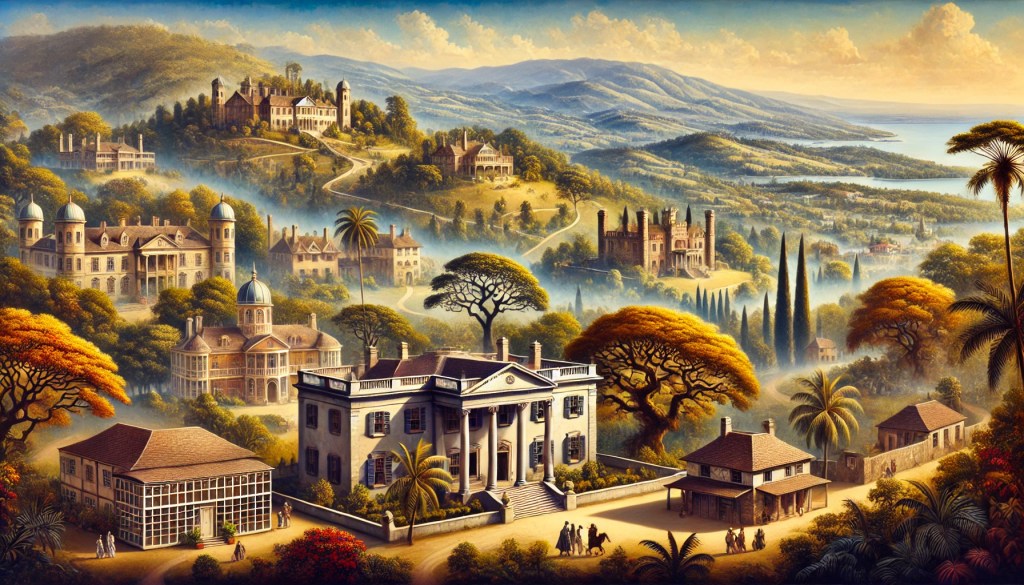
The Great House was the central hub of authority on a plantation estate, acting as both the residence of the estate owner and the focal point for overseeing the operations of the property. These houses were typically the homes of planters, who were often responsible for the day-to-day management of the estate, or attorneys acting on behalf of absentee owners, who may have lived far away, often in Europe. The design, size, and grandeur of the Great House were a direct reflection of the estate’s profitability and the wealth of the owner. Larger, more prosperous estates boasted more impressive houses, showcasing the owner’s social standing and success in the sugar or coffee industries.
Great Houses were usually built as two-story structures with a strong foundation made of brick, cut stone, or mortar to support the upper levels. The upper floors were typically constructed with wooden materials, often sourced locally, which allowed for ventilation and a cooling effect in the tropical climate. The ground floor, often used for practical purposes like storage, workshops, or servant quarters, provided the necessary stability for the building.
Variations of the Great House design were also common across different estates. Some estates featured one-story houses made entirely of wood, cut stone, or a combination of materials such as Spanish walling (a type of masonry used in colonial Jamaica) or wattle and daub (a technique using interwoven branches and clay to create walls). These more modest homes were often seen on smaller estates or in areas where the availability of materials dictated a simpler construction.
Larger, two-story Great Houses could be made of brick, wood, or cut stone, reflecting the owner’s wealth and the scale of the estate. The design of the house was often influenced by European architectural styles, particularly Georgian and Palladian designs, but adapted to the local climate and materials. The verandas or galleries surrounding these homes provided shade and a cool breeze, important features in the hot and humid Caribbean environment. Inside, the layout was typically grand, with large rooms, high ceilings, and fine furniture, showcasing the planter’s wealth and taste.
These Great Houses were not only residences but also served as symbols of power and control over the enslaved people working the land. They represented the pinnacle of colonial authority, often located on elevated land to give a commanding view of the surrounding estate. Over time, many of these houses became part of the historical fabric of the island, standing as testaments to the era of plantation agriculture in Jamaica and the Caribbean.