


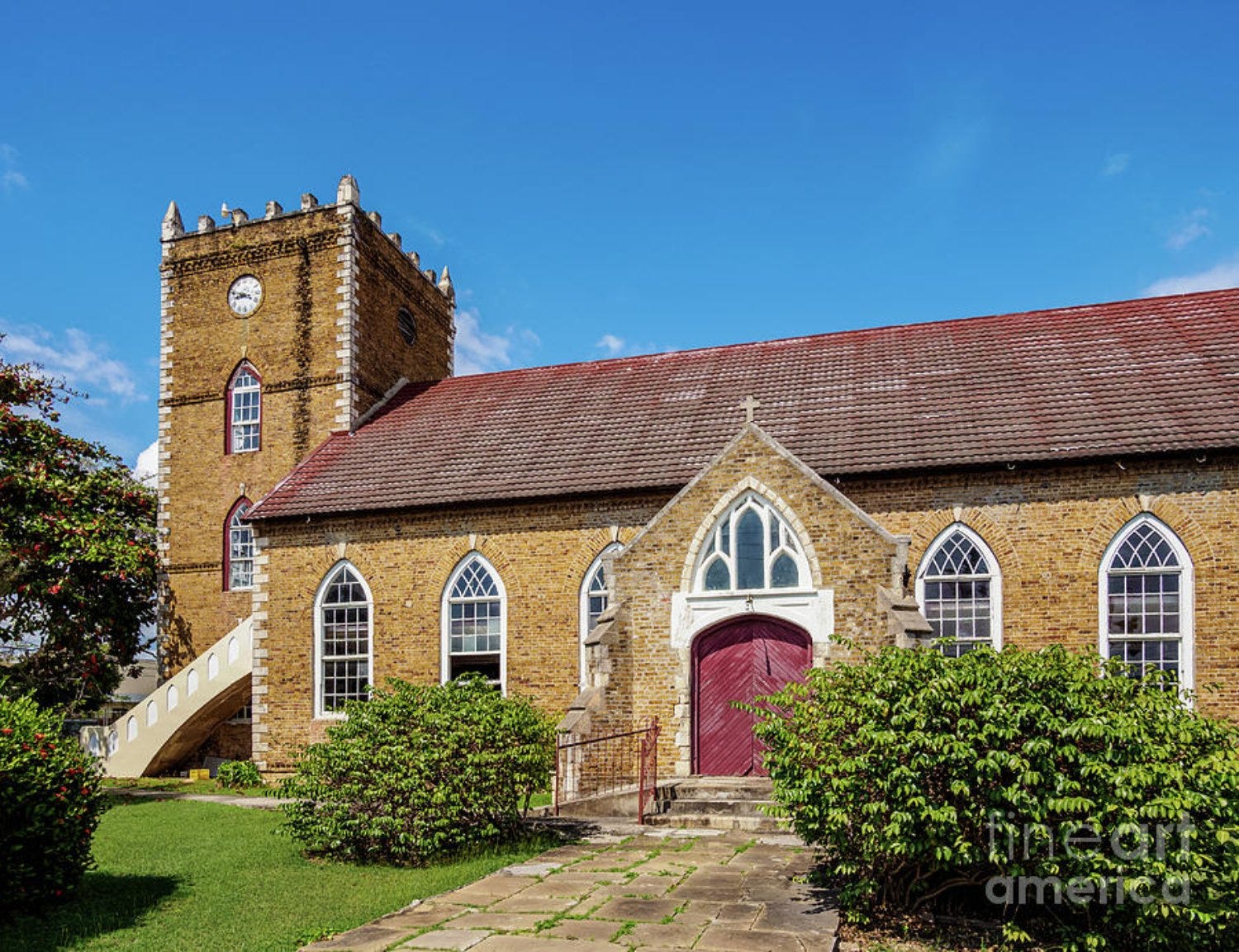
St. Elizabeth Parish Church, known as St. John the Evangelist, stands as a historical and architectural landmark in Jamaica, with origins tracing back to around 1700. The original structure was replaced over time, and while the date of its reconstruction remains uncertain, a 1837 inscription marks the laying of the tower foundation. It is believed that the main body of the church was built earlier, potentially around 1774. Located in the parish of St. Elizabeth, this church is constructed from yellow brick with limestone trim, reflecting a combination of Gothic and classical architectural styles, which is typical of many colonial buildings in the region. The design draws inspiration from medieval English parish churches, evident in its structural elements, such as the tower that features quoins and is crowned with battlements and corner pinnacles. St. Elizabeth Parish Church is not only a religious site but also an important historical building that reflects the evolving architectural practices in Jamaica during the colonial period. The church’s design, blending gothic and classical influences, demonstrates the fusion of European styles with the local context. As a building that has stood the test of time, it contributes to the broader narrative of Jamaica’s cultural and architectural history, serving both as a place of worship and a symbol of the island’s colonial legacy. In the context of real estate, the church holds significance as a heritage property, drawing attention to the value of preserving historical structures in Jamaica. The church, with its rich history and architectural features, plays a role in shaping the local identity and contributes to the community’s sense of place, while also attracting visitors and scholars interested in the intersection of religious and architectural history.