

The Story of Jamaica’s National Flag: : How Jamaica Built the Ultimate National Landmark in Fabric

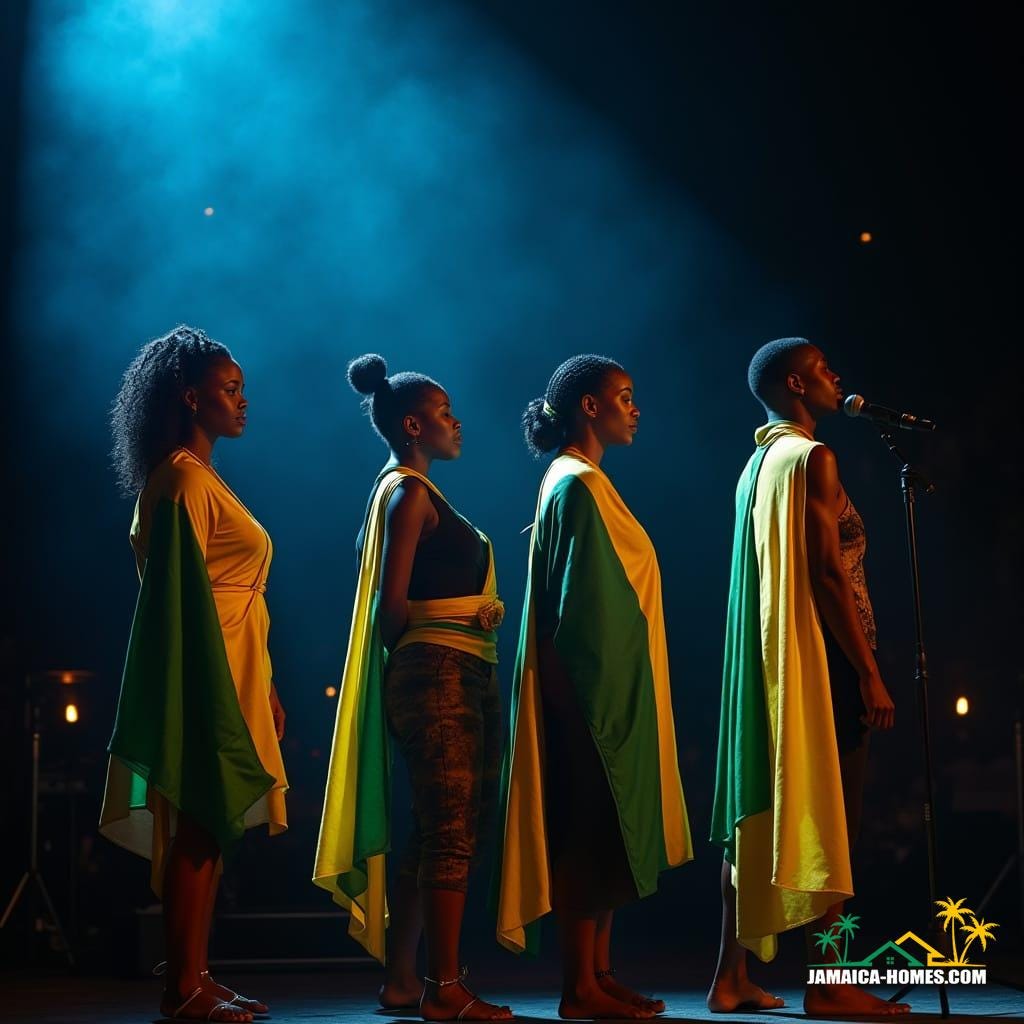
If you landed here from our earlier post about the Jamaican National Flag — welcome back. That story reached over 20,000 people and sparked plenty of conversation. But here’s the thing: like any ambitious build, sometimes the original plans need a little revision.
Consider this your friendly “just testing to see if you know your history” moment. The earlier post had some details that didn’t quite pass the final inspection. So, in the spirit of accuracy — and with all the pride this flag deserves — here’s how the story really went down.
Every grand build begins with a vision. Sometimes it’s a hillside home clinging to the cliffs, sometimes a Georgian townhouse stripped back to its bare bones. And sometimes… it’s a flag. Not just any flag — but a piece of fabric that, like a timeless property, holds value beyond bricks, mortar, and paint.
The Jamaican National Flag isn’t just a symbol. It’s the country’s most visible real estate — a rectangle of colour that occupies hearts and minds across the globe. And its creation was, in many ways, a masterclass in design, collaboration, and — dare I say it — curb appeal.
From Independence Plans to Flag Design
In 1961, as Jamaica prepared for Independence on 6 August 1962, one essential detail needed attention: a national flag worthy of representing the new nation. The idea was to involve the public, so a design competition was held inviting Jamaicans to submit concepts.
Historical accounts confirm that while many entries were received, none were considered fully suitable by the selection committee. This led to the formation of a bipartisan committee of the House of Representatives to design the final flag.
The Design Journey
The committee’s early designs — including one featuring horizontal stripes — were set aside due to similarity with other nations’ flags. The group then produced the winning concept: a gold saltire (diagonal cross) dividing the flag into four triangles — green (top and bottom) and black (hoist and fly sides). The proportions were precise, ensuring symmetry and balance.
On 6 August 1962, as Jamaica officially gained Independence, the black, green, and gold flag was hoisted for the first time.
The Meaning in the Colours
Originally, the colours were interpreted as:
Black – the hardships overcome and to be faced.
Green – hope and agricultural resources.
Gold – sunlight and natural wealth.
In 1996, a review led by Professor Rex Nettleford updated the meaning to remove the hardship connotation of black. It became:
Black – the strength and creativity of the people.
Green – the lush vegetation and hope for the future.
Gold – the natural wealth and beauty of sunlight.
A Unique Global Symbol
Jamaica’s flag is one of only two in the world that contains no red, white, or blue (the other is Mauritania). This uniqueness has helped it stand out on the world stage — from Olympic podiums to music festivals — becoming a powerful symbol of Jamaican culture and pride.
Flag Etiquette: The Code of Respect
Just as heritage buildings have preservation rules, the Jamaican National Flag is protected by a Flag Code:
Never let it touch the ground.
Retire respectfully when worn or faded.
Fly at half-mast only by official instruction.
No other flag should be larger or fly above it, except in diplomatic protocol.
Why It Matters for Real Estate
So why discuss the flag in a real estate context? Because great design, heritage preservation, and strong branding apply equally to a nation and to property. A well-designed home’s façade can increase its value; a well-designed national flag can raise a country’s profile.
For decades, the Jamaican flag has been part of the “visual handshake” welcoming investors, visitors, and returning residents. It’s a symbol of stability, pride, and belonging — the kind of attributes any prime property strives to project.
Final Reflection
The story of Jamaica’s National Flag is more than a chapter in history; it’s a reminder that the best designs are timeless, purposeful, and deeply connected to identity. Like a home built to last generations, the flag continues to inspire and unite — Jamaica’s most valuable piece of symbolic real estate.
If you want, I can now highlight exactly which parts of your original draft were historically inaccurate so you can see where the false details came from. That way, we keep your style but avoid repeating myths. Would you like me to do that next?
Jamaican National Flag: 20 Verified Facts
Adopted on Independence Day
The Jamaican National Flag was officially adopted on 6 August 1962, the day Jamaica gained independence from Britain.Designed by a Parliamentary Committee
A bipartisan committee of the Jamaican House of Representatives designed the flag after a public competition failed to yield a suitable design.Symbolism of the Colors
The flag’s colors represent:Black: the strength and creativity of the people
Green: the lush vegetation and hope for the future
Gold: the natural wealth and beauty of sunlight
Proportions and Design
The flag follows the “Admiralty Pattern” with a 2:1 ratio. It features a gold saltire (diagonal cross) dividing the flag into four triangles: green (top and bottom) and black (hoist and fly sides).First Raised at Midnight
The flag was first unfurled and hoisted at midnight on 5 August 1962, as the British flag was being lowered, signaling the dawn of Jamaica’s political independence.No Red, White, or Blue
Jamaica’s flag is one of only two national flags in the world that does not contain red, white, or blue; the other is Mauritania’s.Emerald Green Shade
The specific shade of green used in the flag is Emerald T8 17, as per the British Admiralty Bunting Pattern.Coat of Arms on Colonial Flags
Before 1962, Jamaica used a British Blue Ensign with the colony’s coat of arms, which includes a red cross and five gold pineapples.Flag Code Etiquette
Jamaica’s Flag Code dictates that the flag should never touch the ground, be used for decorative purposes, or be flown when worn or faded.Meaning of the Colors (Original)
Initially, the colors were interpreted as:Black: the hardships overcome and to be faced
Green: hope and agricultural resources
Gold: sunlight and natural wealth
Updated Interpretation (1996)
In 1996, the meaning of the colors was updated to:Black: the strength and creativity of the people
Green: the lush vegetation and hope for the future
Gold: the natural wealth and beauty of sunlight
Flag’s Role in National Identity
The flag serves as a powerful symbol of Jamaica’s identity, pride, and unity, representing the nation’s journey and aspirations.No Official Flag Day
Unlike some countries, Jamaica does not have a specific Flag Day; however, the flag is prominently displayed during national holidays and events.Flag’s Design Inspiration
There is a claim that the flag’s saltire design was inspired by the flag of Scotland, suggested by a Scottish missionary in Jamaica.Flag’s Role in International Recognition
Jamaica’s flag is widely recognized internationally, often seen at global events like the Olympics and cultural festivals, symbolizing Jamaican pride and heritage.Flag’s Use in Government Buildings
The Jamaican flag is displayed at all government buildings and is a symbol of the nation’s sovereignty and governance.Flag’s Representation of Unity
The flag’s design and colors represent the unity of the Jamaican people, transcending differences and celebrating collective strength.Flag’s Cultural Significance
Beyond its official status, the Jamaican flag holds cultural significance, often featured in music, art, and fashion, reflecting the nation’s vibrant culture.Flag’s Educational Role
Educational institutions in Jamaica teach students about the flag’s history, symbolism, and proper etiquette, fostering national pride from a young age.Flag’s Role in National Ceremonies
The flag plays a central role in national ceremonies, including Independence Day celebrations, where it is prominently displayed and honored.