

 by
by 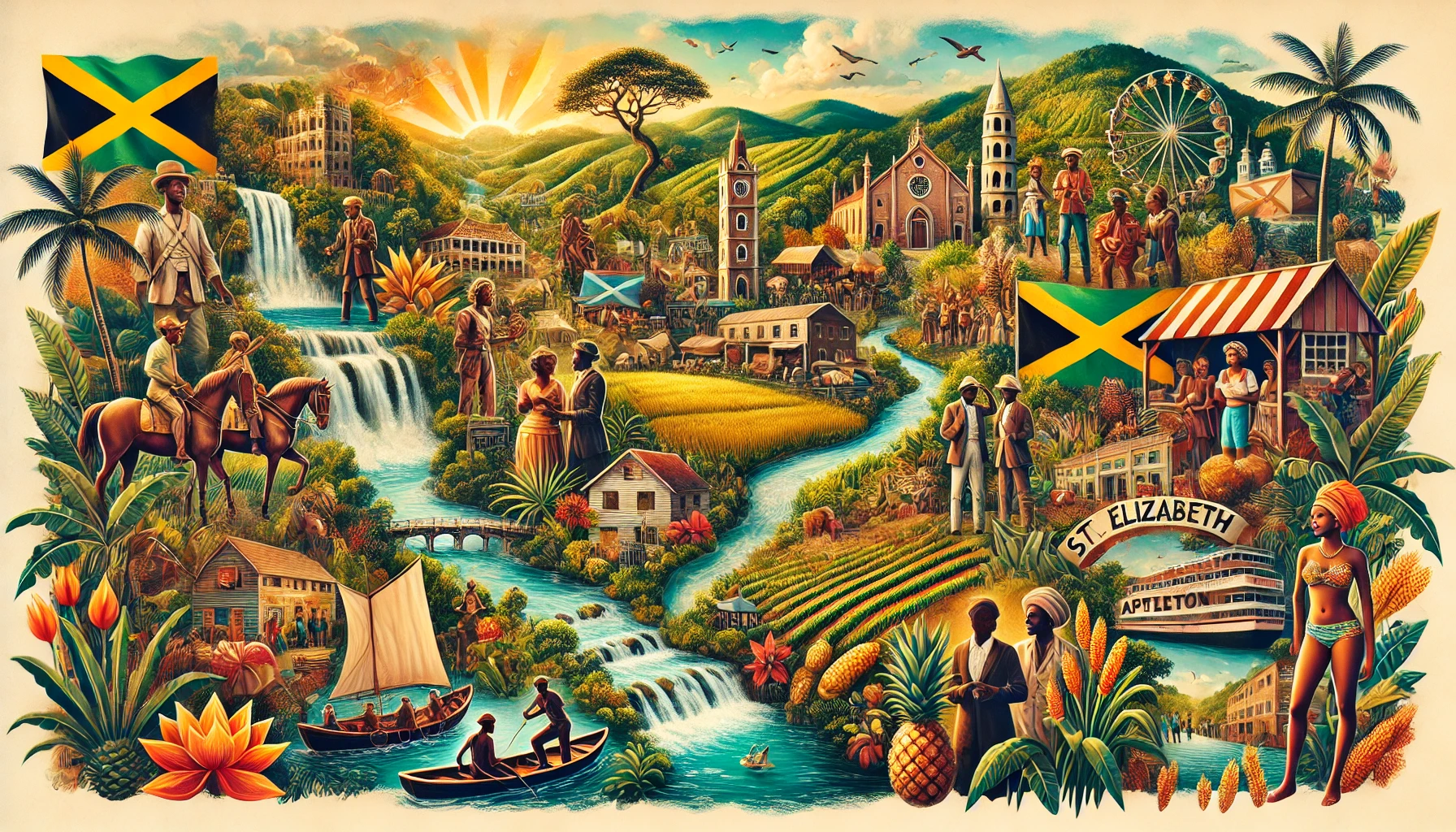
The History of St Elizabeth ParishIn Jamaica, a parish is a unique blend of community, culture, and history. Each of the 14 parishes serves as a local gov...
Introduction
St Elizabeth, one of Jamaica’s oldest parishes, was established in 1671 as part of the second group of parishes created after English colonization. Initially vast, the parish included much of western JamaicaJamaica, with its vibrant culture and stunning landscapes, has a unique position in the global real estate market. The i..., but boundary adjustments over the years reduced it to its current size of 1,212.4 square kilometers. Today, it is Jamaica’s second-largest parish and is situated in the southwest, bordered by WestmorelandWestmoreland is a parish located on Jamaica's southwestern coast, known for its scenic beauty and vibrant communities. T..., ManchesterManchester is a parish located in central Jamaica, known for its cooler climate and picturesque landscapes. Renowned for..., St James, TrelawnyTrelawny is a Parish located on Jamaica ’s north coast, renowned for its rich history, agricultural heritage, and natu..., and the CaribbeanThe Caribbean is a vast region made up of over 700 islands, islets, reefs, and cays. Some of the most well-known islands... Sea.
Known for its rich history, St Elizabeth boasts 37 recorded TainoThe Taino were the indigenous people of Jamaica and much of the Caribbean, known for their advanced agricultural techniq... sites, reflecting the legacyLegacy, in the context of Jamaica, real estate, and the broader world, represents the enduring impact of past actions, a... of Jamaica’s first inhabitants. The parish’s diverse geography, including mountain ranges like the Santa CruzSanta Cruz, a bustling town in St. Elizabeth parish, Jamaica, is nestled at the foothills of the Santa Cruz Mountains, a... Mountains, fertile plains, and the Black RiverBlack River is a historic town located in the parish of Saint Elizabeth on Jamaica’s southwestern coast, known for its..., shaped its developmentIn Jamaica, the term "development" can refer to various contexts, each with its unique focus and implications. Real esta... as Jamaica’s “breadbasket parish.”
Taino HeritageHeritage, in the context of Jamaica, real estate, and the rest of the world, refers to the tangible and intangible asset...
St Elizabeth’s Taino heritage is significant, with 18 midden sites and 19 cave sites recorded. Taino middens reveal remnants of their daily lives, including pottery, tools, and animal bones, offering insights into their material culture. Important midden sites include:
- Alligator PondAlligator Pond, a coastal village in southern Jamaica, is known for its fishing industry, seafood culture, and scenic be...: Known for its Redware pottery featuring turtle motifs, reflecting the Tainos’ reliance on coastal living.
- Black River: A site with unique artefacts from the White Marl culture, including human skeletal remains.
- Fort CharlesFort Charles, located in the historic town of Port Royal, Jamaica, stands as a striking testament to the island’s colo...: A midden with an exposed shallow grave containing ceremonial items.
Taino caves, used for burials and rituals, include Duff HouseA house serves as a fundamental structure designed for residential living, providing shelter and a place for individuals... and Warminster caves, known for petroglyphs depicting human faces and geometric designs. Burial caves such as Baalbec and Bull Savannah contain skeletal remains and artefacts like pottery, showcasing Taino burial customs.
SpanishThe Spanish first arrived in Jamaica in 1494, marking a significant European influence that shaped the island’s early ... Influence (1494–1655)
The Spaniards arrived in 1494 during Columbus’ second voyage. Initially welcomed by the Tainos, the Spanish eventually established settlements, including cattle ranches (“hatos”) like Hato Pereda (Pedro Plains) and Hato Caobana (Black River), which were integral to their economy. St Elizabeth’s abundant plains supported cattle rearing, and the parish became a center for producing beef, hides, and tallow for Spanish fleets.
Other economic activities included cotton farming, cassavaCassava is a starchy root vegetable widely grown and consumed in Jamaica and other parts of the Caribbean. It is a stapl... cultivation, and wood exports. The Spanish introduced mahogany and ebony to Europe, contributing to shipbuilding. Cocoa cultivation led to place names like Chocolata Bay. However, the Spanish neglected Jamaica as they focused on wealthier coloniesThe establishment of colonies in Jamaica by European powers, beginning with the Spanish in the early 16th century and fo..., leaving settlers to rely on smuggling to sustain their livelihoods.
The Spaniards’ legacy persists in place names such as Pedro Plains, Santa Cruz, and Parrotee Bay, though many Spanish terms were anglicized after English colonization. The Spanish also contributed to the parish’s cattle-rearing traditions and infrastructure.
Resistance to English Invasion
The English invasion in 1655 marked the end of Spanish rule. Governor Ysassi led a guerrilla resistance based in St Elizabeth’s Santa Cruz Mountains. The decisive Battle of Caobana (Black River) in 1655 saw heavy losses for the Spaniards. Despite reinforcements from Cuba, Ysassi’s efforts failed, and by 1660, Spanish resistance in Jamaica had ended.
English Settlement (1664–1814)
Under English rule, St Elizabeth became one of Jamaica’s initial 12 parishes by 1670. It was named after Lady Elizabeth Modyford, wife of the then-governor. Early English settlements included Surinam Quarters, established in 1675 by refugees from Surinam, and areas settled by Scots after the failed Darien expedition in Panama.
Boundary changes shaped the parish’s modern size:
- 1703: Westmoreland was carved out of St Elizabeth.
- 1739: Parts of the Carpenter’s Mountains were transferred to Vere.
- 1814: The creation of Manchester reduced St Elizabeth further.
Key Features of St Elizabeth
- Agriculture: Southern plains like Pedro Plains supported livestock rearing, while fertile northern areas along the Black and Y.S. Rivers fostered sugar cane and coffee cultivation.
- Geography: The Santa Cruz, Nassau, and Lacovia Mountains offer varied landscapes, influencing settlement and agricultural patterns.
- Ethnic Diversity: The parish’s populationPopulation refers to the total number of people inhabiting a defined geographic area and encompasses their demographic, ... reflects a blend of Taino, Spanish, AfricanAfricans, in the context of Jamaica, real estate, and the broader world, represent individuals of African descent or tho..., and EuropeanEuropeans, in the context of Jamaica, real estate, and the global market, refer to individuals from the continent of Eur... influences, creating a rich cultural heritage.
Concluding Thoughts
St Elizabeth’s history is a tapestry of Taino ingenuity, Spanish enterprise, and English resilience. Its role as Jamaica’s breadbasket parish, combined with its diverse cultural and historical legacy, makes it a cornerstone of Jamaica’s heritage.
