
 by
by 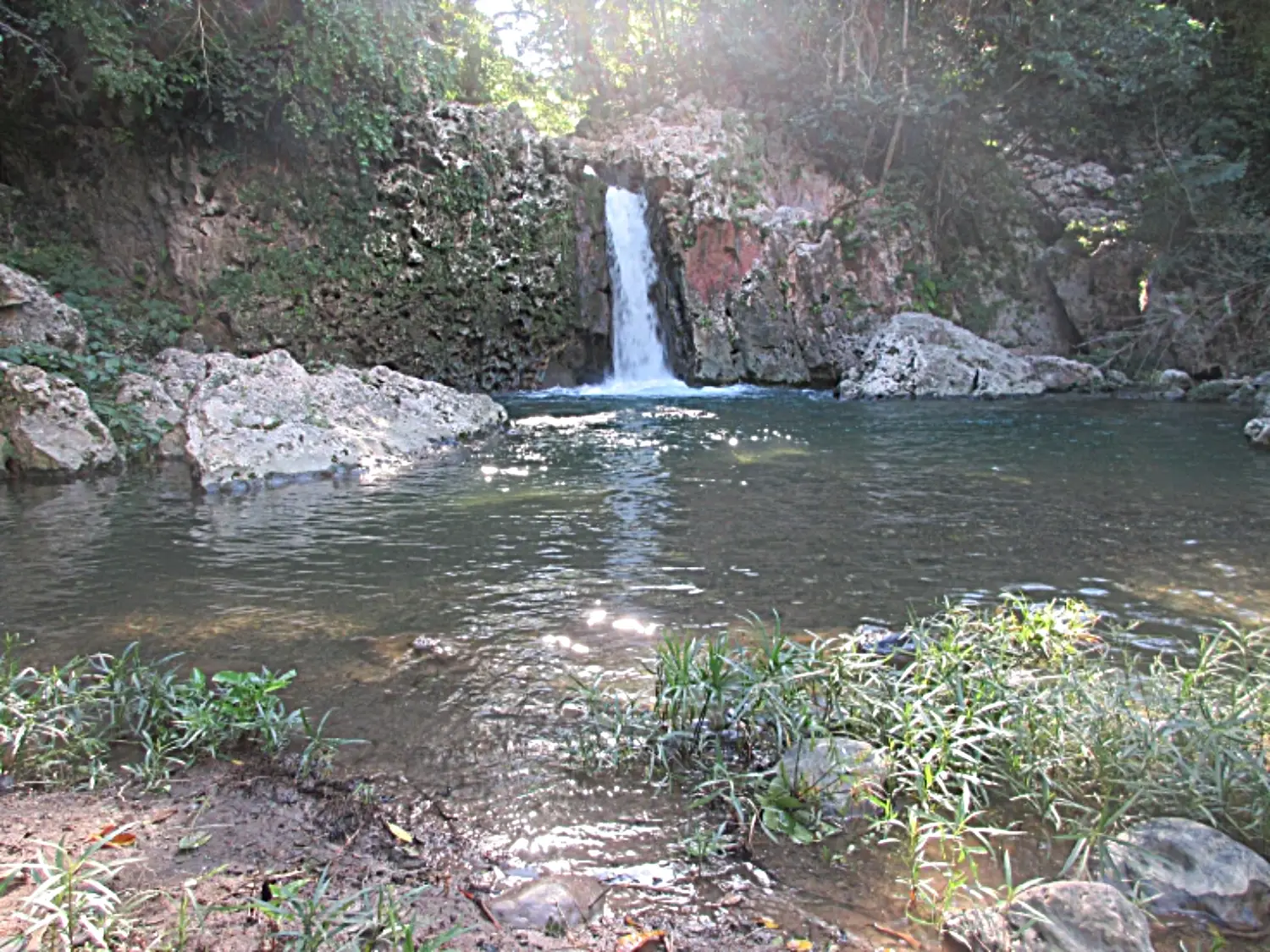
Hidden in the green hills of Cudjoe Hill, St. CatherineSt. Catherine, established in 1664, is one of Jamaica’s seven oldest parishes. Spanning 459.7 square miles, it became ... More, Mountain River Cave is a special place that tells the story of Jamaica’s first peopleThe people of Jamaica embody a spirit that is at once richly diverse and unbreakably unified, as captured by the nationa... More, the Tainos. Long before the SpanishThe Spanish first arrived in Jamaica in 1494, marking a significant European influence that shaped the island’s early ... More arrived in 1494, the Tainos lived peacefully on the island, leaving behind clues about their lives. Mountain River Cave is one of those clues, with drawings and carvings on its walls that are hundreds of years old.
To get to the cave, you can follow St. Johns Road to Browns Hall. Once you reach Cudjoe Hill, there’s a sign from the JamaicaJamaica, with its vibrant culture and stunning landscapes, has a unique position in the global real estate market. The i... More National HeritageHeritage, in the context of Jamaica, real estate, and the rest of the world, refers to the tangible and intangible asset... More Trust (JNHTThe Jamaica National Heritage Trust (JNHT) is a statutory institution committed to protecting and enhancing Jamaica's hi... More) that points the way. From there, it’s a one-mile walk through a beautiful pathA path, in the context of Jamaica and real estate globally, refers to a route or passage that provides access from one p... More. You’ll pass trees like cocoa and jackfruit that fill the air with sweet smells and cross a river that winds through the landIn real estate, land is a foundational element that significantly impacts the value and potential of a property. It enco... More. Comfortable shoes are a good idea because the trail is rocky and uneven. It’s also best to call the JNHT for a guide, so they can show you around and share the cave’s history.
The cave isn’t very big—only about 100 feet long and 30 feet deep—but it’s filled with amazing TainoThe Taino were the indigenous people of Jamaica and much of the Caribbean, known for their advanced agricultural techniq... More art. Inside, there are over 140 drawings called pictographs, with some experts saying there could be more than 200. There are also a few carvings, called petroglyphs. These artworks are thought to be between 500 and 1,300 years old. It’s unclear if the Tainos lived in the cave, but we know they visited it often to create their art.
Mountain River Cave was first written about in 1897 by a man named J. F. Duerden, and later, in 1954, its exact spot was mapped by J. W. Lee and Robert Cooper, whose family owned the land. In 1976, the Archaeological Society of Jamaica worked to protect the cave and, with help from the Jamaica Defense Force, added grills and guardrails to keep it safe. In 1982, the cave was given to the JNHT, and in 2003, it was named a national monument.
Visiting Mountain River Cave is like stepping back in time. Surrounded by nature, with the sound of a nearby waterfallWaterfall is a linear and sequential project management methodology where each phase must be completed before moving on ... More and trees all around, it’s easy to imagine what life was like for the Tainos. Their drawings on the cave walls are a reminder of their creativity and culture, making this place a treasure for anyone who wants to learn more about Jamaica’s history.
Discover more from Jamaica Homes
Subscribe to get the latest posts sent to your email.