


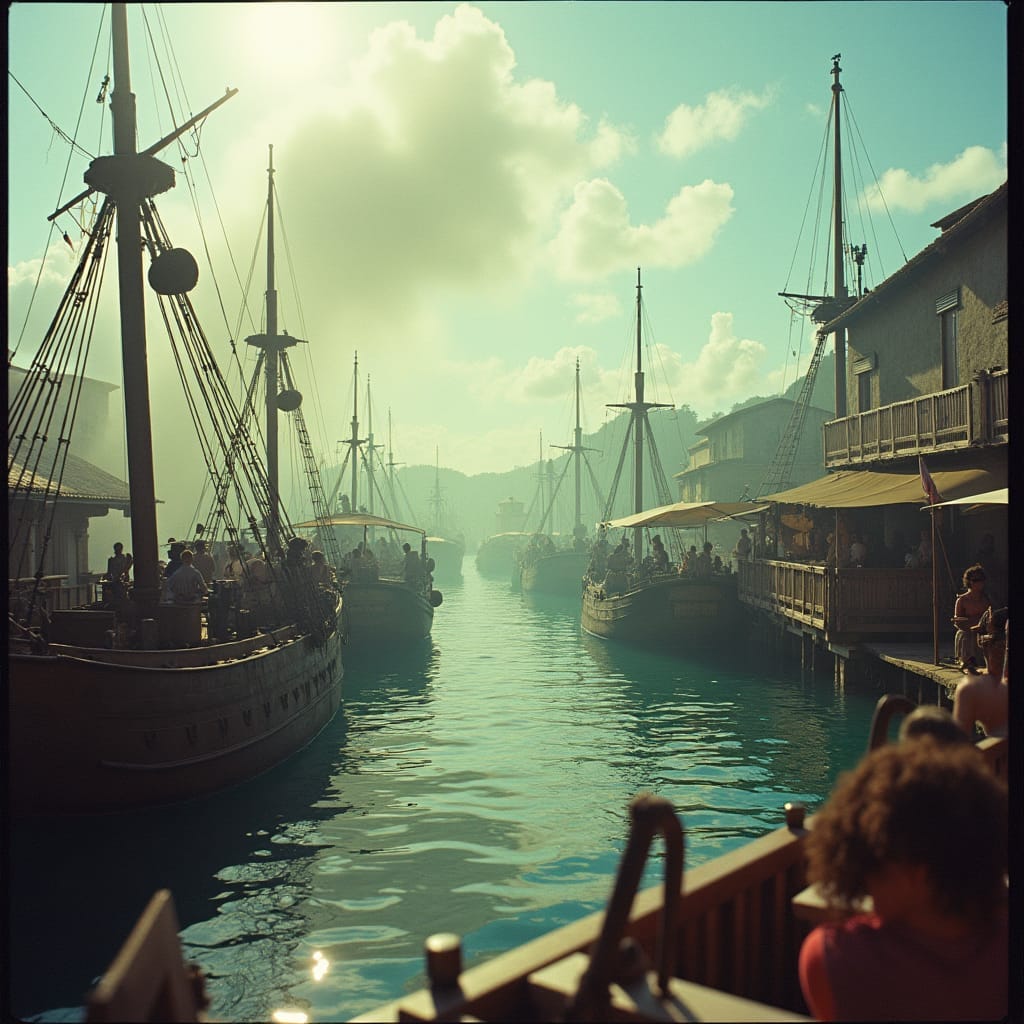
In the late 1600s, Port Royal, Jamaica, became infamous as the “Wickedest City on Earth,” a name that reflected its status as a thriving epicenter of piracy, wealth, and debauchery. This small yet strategically located city near Kingston Harbor was transformed into a bustling hub where pirates, privateers, and merchants converged, drawn by the promise of fortune that the Caribbean’s lucrative trade routes offered. The city’s explosive growth was fueled by the enormous wealth generated from the plunder of Spanish ships, the booming sugar trade, and the slave market. Port Royal’s streets, lined with grandiose houses, bustling taverns, and thriving businesses, became a physical manifestation of the wealth and excesses that characterized the era. However, this wealth was built on a foundation of exploitation, as enslaved Africans were forced to labor under brutal conditions to support the city’s economic engine. The real estate in Port Royal was unlike anything else in Jamaica at the time—lavish, extravagant, and reflective of the immense riches that flowed through the city. Buildings were constructed with materials and designs meant to showcase the wealth and power of their owners, creating a stark contrast to the modest homes found elsewhere on the island. Yet, this opulence came at a cost, as the city’s moral decay became as notorious as its riches. Port Royal’s reputation as a haven for pirates and criminals spread far beyond Jamaica, influencing perceptions of the Caribbean as a lawless frontier where anything could be bought or sold, including land and lives. The eventual downfall of Port Royal came swiftly and catastrophically when a massive earthquake struck in 1692, causing much of the city to sink beneath the sea. This disaster not only marked the end of Port Royal’s golden age but also served as a stark reminder of the transience of wealth and the dangers of unchecked greed. The story of Port Royal’s rise and fall is a powerful illustration of how the pursuit of wealth, particularly through real estate, can lead to both great prosperity and devastating consequences. This narrative is not unique to Jamaica; it echoes throughout history and across the globe, where cities and empires have risen and fallen based on the fortunes made and lost through land and property. Today, the sunken remains of Port Royal lie beneath the waters of Kingston Harbor, serving as a haunting testament to a time when the pursuit of riches overshadowed all else, leaving a legacy that continues to shape Jamaica’s real estate landscape and its place in the world. 4o