


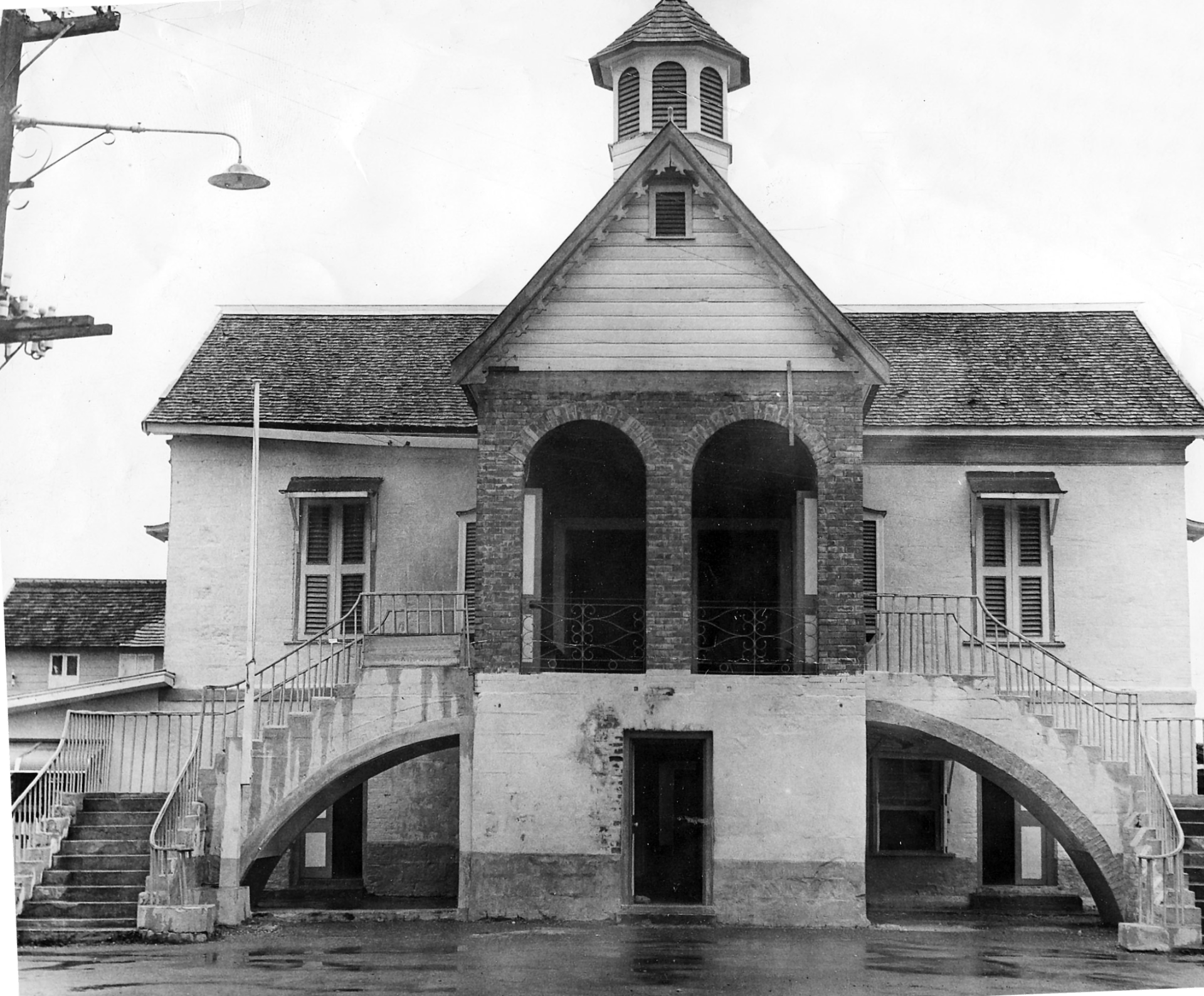
The Morant Bay Court House, once a symbol of justice and governance, holds a significant place in Jamaica’s history as the epicenter of the Morant Bay Rebellion of 1865. Tragically destroyed by fire on February 19, 2007, the courthouse’s ruins remain a poignant reminder of the struggles and sacrifices in the fight for equality and justice.
The rebellion began as a response to widespread poverty, unemployment, and the oppressive conditions faced by the majority of Jamaicans following the abolition of slavery. On October 11, 1865, two large groups of primarily cultivators marched into Morant Bay, armed with sticks and cutlasses, seeking redress for their grievances. They gathered outside the courthouse, where the Custos, Baron Von Ketelholdt, attempted to address the crowd from the portico. However, tensions escalated when the militia opened fire on the advancing protestors, igniting a violent confrontation.
In the chaos, the courthouse was set ablaze, resulting in the deaths of Baron Von Ketelholdt and several militia members. The rebellion led to a severe crackdown by colonial authorities. Governor Edward Eyre declared martial law, unleashing a wave of repression. Paul Bogle, the rebellion’s leader, was captured and hanged, and George William Gordon, a politician accused of supporting the uprising, was forcibly taken to Morant Bay, tried, and executed. These events marked a turning point in Jamaica’s colonial history, highlighting the deep inequalities and sparking debates about governance and justice that continue to resonate.
Before its destruction, the courthouse served multiple civic functions, hosting St. Thomas Parish Council meetings and Circuit Court sessions. Today, only the brick walls of the historic building remain, bearing silent witness to its tumultuous history. However, Edna Manley’s iconic statue of National Hero Paul Bogle, prominently placed in front of the ruins, survived the fire and stands as a symbol of resilience and the enduring fight for justice.
The Morant Bay Court House is more than a relic of the past; it is a cornerstone of Jamaica’s narrative, representing the ongoing pursuit of equity and the sacrifices of those who dared to demand a better future.