


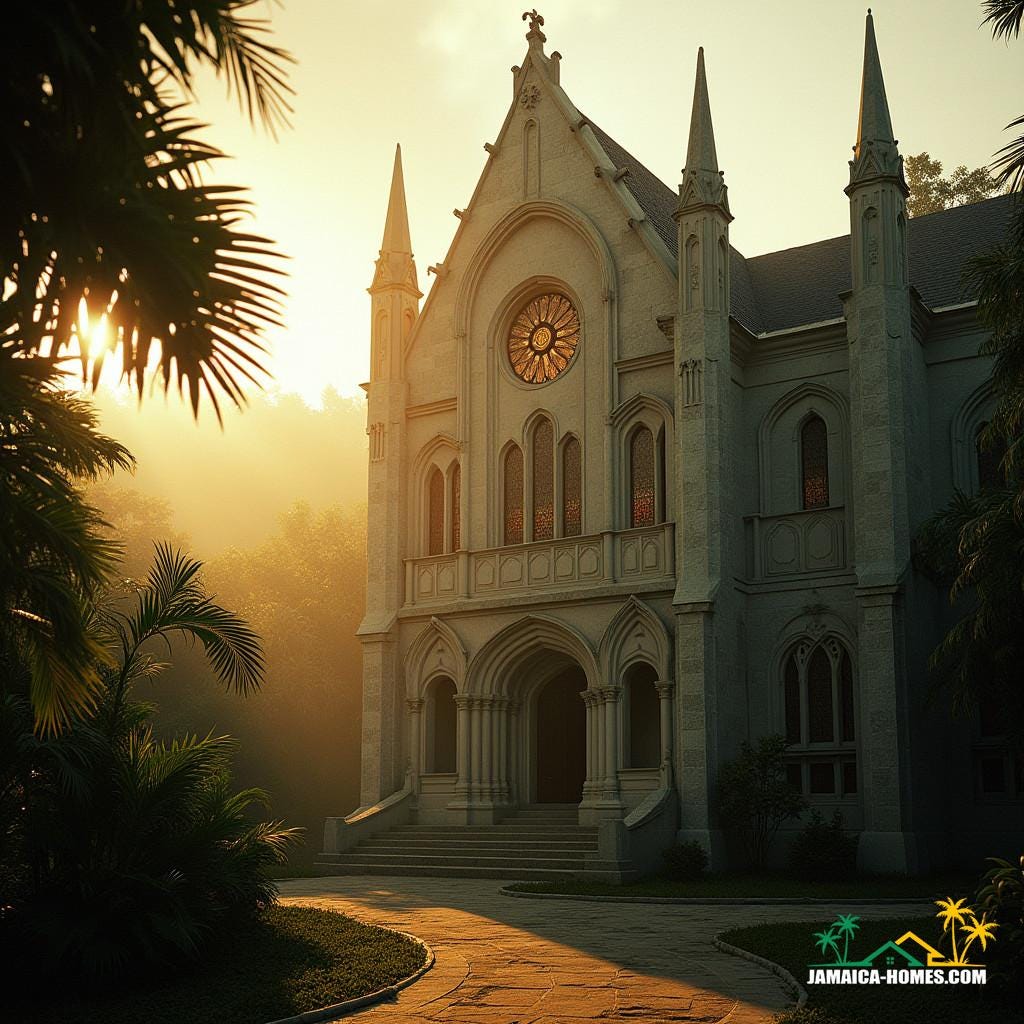
Gothic Revival architecture is a style that emerged in the late 18th and early 19th centuries, inspired by the medieval Gothic architecture of Europe, particularly the pointed arches, ribbed vaults, and flying buttresses seen in cathedrals and churches. This style was characterized by its intricate detailing, vertical lines, and an emphasis on height and light, often featuring large windows with stained glass, pointed roofs, and ornate decorations. In Jamaica, Gothic Revival elements can be seen in some of the island’s churches and historic buildings, where the influence of European design is evident in the use of stone, arched windows, and towering spires. Globally, the style gained prominence during the Victorian era, with buildings such as the Palace of Westminster in London and many churches across Europe and North America exemplifying its grandeur. In the context of real estate, Gothic Revival buildings are often sought after for their historic value and aesthetic appeal, especially in heritage conservation areas. In Jamaica, the style could be revived in residential and commercial properties, offering a unique, timeless design that blends historical European influences with modern Jamaican living needs. The Gothic Revival style, while associated with grand religious and civic structures, also finds use in modern adaptations, particularly in urban regeneration projects, where it can be reinterpreted to suit contemporary living while maintaining its historical integrity. The style’s enduring appeal lies in its ability to evoke a sense of history and grandeur, offering both practical benefits, such as increased natural light, and a connection to the architectural traditions of the past.