



Nanny Town, perched high on Nanny Town Hill at 2,000 feet above sea level in the shadow of the majestic Abraham mountain, was a formidable Maroon citadel and one of the most renowned settlements of the Maroons. Its strategic location served as a natural fortress, impenetrable to outsiders and ideal for defense. Built intentionally to withstand invasions, it provided sanctuary for escaped slaves seeking freedom.
In its prime, Nanny Town had over 140 houses, many of which were burned by British militias during their relentless campaigns. However, the Maroons’ resilience shone as they continuously rebuilt during the four years of fierce fighting leading up to the peace treaty. More than a home, it was a symbol of defiance and self-determination.

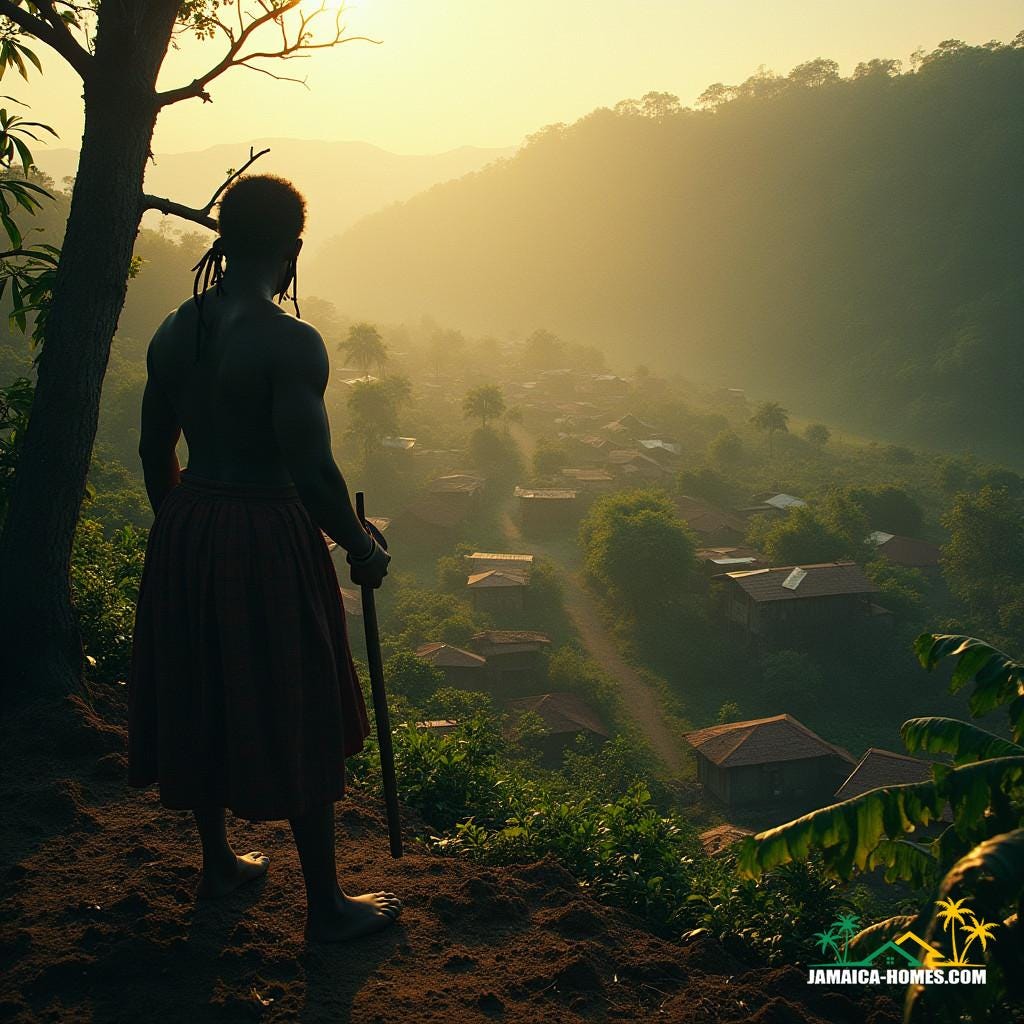

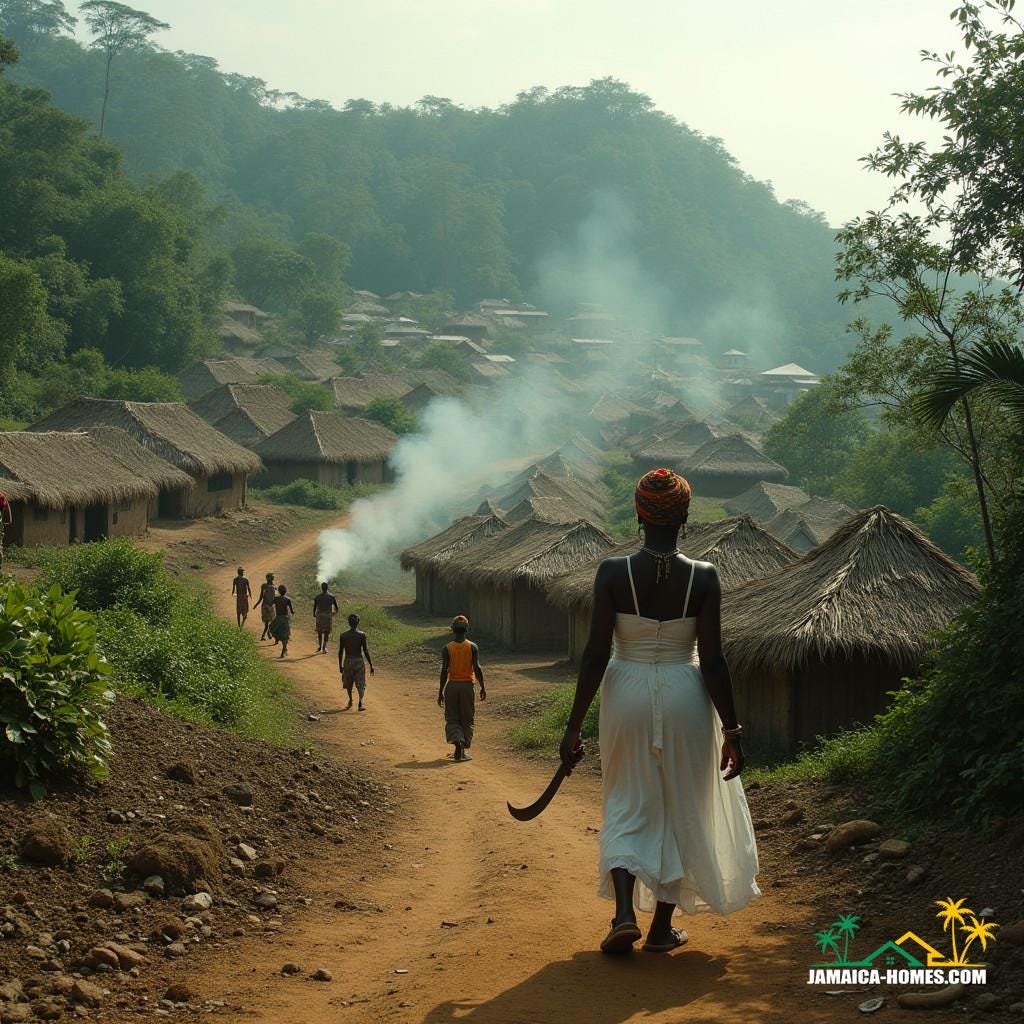
The settlement is named after Nanny, Jamaica’s only National Heroine, whose leadership and military brilliance led the Maroons to significant victories during the First Maroon War. Her guerrilla warfare tactics, deep understanding of the terrain, and spiritual leadership cemented her as a formidable figure in the resistance. Nanny’s strategies ensured that Nanny Town remained a constant challenge to British colonial forces.
Established around 1723, Nanny Town’s existence was hidden until 1728 when Sambo, an African working with the British, revealed its location. It then became a key target for British troops, who launched repeated attacks in 1730, 1731, 1732, and 1734. Despite their efforts, the Maroons, with their mastery of the terrain and guerrilla tactics, resisted fiercely, frustrating and weakening colonial forces.
Though its original structures no longer remain, Nanny Town endures as a powerful symbol of the Maroons’ fight for freedom and resilience. Its legacy lives on in the traditions and pride of Maroon communities who honor their ancestors’ sacrifices and victories.