


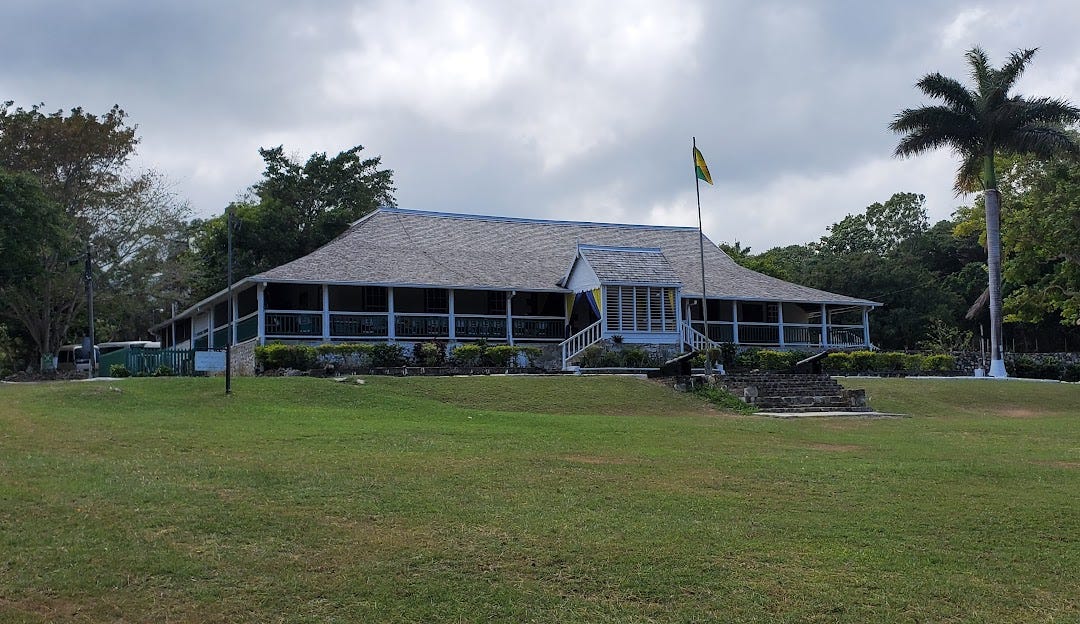
Seville Great House, located in St. Ann, Jamaica, represents an important chapter in the island’s colonial history and architectural evolution. The estate emerged from the ruins of New Seville, the first Spanish capital in Jamaica, abandoned by the Spaniards after the British capture of the island in 1655. The property was allotted to Captain Hemmings, a British officer, and subsequently developed into Seville Estate. The current Great House, built in 1745 by Hemmings’ grandson, replaced an earlier structure from the late 17th century and stands as a testament to the English period in Jamaica. Originally a two-storey building, the top floor was lost in a hurricane around 1898 and never reconstructed. The house features wattle and daub construction, a hallmark of the era, combined with fine timber floors, English tiling, and solid mahogany raised-panel doors. The predominantly sash windows were later updated with jalousies, and the interiors boast mahogany arches separating the dining and living areas. The northern veranda, supported by square wooden columns, was designed to optimize airflow and light while ensuring privacy, reflecting the practical elegance of colonial design. Cedar shingles, complete with cap and comb finishes, cover the roof, which is accentuated by finials on the gabled ends. The estate’s design incorporated cut-stone steps leading to a porticoed entrance and features such as stained timber floors, which further underline its historical significance. Seville Great House not only symbolizes the adaptive use of architecture to suit Jamaica’s tropical climate but also offers insights into the socio-economic dynamics of the plantation era, including its ties to the slave-driven economy. Today, it remains a cultural landmark, connecting Jamaica’s past to its present and illustrating broader colonial influences on real estate practices worldwide.