


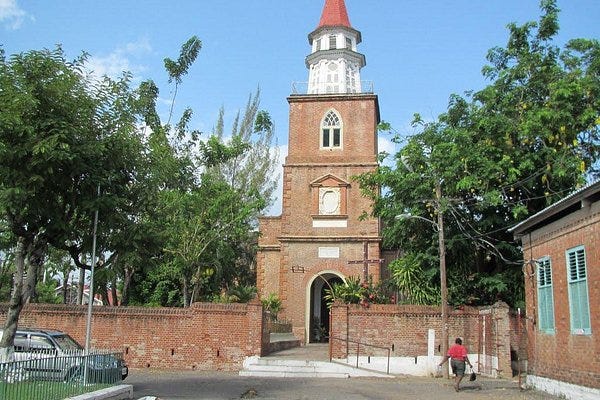
Nestled within the parish of St. Catherine, Jamaica, Spanish Town emerges as a poignant testament to the island’s multifaceted history. From its genesis as a Spanish enclave to its zenith as the seat of British colonial power, Spanish Town has stood as a cornerstone of cultural and political significance in the Caribbean.
Established in 1534 under the name Villa de la Vega by Spanish settlers, this settlement later assumed the titles of Santiago de la Vega and St. Jago de la Vega. Strategically positioned along the Rio Cobre, approximately 10 miles west of Kingston, it flourished as a bastion of Spanish influence, fostering trade and governance in the region.
The tides of history shifted dramatically in 1655 with the English conquest of Jamaica. Renamed Spanish Town in homage to its origins, the town underwent a metamorphosis, evolving into the nerve center of British administration in the Caribbean. For nearly two centuries, it served as the capital of Jamaica, witnessing epochs of economic prosperity, political upheaval, and cultural exchange.
Evident in its architectural splendor, Spanish Town boasted a skyline adorned with landmarks such as St. Catherine’s Cathedral (1655), the Rodney Memorial, the House of Assembly, and the Court House. These edifices stood as monuments to the town’s grandeur and underscored its pivotal role in the colonial narrative.
However, the passage of time brought challenges to Spanish Town’s doorstep. Economic downturns, natural calamities, and urban decay eroded its former glory, casting shadows over its storied past. Yet, amidst adversity, resilience emerged as a guiding principle, spurring efforts to safeguard the town’s heritage and revitalize its cultural legacy.
In the early 2000s, initiatives to preserve Spanish Town’s historic architecture and rejuvenate its urban landscape gained momentum. Renewed interest in the town’s heritage sparked a renaissance, drawing visitors and scholars alike to explore its labyrinthine streets and unravel its secrets.
Today, Spanish Town stands as a living tableau of Jamaica’s colonial heritage. Its streets, steeped in history, bear witness to centuries of triumphs and tribulations, echoing the voices of generations past. As visitors traverse its thoroughfares, from the Spanish Town Methodist Church on White Church Street to the iconic Rodney’s Memorial in Emancipation Square, they embark on a journey through time, immersing themselves in the tapestry of Jamaica’s rich cultural mosaic.
As custodians of Spanish Town’s legacy, we are tasked with preserving its essence for posterity. Through education, conservation, and appreciation, we honor the resilience of those who have walked its hallowed streets and ensure that Spanish Town remains a beacon of Jamaica’s cultural heritage for generations to come.
Here’s a brief timeline of its history:
Pre-1494: The area that would later become Spanish Town was inhabited by the indigenous Taíno people.
1494: Christopher Columbus arrived in Jamaica and claimed the island for Spain during his second voyage to the New World.
1509: The Spanish established Sevilla la Nueva (New Seville) on the northern coast of Jamaica, near present-day St. Ann’s Bay. This settlement served as the capital until 1534 when it was abandoned due to disease and attacks by the indigenous people.
1534: The capital was moved to Villa de la Vega, which eventually became known as Spanish Town. The town was strategically situated inland to protect it from attacks by both the indigenous people and foreign invaders.
1655: The English captured Jamaica from the Spanish, and Spanish Town became the capital of British Jamaica.
Late 17th to 18th Century: Spanish Town flourished under British rule. It became the center of commerce, politics, and culture on the island. The British constructed many grand buildings, including the Old King’s House, the Rodney Memorial, and the Cathedral of St. James.
1834: The Slavery Abolition Act was passed in the British Parliament, leading to the emancipation of enslaved people throughout the British Empire, including Jamaica. Spanish Town’s economy suffered as a result of the decline of the sugar industry, which was heavily dependent on slave labor.
1872: Kingston replaced Spanish Town as the capital of Jamaica due to its more favorable location for trade and commerce due to its proximity to the island’s main port and better access to transportation routes. This transition marked the end of Spanish Town’s tenure as the political epicenter of Jamaica, although it remained an important historical and cultural center on the island.
1880s-1890s: Despite losing its status as the capital, Spanish Town remains an influential administrative center, with government offices and institutions continuing to operate in the town.
1891: The opening of the Jamaica Railway connects Spanish Town to Kingston and other major towns on the island, facilitating transportation and trade.
1907: The earthquake of 1907 causes widespread damage to buildings and infrastructure in Spanish Town, further exacerbating the town’s economic woes.
1910: The Jamaica School of Agriculture is founded in Spanish Town, contributing to the town’s reputation as an educational and cultural center.
1920s-1930s: Efforts to revitalize Spanish Town begin to gain traction, with initiatives aimed at preserving historic landmarks and promoting tourism.
1944: The establishment of the St. Catherine Parish Council underscores Spanish Town’s continued importance as a local administrative hub.
1950s-1960s: Spanish Town experiences a period of urban renewal, with the construction of new infrastructure and public facilities aimed at modernizing the town and improving quality of life.
1970s-1980s: Political and social unrest in Jamaica impacts Spanish Town, leading to periods of instability and economic uncertainty.
20th Century: Spanish Town experienced periods of decline and revitalization throughout the 20th century. The town continued to be an important center for government administration and culture in Jamaica.
2001: The Spanish Town Hospital undergoes a major renovation, improving healthcare facilities for residents.
2002: The Spanish Town Market undergoes renovations to modernize facilities and improve conditions for vendors and shoppers.
2003: The Spanish Town Police Station implements community policing initiatives to address rising crime rates and improve public safety.
2004: The Spanish Town Library expands its collection and introduces new programs to promote literacy and lifelong learning in the community.
2005: The Spanish Town Square undergoes a beautification project, including landscaping and the installation of public art, to enhance the town’s aesthetic appeal.
2007: The Spanish Town Heritage Trust is established to oversee the preservation and promotion of the town’s historical landmarks and cultural heritage.
2009: The Spanish Town Sports Complex is inaugurated, providing state-of-the-art facilities for various sports and recreational activities, fostering community health and well-being.
2010: The Spanish Town Civic Center opens, providing a venue for community events, cultural activities, and government functions, contributing to the town’s revitalization efforts.
2013: The Spanish Town Beautification Project is launched, aiming to enhance the town’s aesthetic appeal through landscaping, street cleaning, and public art installations.
2015: The Spanish Town Historical Society hosts a series of educational seminars and walking tours to raise awareness about the town’s rich history and architectural heritage.
2017: The Spanish Town Economic Development Council is formed, bringing together local businesses, government agencies, and community organizations to stimulate economic growth and job creation in the town.
2019: The Spanish Town Revitalization Plan is unveiled, outlining strategies for attracting investment, improving infrastructure, and revitalizing commercial districts to ensure the town’s long-term sustainability.
2021: The Spanish Town Cultural Festival is revived, showcasing the town’s diverse cultural heritage through music, dance, food, and art, attracting visitors from across Jamaica and beyond.
2023: The Spanish Town Green Spaces Initiative is launched, creating new parks, gardens, and recreational areas to promote outdoor activities and improve quality of life for residents.
20th Century Spanish Town confronts a host of modern challenges that threaten its historical legacy and cultural vibrancy. Urban decay, characterized by dilapidated infrastructure and neglected neighborhoods, poses a significant threat to the town’s aesthetic appeal and livability. Decades of economic stagnation and shifting demographics have contributed to the decline of once-thriving commercial districts and residential areas. Crime, another pressing concern, casts a shadow over Spanish Town, affecting both residents and visitors alike. High rates of violence and property crime have eroded community cohesion and deterred investment in the town’s revitalization efforts. Addressing these security issues is paramount to restoring confidence in Spanish Town as a safe and welcoming destination for residents and tourists. Moreover, infrastructure deficiencies, including inadequate transportation networks and utilities, hinder the town’s ability to attract businesses and foster economic growth. Aging roads, bridges, and public facilities require substantial investment to modernize and expand capacity, ensuring that Spanish
Town can meet the needs of its growing population and evolving economy. Despite these formidable challenges, concerted efforts are underway to safeguard Spanish Town’s historic buildings and revitalize its urban core. Preservation initiatives aim to protect architectural landmarks from further deterioration, utilizing state-of-the-art conservation techniques to maintain their structural integrity and historical significance. By partnering with local stakeholders, government agencies, and heritage organizations, these endeavors seek to celebrate Spanish Town’s rich cultural heritage while promoting sustainable development for future generations. Central to the town’s rejuvenation is the revitalization of its town center, transforming neglected spaces into vibrant hubs of activity and commerce. Redevelopment projects aim to enhance public spaces, create mixed-use developments, and attract investment in retail, dining, and entertainment amenities. By fostering a sense of community pride and ownership, these initiatives strive to reinvigorate Spanish Town as a dynamic urban destination that honors its past while embracing its future.
Through collaborative action and visionary leadership, Spanish Town is poised to overcome its modern challenges and emerge as a beacon of resilience, innovation, and cultural diversity in the 21st century. By harnessing the collective energy and creativity of its residents, businesses, and stakeholders, the town can chart a course towards a brighter and more prosperous future, ensuring that its rich heritage continues to inspire and captivate generations to come.
While Spanish Town may not have produced as many globally recognized figures as some larger cities, it has nonetheless been home to notable individuals who have made significant contributions in various fields. Some famous people associated with Spanish Town include:
Marcus Garvey: Born in St. Ann’s Bay, Jamaica, Marcus Garvey, the renowned political leader, journalist, and entrepreneur, spent part of his childhood in Spanish Town. Garvey’s influential advocacy for Pan-Africanism and Black nationalism left a lasting impact on civil rights movements worldwide.
Toots Hibbert: Frederick “Toots” Hibbert, the legendary reggae musician and founder of the band Toots and the Maytals, was born in May Pen but grew up in Spanish Town. His pioneering contributions to reggae music helped to popularize the genre internationally.
Tony Rebel: Patrick George Anthony Barrett, better known as Tony Rebel, is a prominent Jamaican reggae artist and cultural ambassador. He hails from Manchester Parish but has strong connections to Spanish Town, where he has performed and promoted reggae music.
Bunny Wailer: Neville O’Riley Livingston, known as Bunny Wailer, was a founding member of the iconic reggae group The Wailers, along with Bob Marley and Peter Tosh. While not born in Spanish Town, Bunny Wailer spent significant periods of his life there and maintained close ties to the community.
Errol Dunkley: Errol Dunkley, a Jamaican reggae singer and songwriter, was born in Kingston but grew up in Spanish Town. He gained international recognition for his soulful voice and classic reggae hits in the 1970s.
These individuals, among others, have helped shape Jamaican culture and music, leaving a lasting legacy both locally and globally. Their contributions reflect the diverse talent and creativity that have emerged from Spanish Town and its surrounding communities.
Today, Spanish Town remains an important historical and cultural center in Jamaica, with many of its colonial-era buildings still standing as reminders of its rich past.