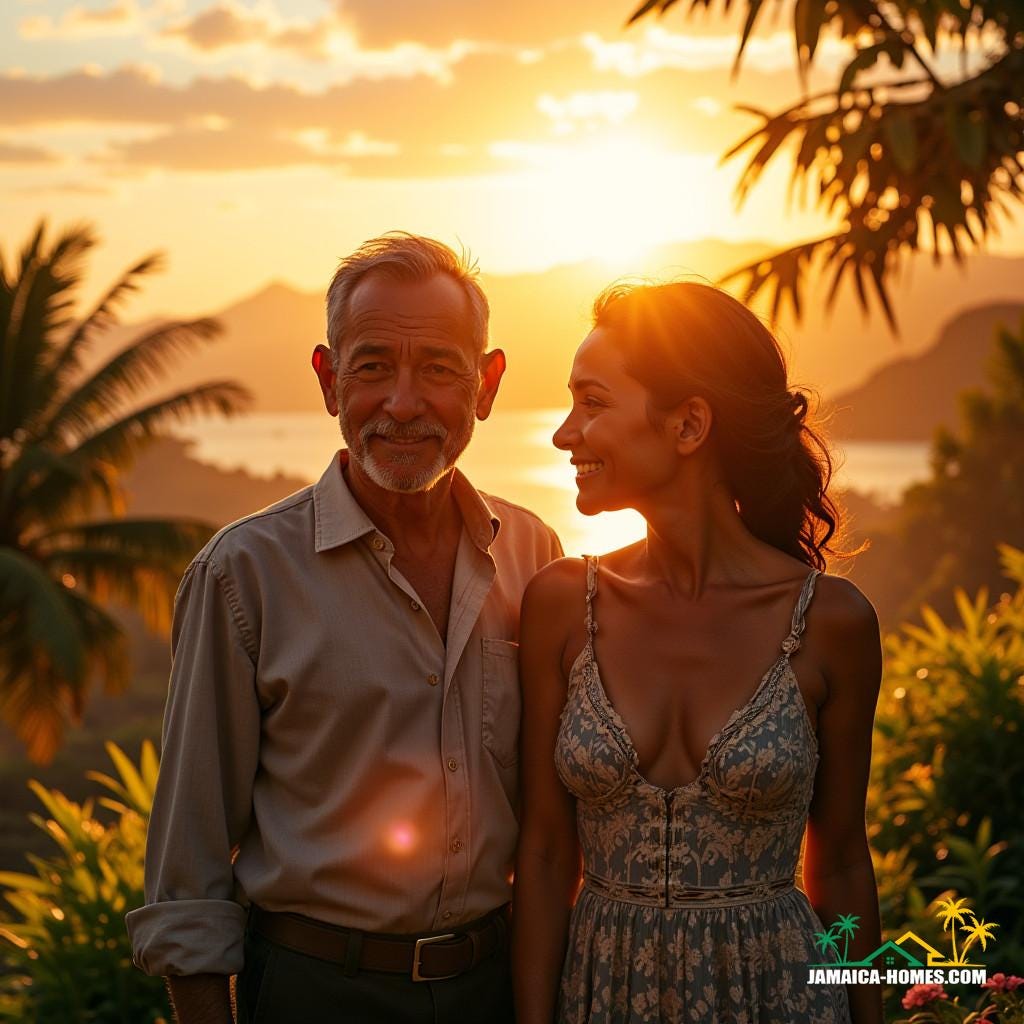
There are few places in the world where sunsets melt into the sea like butter on warm bread, and the heartbeat of a people pulses through the hills, the streets, and even the soil. Jamaica is one such place. A Caribbean jewel draped in emerald jungles and golden coastlines, it beckons not just tourists, but dreamers. Those looking not only for beauty—but for a life lived fully.
But behind the Instagram filters and reggae beats lies a complex, evolving reality. For many, the question remains: is Jamaica truly a good place to live, to invest, to build a future?
“Jamaica is not just a place you visit. It’s a place that demands your participation, your patience—and your faith in its long game,” says Dean Jones, Realtor Associate at Coldwell Banker Jamaica Realty and founder of Jamaica Homes. “For those who truly engage, Jamaica gives back tenfold.”
Rich in Spirit, Resource, and Resilience
To understand Jamaica’s living standard is to appreciate its paradoxes. The country is often labeled as “poor,” but this simplistic classification belies its richness in other currencies: culture, creativity, and community.
Jamaica is rich in bauxite, limestone, coffee, and yes—reggae. But more than that, it is rich in human capital and unshakable pride. According to the World Bank, it’s classified as a middle-income country, with vast potential held back not by people but by systems long overdue for reform.
“You won’t always measure Jamaica by GDP,” Jones points out. “But you’ll feel its wealth when a stranger feeds you from their pot or helps you fix your tyre on a lonely road.”
Living in Jamaica: A Life of Meaning Over Madness
The cost of living in Jamaica varies wildly depending on location, lifestyle, and expectations. You can live frugally on the outskirts of Clarendon or Trelawny, or you can spend like royalty in Kingston’s Beverly Hills or Montego Bay’s Tryall Club. Generally speaking, a single returning resident can live modestly on $1,200 to $2,000 USD per month, including rent, utilities, food, and transport. Families relocating to Jamaica should double that for comfort.
“Cheap” is relative. In some areas, $50,000 USD can still buy you land in some places. In others, like the Norbrook hills or Ironshore estates, you will spend upwards of $500,000 USD for a modern villa with views of the Caribbean Sea.
“Jamaica won’t always offer cheap living,” Dean Jones notes, “but it offers real value—especially when you consider the lifestyle, sunshine, and chance to own land with legacy.”
Summary Table: Single Person Monthly Cost
CategoryBudget TownsKingston CenterMontego BayRent$300–700$430–880~$268Utilities$100–150$150–200Included in estimatesFood & Transport$300–500~$600~$778Total Monthly Cost$800–$1,200$1,200–1,500$1,000–1,700+
Where the Wealthy Roam
So, where do the wealthiest Jamaicans reside? Like many societies, wealth gravitates towards comfort, security, and seclusion. Cherry Gardens, Jacks Hill, Norbrook, and Millsborough are prime real estate enclaves in Kingston. Meanwhile, Tryall Club, Spring Farm, Ironshore, and Rose Hall in Montego Bay offer resort-style coastal luxury. In St. Ann, affluent buyers are drawn to Cardiff Hall, Mammee Bay, and Richmond Estate, where gated communities blend elegance with sea views and privacy. In St. Mary, high-end living can be found in Boscobel, Tower Isle, and the prestigious Goldeneye estate, a secluded haven that has attracted international celebrities and discerning investors alike. These areas are known for their modern amenities, private security, and stunning architecture—often owned by a mix of local elites, returning diaspora, and foreign investors.
Jamaica’s wealth, though highly concentrated, is visually evident in these districts where BMWs hum quietly through palm-lined lanes and private schools boast world-class curricula.
Homeownership in the Caribbean’s Crown Jewel
Buying a house in Jamaica is a rite of passage for many—especially those returning from the UK, USA, or Canada. The process is straightforward for locals and foreigners alike, although it demands due diligence, legal guidance, and patience. Prices range from around $150,000 USD for unfinished strucutures and fixer-uppers —though it’s important to note that “fixer-uppers” in Jamaica often come with serious structural, electrical, or legal challenges) in rural towns. At the other end of the spectrum, luxury waterfront properties easily command $1 million USD or more, with listings in places like Montego Bay often ranging from $1.4–1.6 million USD. One standout example is The Pinnacle on the Reading Peninsula—an ultra‑luxury, full‑service residential resort featuring high‑rise apartments, private villas, a marina, spa, and resort‑style amenities—marking a new era in Jamaican real estat. An in‑depth look at The Pinnacle’s design, management model, and why founder Dean Jones calls it a “carefully curated experience,” check out the Jamaica Homes article
“Property in Jamaica is still one of the most undervalued in the region,” says Dean Jones. “In five to ten years, the appreciation we’ll see will make today’s buyers look like visionaries.”
Legal ownership is protected by the Torrens title system, and most mortgages are offered in Jamaican dollars, with increasing access to foreign currency options for non-residents.
Safety, Comfort, and the Best Places to Live
Safety is a serious concern when discussing life in Jamaica, but it deserves nuance. While some areas suffer from crime, others are quiet, peaceful, and patrolled. The safest regions include Mandeville, Portmore’s gated communities, Kingston’s upper St. Andrew, St. Ann’s Discovery Bay, and the expat haven of Treasure Beach.
Jamaica House—by contrast—is not a residential property at all, but the official office of the Prime Minister, located in the capital city of Kingston. Its very name symbolizes governance, history, and Jamaica’s ongoing journey toward political maturity.
“The safest place in Jamaica is the one where you’ve built strong community ties,” Jones reflects. “When your neighbours know your name, your house becomes a home.”
Is It Good for Living?
“Good for living” depends on what you want. Jamaica offers a high quality of life, though not always a high standard of infrastructure. If you can handle intermittent water cuts, power outages, and bureaucratic headaches, you’re rewarded with fresh mangoes from your backyard, endless coastline, and an unmatchable spirit of freedom.
Cities like Kingston and Montego Bay offer nightlife, education, and employment. Mandeville is great for families and retirees, with its cool climate and British architecture. Coastal towns like Port Antonio offer tranquility and a creative vibe.
Many returnees and digital nomads alike have made a fulfilling life in Jamaica. Work-from-home culture is thriving, especially in places like Negril and Ocho Rios, where you can sip coconut water at noon while meeting global clients over Zoom.
“Jamaica is not for the faint of heart,” Dean Jones warns. “But for those willing to adapt, it’s a paradise unmatched.”
Comfortable Living: What It Costs
To live comfortably—with a car, air-conditioning, occasional travel, and modern conveniences—plan for $2,500 to $4,000 USD per month as a couple or family of three. This includes rent for a decent home in a good area, groceries, bills, and some luxuries.
Keep in mind, education and healthcare costs may add significantly, especially if using private schools or clinics. However, many expats find the lifestyle trade-offs more than worthwhile.
Legacy, Landscape, and Long-Term Vision
The allure of Jamaican life lies in its fusion of opposites: luxury and humility, rhythm and stillness, modernity and nature. For every challenge—potholes, bureaucracy, heat—there’s a moment of soul-deep peace. A child’s laughter under a breadfruit tree. A Sunday meal of oxtail and rice. A feeling that, here, you matter.
“Real estate in Jamaica isn’t just about bricks and land,” says Dean Jones. “It’s about legacy. Every house you build, every plot you buy, adds a line to your family’s story.”
The Bottom Line: Why Jamaica?
Jamaica is not a fantasy. It is not all rum and beaches. But it is real. And in its authenticity lies its power. Whether you seek adventure, heritage, investment, or rest, Jamaica offers a canvas on which to paint your next chapter.
As more people consider returning home or relocating to the Caribbean, the question isn’t “Is Jamaica cheap?” or “Is it rich or poor?” The real question is: What kind of life do you want to live? And is it time to plant your roots somewhere that challenges you to grow—boldly and beautifully?
Because here, under this sun and sky, you don’t just live. You thrive.