 by
by 
Across the world, real estateReal estate refers to property consisting of land and the structures on it, such as buildings and homes. It also include... More<estate agentsEstate agents, commonly known as real estate agents, are professionals who assist in the buying, selling, and renting of... More debate one simple question: are open houses still worth doing?
It’s a fair question. A listing goes live, the signs go up, the social media posts roll out—and then the day arrives. Three hours later, maybe four peopleThe people of Jamaica embody a spirit that is at once richly diverse and unbreakably unified, as captured by the nationa... More walked through the door. One asked a hundred questions but clearly wasn’t ready to buy. Another came because they “were just passing through.” One neighbour wanted to see what the houseA house serves as a fundamental structure designed for residential living, providing shelter and a place for individuals... More next door looks like inside. And the last one? Well, they might actually be interested.
That scenario is not uncommon.
In many markets, realtorsA REALTOR® is a person who helps others buy, sell, or rent homes and land. They are part of a big group called the Nati... More report that only around 3–5% of homes are actually sold directly because of an open houseAn Open House in Jamaica real estate is an event where a property for sale is open to the public, allowing potential buy... More. Yet the same studies show that about half of buyers attend open houses at some point during their search.
So which is it? Are open houses outdated rituals from a different era—or are they still quietly doing important work behind the scenes?
When we shift this conversation into the Jamaican real estateJamaican real estate encompasses a diverse property market within Jamaica, including residential homes, commercial build... More market, the answer becomes even more interesting. Because what works in New York, Miami, or Toronto does not always translate directly to KingstonKingston, the capital city of Jamaica, embodies a dynamic fusion of historical depth and contemporary vitality. Establis... More, Montego BayMontego Bay, often referred to as MoBay, is one of Jamaica's most popular tourist destinations, known for its stunning b... More, or MandevilleMandeville, the capital of Manchester parish in Jamaica, is the largest town in the region. As of 2005, it had a populat... More.
And that is where the real conversation begins.
A Strategy Imported from Abroad
Open houses are largely a tradition imported from North American real estate cultureReal estate culture is about how people feel and act when it comes to owning, buying, or selling property. In Jamaica, o... More. In places like the United States and Canada, open houses became popular because suburban neighbourhoods made them convenient. A buyerA buyer is an individual or entity that acquires goods, services, or properties through a transaction, motivated by a ne... More could drive around on a Sunday afternoon, see several houses in the same area, and compare them.
Jamaica’s housing landscape is very different.
Many properties are in gated communities. Others require appointments with securityIn Jamaican real estate, security refers to assets pledged to back a loan or financial obligation. Typically, the proper... More. Some are in rural areas where casual walk-in traffic simply doesn’t exist. And in certain parts of the island, privacy and security are major considerations for homeowners.
This means the typical “Sunday open house with balloons and directional signs” doesn’t always translate perfectly to the JamaicanThe term "Jamaican" encompasses the citizens of Jamaica and their descendants in the Jamaican diaspora, representing a d... More market.
But that does not mean the concept is useless.
It simply means it must be adapted to Jamaican realities.
What the Numbers Really Tell Us
Let’s start with the uncomfortable truth that many realtors quietly acknowledge.
Open houses rarely sell homes directly.
Research from real estateIn Jamaican real estate, an estate refers to the total collection of assets and property owned by an individual, especia... More industry surveys consistently shows that only a small percentage—often between 2% and 5%—of buyers purchase a home they first encountered through an open house.
That statistic often surprises people.
But it should not.
Most buyers today begin their propertyProperty encompasses a wide range of tangible assets that individuals or entities can own, utilize, or invest in, includ... More search online, browsing listings, comparing neighbourhoods, and studying prices long before they physically step into a home.
By the time they attend an open house, they are usually already aware of the property.
In other words, the open house is not the beginning of the buying journey—it is a checkpoint along the way.
The Jamaican Reality: Relationships Still Matter
While digital platforms dominate the search process, JamaicaJamaica, with its vibrant culture and stunning landscapes, has a unique position in the global real estate market. The i... More still has something that many global markets have lost: the power of personal networks.
Family conversations. Church communities. Workplace recommendations. DiasporaIn the context of Jamaica, real estate, and the broader global sphere, diaspora refers to the community of Jamaicans liv... More connections.
These informal channels often influence property decisions as much as online listings.
In that environment, open houses can serve a different purpose: they create moments for conversation.
A neighbour may attend out of curiosity, but later mention the property to a cousin who lives overseas and wants to invest. A visitor may not buy that house, but may later contactIn the real estate realm, contact refers to the crucial communication point between parties involved in a transaction or... More the agentIn Jamaica, an agent is a real estate professional who handles various aspects of buying and selling properties. Their r... More to help them find another.
These outcomes rarely show up in statistics—but they matter.
As Dean JonesDean Jones is a chartered builder, project manager, licensed real estate professional and the founder of Jamaica Homes, ... More, founder of Jamaica HomesJamaica Homes is a premier real estate company offering a comprehensive platform for buying, selling, and renting proper... More, puts it:
“Real estate is not just about property. It is about people finding their place in the world. Sometimes the conversation you have today becomes the transaction two years from now.”
The Hidden Purpose of Open Houses
Many agents willIn Jamaica, a will is a legal document created by an individual to specify how their assets, including their belongings ... More admit something quietly among themselves.
Open houses are often less about selling the property—and more about meeting potential clients.
That may sound cynical, but it is simply how business works.
When an unrepresented buyer walks through the door, it creates an opportunity. A conversation begins. Questions are asked. Contact details are exchanged.
In some cases, that visitor eventually becomes a clientIn real estate, a client is anyone seeking help to buy, sell, or invest in property. In Jamaica, clients might be lookin... More.
Studies even suggest that about one in twenty buyers meet their eventual agent through an open house interaction.
From a business perspective, that is not insignificant.
But it also raises an ethical tension within the profession.
Some agents feel uncomfortable collecting contacts during another agent’s open house or engaging with walk-in clients who may already have representation.
Others view it as part of the competitive nature of real estate.
It’s a delicate balance—and one that requires professionalism.
The “Nosy Neighbour” Effect
Every realtor knows this phenomenon.
You host an open house, and half the visitors are neighbours who simply want to see inside the property.
At first glance, that may seem like a waste of time.
But surprisingly, it can work in the seller’s favour.
Neighbours often become informal ambassadors for the listing. They talk. They share. They spread the word through their own networks.
And in a society like Jamaica, where communityIn Jamaica, "community" refers to more than just a geographic area; it embodies a collective identity rooted in shared e... More ties are strong, word travels quickly.
One neighbour’s curiosity today can become another family’s serious interest tomorrow.
Of course, there is always that one neighbour who attends every open house in the area like it’s a weekend hobby—Jamaica’s unofficial version of Netflix, except the episodes come with tiled floors and granite countertops.
The Security Question
In Jamaica, one issue that deserves careful attention is security.
An open house means allowing strangers into someone’s home. While this is common practice globally, it must be handled thoughtfully here.
Properties may contain valuables. Layouts become visible. Personal information can sometimes be inferred.
Agents should therefore take precautions:
- Avoid hostingHosting in the real estate context involves several key elements. For real estate businesses, hosting refers to providin... More open houses alone
- Keep sign-in records
- Secure valuables beforehand
- Maintain awareness of who is entering the property
This is not paranoia—it is professionalism.
A well-managed open house protects both the sellerA seller is an individual or entity engaged in the act of offering goods or services for sale, aiming to transfer owners... More and the agent.
When Open Houses Actually Work
Despite the criticisms, there are situations where open houses can be particularly effective.
One is when a new listing enters the market.
The first weekend after a property is listed often generates the highest curiosity. Buyers who have been watching the market may want to see the property immediately.
Another scenario is when the home has unique designDesign is the art and science of creating plans and specifications for the construction of objects, structures, and syst... More features that photographs cannot fully capture.
A panoramic sea viewIn Jamaica, "sea view" refers to a property or location with a visible and often unobstructed perspective of the Caribbe... More. A beautifully landscaped yardIn Jamaican Patois, the term "yard" carries a special significance beyond its literal meaning of a plot of land. Traditi... More. A well-designed kitchen that simply feels right when you stand in it.
Some properties must be experienced physically to be appreciated.
And that is where open houses still shine.
As Dean Jones reflects:
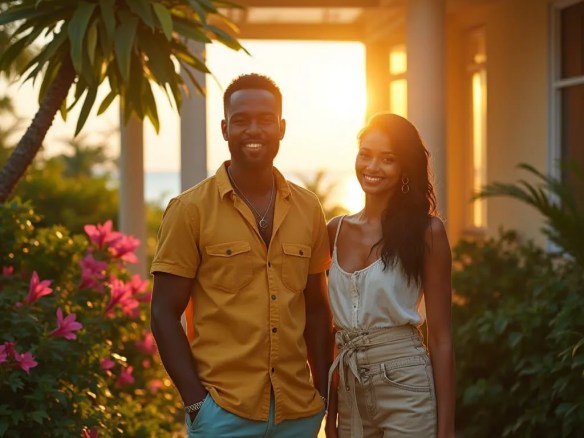
“The internet can show a house, but only a visit can show a life. When someone walks into a space and says, ‘I can see my family here,’ the property has already begun to sell itself.”
The Value of Small Crowds
Ironically, the most productive open houses are often the quiet ones.
When fewer visitors attend, the agent has more time to engage with each person individually. Real conversations happen. Questions are answered thoroughly.
A busy open house may feel exciting, but it often becomes chaotic.
The quieter ones allow something more valuable: connection.
In many cases, one thoughtful conversation is worth more than twenty casual walk-throughs.
The Seller’s Perspective
From a seller’s standpoint, open houses can feel exhausting.
Cleaning the home. Leaving for several hours. Allowing strangers to walk through personal spaces.
Some sellers question whether the effort is worthwhile.
The honest answer is this: open houses are only one piece of a larger strategy.
They should never replace strong photography, online marketingThe process of determining, generating, and providing value to a target market in order to fulfill the demands of that m... More, and targeted outreach.
But when integrated into a broader campaign, they can still contribute to visibility.
And in a competitive housing market like Jamaica’s—where demand often exceeds supply in key areas—visibility matters.
A Changing Market
Real estate marketing is evolving rapidly.
Virtual toursVirtual tours are like taking a walk through a place using your computer or phone, without actually being there. Imagine... More, drone footage, and social media campaigns now reach buyers across the globe. Many Jamaican properties are purchased by diaspora buyers who may first encounter them online.
That does not eliminate the role of physical viewings—but it changes how they happen.
Open houses today are no longer the centrepiece of property marketing.
They are one tool among many.
As Dean Jones observes:
“The best realtors don’t rely on one strategy. They build momentum from many directions—online, in communities, and through genuine relationships.”
So… Are Open Houses Worth It?
The answer is neither yes nor no.
It depends on the property.
It depends on the location.
It depends on the strategy.
If an agent simply posts on social media, places a few signs on the roadside, and hopes people will show up, the results will probably be disappointing.
But when open houses are integrated into a thoughtful marketing plan—combined with digital promotion, community outreach, and follow-up—they can still play a valuable role.
Perhaps the better question is not “Do open houses work?”
The better question is:
“Are we using them wisely?”
A Final Reflection
Real estate has always been a profession built on persistence.
Some days you host an open house and twenty people arrive. Other days four people come through the door.
And sometimes those four people change everything.
Because in real estate, the moment that matters most is not the number of visitors—it is the moment someone quietly says:
“I think this could be home.”
As Dean Jones puts it:
“Every property has a story waiting for the right person to read it. A realtor’s job is simply to keep opening the door until that reader arrives.”
And that, perhaps, is the true purpose of an open house.
Not just to sell a house.
But to give someone the chance to imagine a future inside it.



Join The Discussion