
 by
by 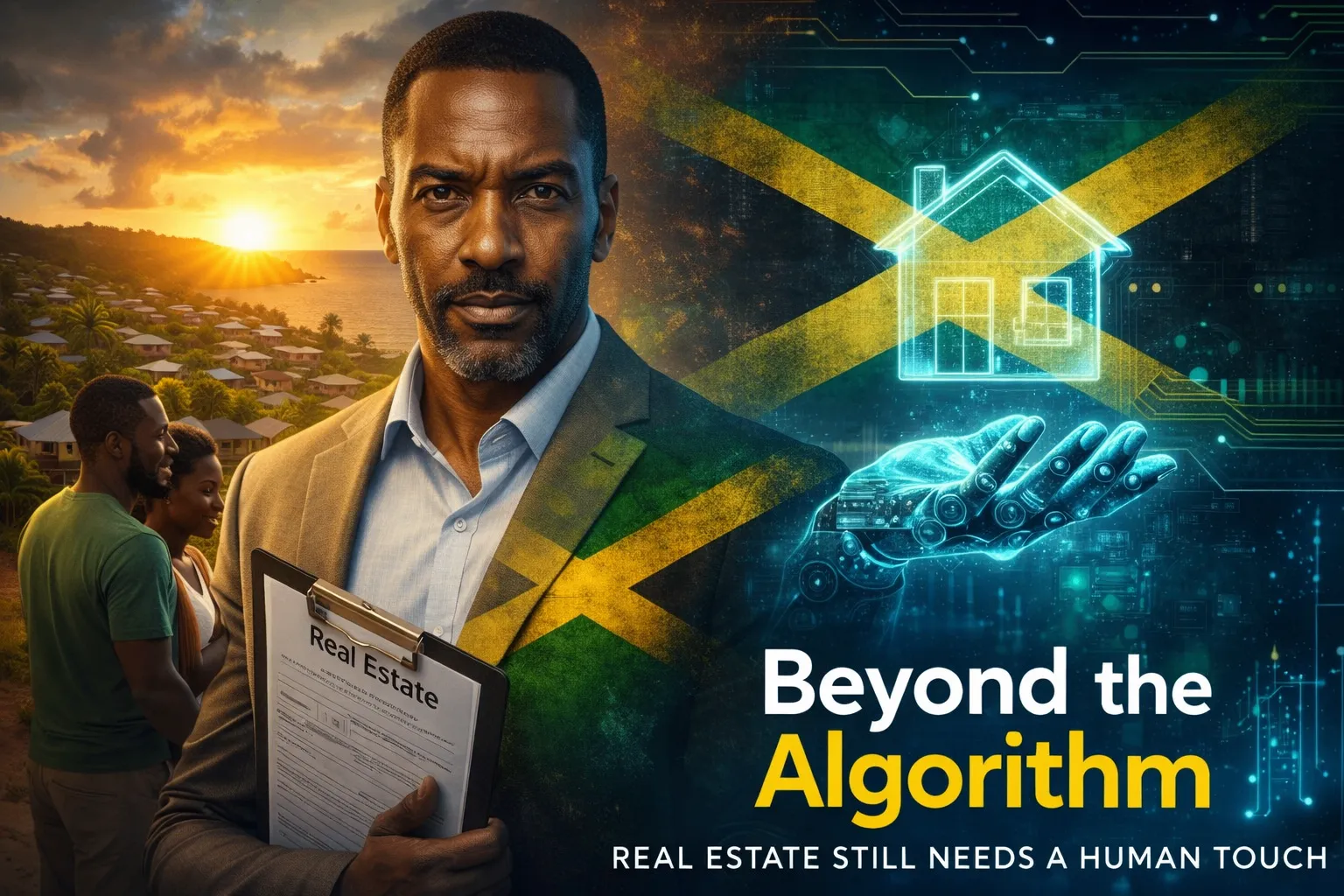
The conversation around artificial intelligenceArtificial intelligence, or AI, is like a super-smart computer program that can learn, think, and make decisions, just l... More has become unavoidable. From banking to education, from medicine to marketingThe process of determining, generating, and providing value to a target market in order to fulfill the demands of that m... More, AIArtificial Intelligence, or AI, is like a super-smart computer that can think and learn to do things humans usually do, ... More has planted its flag firmly in the modern world. Real estateReal estate refers to property consisting of land and the structures on it, such as buildings and homes. It also include... More, of course, is no exception. PropertyProperty encompasses a wide range of tangible assets that individuals or entities can own, utilize, or invest in, includ... More platforms now generate instant valuations, neighbourhood profiles, and investment"Investment" in the realm of real estate refers to the allocation of money or resources into property with the expectati... More projections in seconds. Buyers arrive at viewings armed with screenshots, spreadsheets, and opinions shaped by algorithmsAlgorithms are like step-by-step recipes that tell computers what to do to solve problems or make decisions. In Jamaica,... More long before they shake an agent’s hand.
At first glance, it is easy to assume that this wave of automation threatens the very existence of the real estateIn Jamaican real estate, an estate refers to the total collection of assets and property owned by an individual, especia... More professional. In larger markets like the United States, that fear has been loudly voiced. But JamaicaJamaica, with its vibrant culture and stunning landscapes, has a unique position in the global real estate market. The i... More is not the United States—and that distinction matters more than ever.
Jamaica’s property marketThe property market operates through a mix of formal and informal constraints that shape the behaviour of market players... More is layered with nuance: informal arrangements, inherited landIn real estate, land is a foundational element that significantly impacts the value and potential of a property. It enco... More, overlapping family interests, evolving planningPlanning in Jamaica involves managing land, resources, and infrastructure to support economic growth, social development... More rules, emotional ties to property, and a cultural relationship with land that stretches far beyond square footageIn real estate, square footage refers to the measurement of livable space within a property, which plays a critical role... More and price per square foot. TechnologyTechnology, in its original definition, refers to the application of scientific knowledge for practical purposes, often ... More can assist with data, but it cannot untangle context. It can suggest value, but it cannot understand meaning.
This is where Jamaican real estateJamaican real estate encompasses a diverse property market within Jamaica, including residential homes, commercial build... More professionals not only remain relevant—but essential.
The rise of artificial intelligence is not a signal for agents to retreat. It is an invitation to sharpen purpose, deepen expertise, and reassert value in ways no machine can replicate.
As Dean JonesDean Jones is a chartered builder, project manager, licensed real estate professional and the founder of Jamaica Homes, ... More, founder of Jamaica HomesJamaica Homes is a premier real estate company offering a comprehensive platform for buying, selling, and renting proper... More, puts it:
“Technology can tell you what a property is worth on paper, but only peopleThe people of Jamaica embody a spirit that is at once richly diverse and unbreakably unified, as captured by the nationa... More can understand what it’s worth in real life.”
A Smarter Buyer Does Not Eliminate the Need for an Agent
AI-powered toolsAI-powered tools are like really smart robots in your computer or phone that help make work easier and faster. In Jamaic... More have made buyers more informed. That much is undeniable. Prospective purchasers now explore asking prices, neighbourhood trends, and comparable properties online with ease. Some even attempt to estimate future returns or rental yields without speaking to a professional at all.
But information is not the same as understanding.
In Jamaica, property data is often incomplete, inconsistent, or interpreted without local context. Two houses on the same street can have vastly different histories—one cleanly titled, another quietly entangled in unresolved family matters. An algorithm may see proximity and size; an experienced agentIn Jamaica, an agent is a real estate professional who handles various aspects of buying and selling properties. Their r... More sees riskA risk is the possibility of an adverse outcome or loss arising from uncertainty or potential hazards. It represents the... More, opportunity, and reality.
A smarter buyerA buyer is an individual or entity that acquires goods, services, or properties through a transaction, motivated by a ne... More, therefore, does not make the agent obsolete. Instead, it raises the standard of what an agent must offer.
The modern JamaicanThe term "Jamaican" encompasses the citizens of Jamaica and their descendants in the Jamaican diaspora, representing a d... More real estate professional must go beyond listing and showing. They must become translators—bridging digital information with lived, local knowledge. They must be able to explain why a valuationValuation involves assessing the worth of a property based on various factors such as its location, condition, size, and... More looks right but feels wrong, or why a bargain today could become a burden tomorrow.
In a market shaped by relationships as much as regulations, context remains king.
Keeping Pace Without Losing Ground
The first responsibility of the Jamaican real estate professional in an AI-influenced market is simple, but demanding: stay informed.
This does not mean competing with machines on speed. It means outgrowing them in judgment.
Agents must understand the tools buyers are using—not to mimic them, but to complement them. Knowing what online platforms can and cannot reliably provide allows agents to step into the gaps with authority. It also prevents uncomfortable conversations where clients assume technology has already delivered the full picture.
But “keeping up” in Jamaica also means something deeper. It means understanding how shifts in infrastructure, tourismTourism in Jamaica refers to the industry focused on attracting visitors to the island, who come to experience its natur... More patterns, diasporaIn the context of Jamaica, real estate, and the broader global sphere, diaspora refers to the community of Jamaicans liv... More interest, financing practices, and planning approvals shape property value over time. It means recognising that a developmentIn Jamaica, the term "development" can refer to various contexts, each with its unique focus and implications. Real esta... More approved today may take years to materialise—or may never materialise at all.
An algorithm works from historical data. A good agent works from lived experience.
And when things are changing quickly—when communities are adapting, rebuilding, and reassessing priorities—human insight becomes even more valuable.
AI Is Not the Enemy—But It Is Not the Leader Either
One of the biggest mistakes agents can make is viewing artificial intelligence as competition rather than collaboration. In reality, AI works best as a support system, not a decision-maker.
In Jamaica, where property transactionsIn Jamaica, property transactions refer to the legal processes involved in buying, selling, or transferring ownership of... More often involve emotion, family history, and long-term aspirations, AI can streamline research but cannot guide decisions. It can highlight trends but cannot sense hesitation. It can offer comparisons but cannot negotiate trust.
The healthiest way forward is to treat AI as a junior assistant: fast, efficient, and helpful—but in need of supervision.
When agents use technology to enhance service—organising information, spotting patterns, preparing clients—they gain time to focus on what truly matters: advising, negotiating, and problem-solving.
Or, put another way, AI can drive the car, but it should not choose the destination.
The Power of Partnership in the Jamaican Market
In Jamaica, real estate has always been relational. Deals move faster when trust exists. Challenges are resolved when communication remains open. Success often depends not only on what you know, but who you know—and how responsibly you use that knowledge.
This is why the agent-buyer relationship remains central, even in an age of advanced technology.
A buyer may arrive with data, but they still need guidance. They still need reassurance. They still need someone who understands local processes, timelines, and unwritten realities. When buyers and agents work as partners rather than adversaries, technology becomes a shared tool rather than a point of tension.
AI can help buyers articulate what they want more clearly. That clarity allows agents to serve more precisely. The result is not displacement—but alignment.
As Dean Jones observes:
“The best property transactions are not about speed; they’re about clarity—and clarity comes from conversation, not calculation.”
Knowing Your Worth in a World Obsessed with Efficiency
Perhaps the most important shift for real estate professionals is internal.
The question is no longer whether agents are useful, but whether they understand why they are useful.
In Jamaica, agents bring value that cannot be automated: interpreting land titles, navigating inherited ownership structures, understanding parish-level nuances, managing expectations shaped by culture and family, and guiding clients through processes that are rarely linear.
A machine may generate confidence. A professional builds confidence.
That distinction matters, especially in a market where property decisions often represent a lifetime investment—or a family legacyLegacy, in the context of Jamaica, real estate, and the broader world, represents the enduring impact of past actions, a... More.
There is also a subtle irony worth acknowledging: the more technology promises simplicity, the more valuable human judgment becomes when things are anything but simple. And in real estate, things are rarely simple—despite what the brochure says.
(After all, if property transactions were truly as straightforward as some apps suggest, lawyers would have gone extinct long ago… and yet here we are.)
Experience Is Still the Ultimate Currency
AI systems learn from data. Agents learn from consequences.
A seasoned Jamaican real estate professional has seen deals fall apart for reasons no algorithm could predict: a missing signature, a long-lost relative, a boundary misunderstanding, or a planning issue that surfaces late in the process. They have learned patience, timing, and judgment through experience—not simulation.
This is not nostalgia. It is practical value.
Buyers who recognise this are often willing to trade speed for securityIn Jamaican real estate, security refers to assets pledged to back a loan or financial obligation. Typically, the proper... More, and convenience for confidence. They understand that avoiding mistakes is often more valuable than chasing efficiency.
And when the stakes are high, most people still prefer a human voice over a digital one.
Opportunity Hidden Inside Change
Periods of disruption often feel uncomfortable. They challenge established roles and force difficult questions. But they also create space for reinvention.
For Jamaican real estate professionals willing to adapt, this moment offers opportunity. Technology can elevate service, expand reach, and improve transparency. But it cannot replace wisdom, empathy, or accountability.
Agents who embrace learning, collaborate with informed buyers, and confidently articulate their value willIn Jamaica, a will is a legal document created by an individual to specify how their assets, including their belongings ... More not merely survive an AI-influenced market—they will lead it.
As Dean Jones succinctly puts it:
“The future of real estate doesn’t belong to technology or tradition alone—it belongs to professionals who know how to honour both.”
The Road Ahead
Artificial intelligence will continue to evolve. Property platforms will become more sophisticated. Buyers will arrive better prepared than ever before.
But Jamaica’s real estate market will remain uniquely Jamaican—shaped by people, history, resilience, and relationship.
In that space, the role of the agent is not shrinking. It is sharpening.
The question is not whether AI changes real estate. It already has.
The real question is whether professionals are willing to change with intention, integrity, and insight.
Those who do will discover that in a world flooded with information, wisdom still stands out.



Join The Discussion