

 by
by 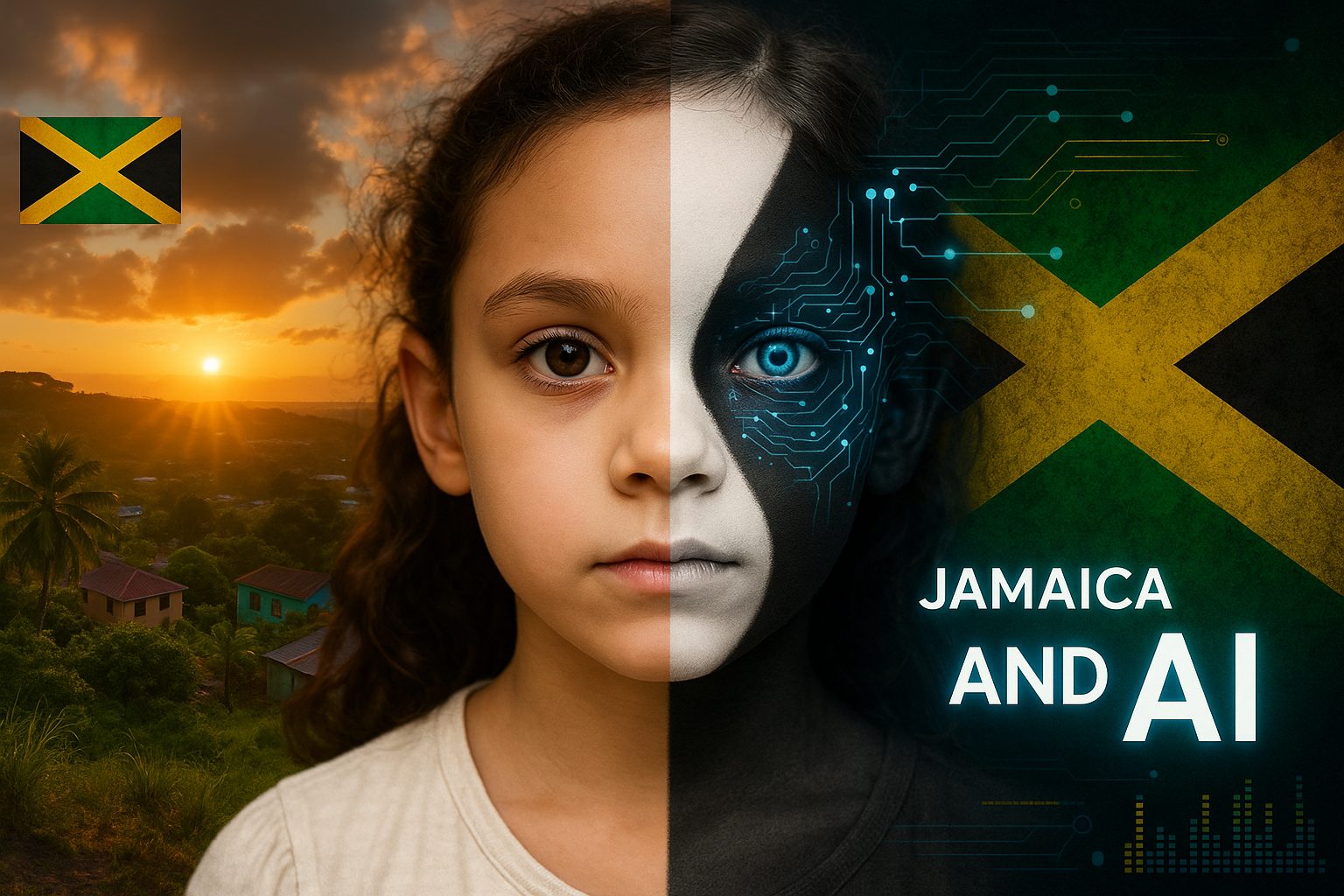
There are moments in a nation’s story when time feels as if it splits. One direction leads back to the world we know—a world of familiar systems, comfortable habits, and slow evolution. The other leads forward into a future we can barely understand, a future that demands new thinking, new courage, and a new relationship with uncertainty.
JamaicaJamaica, with its vibrant culture and stunning landscapes, has a unique position in the global real estate market. The i... stands at such a crossroads now.
Still drying from the winds and waters of Hurricane MelissaHurricane Melissa
(noun) Definition:
Hurricane Melissa is a historic and catastrophic tropical cyclone that struck..., still mending zinc roofs and grieving lost crops, still wrestling with infrastructure that bends but does not always break—we remain a resilient peopleThe people of Jamaica embody a spirit that is at once richly diverse and unbreakably unified, as captured by the nationa..., but also a people who often feel the world moving faster than we can follow. While nations accelerate into automation and artificial intelligenceArtificial intelligence, or AI, is like a super-smart computer program that can learn, think, and make decisions, just l..., we are still fixing roads, still waiting at government offices, still holding onto paper titles and manila envelopes.
But beneath the surface, something extraordinary is happening.
A new Jamaica is forming—not from concrete and steel, but from data, intelligence, and the dreams of our children.
They willIn Jamaica, a will is a legal document created by an individual to specify how their assets, including their belongings ... inherit a world where artificial intelligence is not an accessory but an environment. They will not remember the clattering dial-up tones of the early internet; they will grow up speaking to AIArtificial Intelligence, or AI, is like a super-smart computer that can think and learn to do things humans usually do, ... the way previous generations spoke to neighbours. They will ask questions not by typing but by conversing. They will learn not just from books but from intelligent tutors who understand their learning style better than any classroom ever could.
And if we are brave—if we are intentional—those same children will inherit a Jamaica where landIn real estate, land is a foundational element that significantly impacts the value and potential of a property. It enco..., propertyProperty encompasses a wide range of tangible assets that individuals or entities can own, utilize, or invest in, includ..., and nation-building become more accessible, more transparent, more secure, and more equitable than ever before.
Because real estateReal estate refers to property consisting of land and the structures on it, such as buildings and homes. It also include..., though often treated as its own industry, is in truth the skeleton of a nation.
Where people live determines how they grow.
Where families settle determines how communities form.
Where investments flow determines how a country rises.
And in the age of AI, Jamaica has the opportunity to rewrite this story from the ground up.
The Children of the New Jamaica: Born into Intelligence
A JamaicanThe term "Jamaican" encompasses the citizens of Jamaica and their descendants in the Jamaican diaspora, representing a d... child born in 2025 will live their entire life in the presence of artificial intelligence. To them, AI will not feel like a breakthrough. It will feel like electricity—something that simply exists, everywhere, all the time.
They will not “adopt” AI; they will absorb it.
Imagine a five-year-old in St. Mary asking an AI teacher to explain hurricanesHurricanes, powerful tropical storms characterized by strong winds and heavy rains, significantly impact both Jamaica an..., not from a textbook, but through storytelling, visuals, and personalised language. Imagine a teenager in Spanish TownSpanish Town is a historic town located in St. Catherine Parish, Jamaica, and was once the island's capital during the S... preparing for CSEC with an AI coach that knows their weak areas and strengthens them daily. Imagine a student in HanoverHanover is a parish located in the western part of Jamaica, known for its scenic landscapes and historic sites. It offer... designing a small business at age twelve, generating logos, testing market ideas, and learning accounting through interactive AI simulations.
This next generation will be smarter, faster, more intuitive, and more globally connected than any before it.
But intelligence alone is not enough.
They need a Jamaica built to sustain them.
They need a Jamaica where opportunity does not drain away at the airport gates.
Where digital progress amplifies local culture instead of erasing it.
Where technologyTechnology, in its original definition, refers to the application of scientific knowledge for practical purposes, often ... meets land, communityIn Jamaica, "community" refers to more than just a geographic area; it embodies a collective identity rooted in shared e..., and identity to form something powerful, grounded, and lasting.
And this is where real estateIn Jamaican real estate, an estate refers to the total collection of assets and property owned by an individual, especia... becomes the heartbeat of the national future.
Land as LegacyLegacy, in the context of Jamaica, real estate, and the broader world, represents the enduring impact of past actions, a...: Why Real Estate Is at the Core of Jamaica’s Future
Artificial intelligence may reshape the digital world, but land is the ultimate non-digital asset, the one thing no algorithm can replicate.
The future of Jamaica will be determined, in large part, by who owns land, who accesses land, and who benefits from its developmentIn Jamaica, the term "development" can refer to various contexts, each with its unique focus and implications. Real esta....
AI has the potential to solve many of Jamaica’s historic real estate challenges:
Transparency, in a market where information has long been uneven.
SecurityIn Jamaican real estate, security refers to assets pledged to back a loan or financial obligation. Typically, the proper..., in a country where titleA title is a crucial document that establishes legal ownership of a property. When a buyer agrees to purchase real estat... fraud and unclear ownership haunt too many families.
Opportunity, in a place where young people often believe land ownershipLand ownership is the legal right to possess, use, and control a piece of land, often including any structures or resour... is beyond their reach.
Urban planningUrban planning in Jamaica involves the strategic organization and development of cities and towns to create efficient, s..., in a nation still wrestling with haphazard development.
Disaster resilience, essential in a post-Melissa era where climate disruptions will come more frequently.
Imagine a Jamaica where every property has a digital twin—an intelligent model that predicts flood riskA risk is the possibility of an adverse outcome or loss arising from uncertainty or potential hazards. It represents the..., hurricane vulnerability, market valueMarket Value is the estimated amount for which an asset or liability should exchange on the valuation date between a wil..., rental potential, and community growth. Imagine a country where AI can map informal settlements and support pathways to legitimacy and safety. Imagine young JamaicansJamaicans are a resilient and vibrant people with a deep-rooted history defined by courage, resistance, and cultural ric... receiving personalised real estate plans based on their incomeIncome refers to the money or value that individuals or businesses receive, typically from various sources such as salar..., family history, aspirations, and risk appetite.
If education shapes the mind of a nation, real estate shapes its body.
AI makes it possible to modernise Jamaica not with concrete alone, but with clarity—clarity of ownership, clarity of value, clarity of future.
Dean JonesDean Jones is a chartered builder, project manager, licensed real estate professional and the founder of Jamaica Homes, ... phrases it with a visionary boldness:
“Land is the oldest form of wealth, and intelligence is the newest. Jamaica’s future will be written where the two converge.”
A Nation Recovering, A Nation Remembering, A Nation Rebuilding
Hurricane Melissa reminded Jamaica of an old truth: we are a nation of strength, but also a nation still vulnerable to the winds of geography and the storms of inequality.
Recovery is not only about rebuilding houses. It is about rebuilding systems.
AI can help Jamaica rebound faster and stronger by:
Predicting weather patterns with greater accuracy
Mapping risk zones and advising safer building locations
Guiding families toward more resilient housing solutions
Helping government allocate aid more efficiently
Transforming disaster readiness and emergency communication
But the deeper question is this:
How do we rebuild not just for today, but for the world these children will inherit?
Recovery must be future-proof.
Recovery must be data-driven.
Recovery must be national, not individual.
The Jamaica that survives the next century will be the Jamaica that uses intelligence to turn vulnerability into foresight.
Real Estate, AI, and the Dream of National Transformation
Real estate is not just an economic sector. It is the stage on which national transformation occurs.
AI will change:
How homes are built
How communities are planned
How cities grow
How tourismTourism in Jamaica refers to the industry focused on attracting visitors to the island, who come to experience its natur... evolves
How diasporaIn the context of Jamaica, real estate, and the broader global sphere, diaspora refers to the community of Jamaicans liv... investment"Investment" in the realm of real estate refers to the allocation of money or resources into property with the expectati... flows
How wealth is transferred
How climate risk is managed
Picture a KingstonKingston, the capital city of Jamaica, embodies a dynamic fusion of historical depth and contemporary vitality. Establis... designed with AI-assisted zoning—streets planned for traffic flowTraffic flow is a term that describes the movement of vehicles and pedestrians through road networks and intersections, ..., green corridors positioned to cool heat-intense districts, stormwater drainage optimised through predictive modelling. Picture Montego BayMontego Bay, often referred to as MoBay, is one of Jamaica's most popular tourist destinations, known for its stunning b... tourism zones redesigned to balance growth with sustainability, guided by environmental data rather than guesswork. Picture rural areas revitalised through AI-supported agriculture, renewable energy planningPlanning in Jamaica involves managing land, resources, and infrastructure to support economic growth, social development..., and digital land registries.
Jamaica has always had potential.
What we have lacked is alignment.
AI gives us the ability to centre development around knowledge, not impulse.
Around sustainability, not short-term profit.
Around the people, not the few.
This is not wishful thinking. It is the logical evolution of a country that chooses to embrace digital maturity.
Children and the Home They Deserve: AI and the Family Story
The future of real estate is also the future of childhood.
Children raised in stable homes perform better academically, emotionally, and financially. Children raised in chaotic housing conditions struggle to break cycles of poverty.
AI can help Jamaican families:
Find safer rental options
Access fairer mortgage guidance
Discover communities that match their needs
Understand long-term costs
Evaluate school districts
Identify economic opportunities
Plan generational wealth
Imagine a young Jamaican mother in Sav-la-Mar using AI assistance to evaluate whether buying land, renting, or shared ownership is the smartest choice for her family. Imagine a father in ClarendonClarendon is a parish situated in central Jamaica, known for its diverse landscape that includes fertile plains and roll... receiving digital guidance on hurricane-resistant building methods tailored to his exact property location. Imagine families learning financial literacy through interactive AI experiences that turn complex concepts into simple, empowering knowledge.
When families are stable, children thrive.
When children thrive, nations rise.
The Diaspora and the Digital Bridge
No Jamaican conversation about the future is complete without the diaspora—the invisible island scattered across continents, always watching home, always dreaming of returning or contributing.
AI will finally give Jamaica a way to connect diaspora intention with local opportunity.
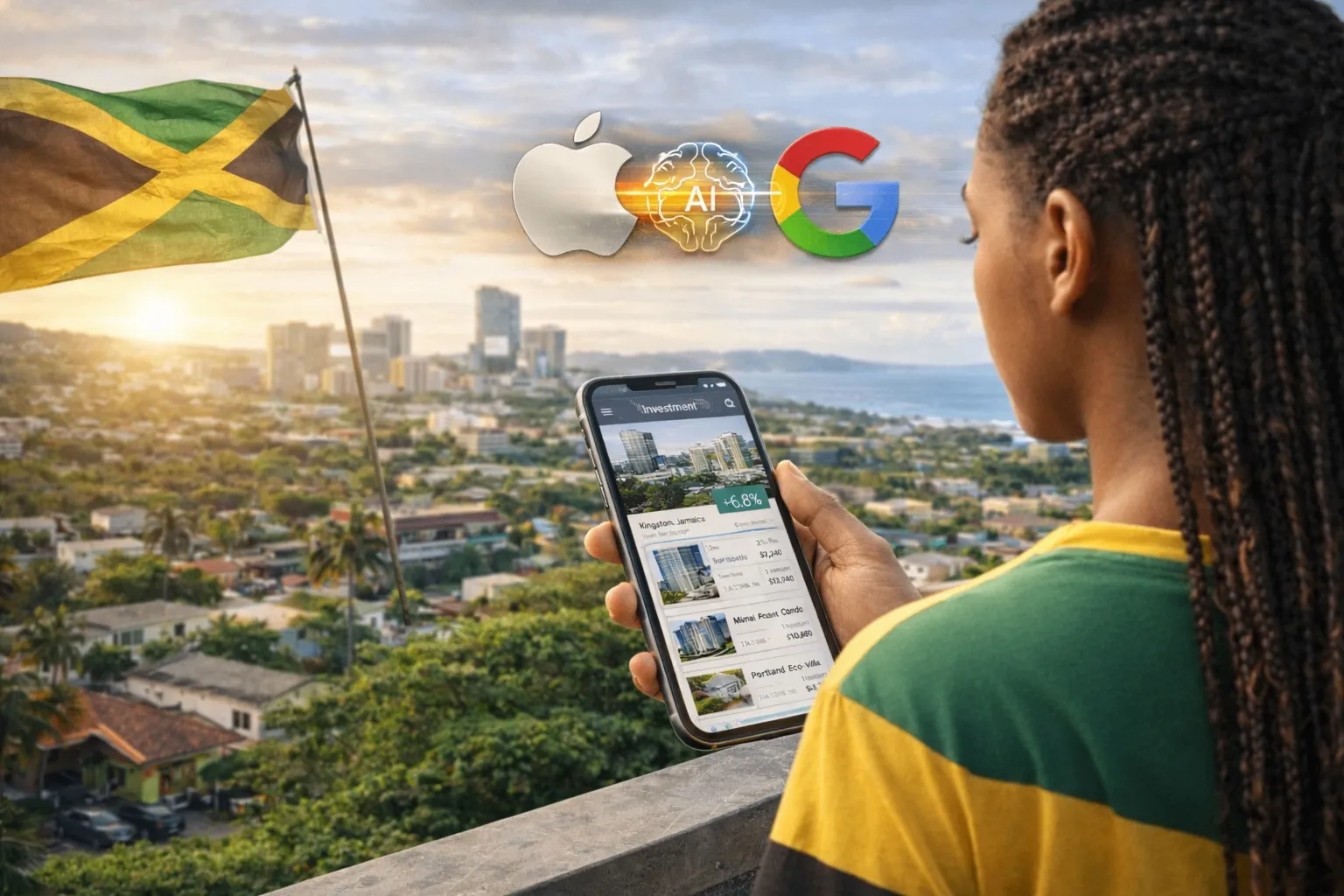
Diaspora buyers will gain unprecedented transparency into the market. They will access verified listings, trustworthy price guidance, neighbourhood insights, legal support, valuationValuation involves assessing the worth of a property based on various factors such as its location, condition, size, and... history, and predictive models that eliminate guesswork and reduce the risk of scams.
For the first time, Jamaica will be able to scaleScale is a fundamental concept in cartography that translates the vastness of the real world into manageable proportions... trust.
That single achievement has the power to reshape the economy.
Will Jamaica Move Fast Enough?
This is the question that sits beneath every national conversation.
Jamaica is resilient.
Jamaica is creative.
Jamaica is innovative.
But Jamaica is also slow.
Slow in legislation.
Slow in infrastructure.
Slow in technological adoption.
Slow in unified national action.
It is not shame—it is reality.
But this time, slowness carries consequences.
The world is not simply advancing; it is accelerating.
AI is not a chapter. It is a new book.
Dean Jones captures the urgency in a line that feels like a lighthouseA lighthouse is a tower or structure equipped with a light, typically situated at the edge of coastlines, on islands, or... cutting through fog:
“The world is not waiting. Jamaica must decide whether to catch up, keep up, or lead.”
If we delay, we risk raising children for a world that will not recognise them.
If we act, we can prepare a generation to shape the world instead of surviving it.
A Vision of Jamaica in 2035
Imagine the Jamaica our children could inherit:
A nation where property ownershipProperty ownership means having the legal right to use, live on, or manage land or a building. In Jamaica, it’s like h... is clearer, safer, and more attainable than ever.
A nation where climate resilience is not guesswork but scientific precision.
A nation where AI education begins in primary school.
A nation where the poorest child has access to the richest knowledge.
A nation where government processes operate with efficiency and integrity.
A nation where communities are planned, not patched.
A nation where diaspora investment is secure and thriving.
A nation where young people build companies, apps, and industries we cannot yet imagine.
Most of all, imagine a Jamaica where our children feel not fear of the future, but ownership of it.
Conclusion: Jamaica Must Build Forward, Not Back
Artificial intelligence will not slow down for us.
Hurricanes will not pause for us.
Global competition will not wait for us.
Our children’s futures will not stretch themselves to fit our pace.
The Jamaica that succeeds in the next decade will be the Jamaica that realises this truth and chooses not merely to adapt, but to transform.
Real estate will be our foundationThe foundation of a building is its underlying support system, designed to distribute the load of the structure and prov....
AI will be our accelerant.
Children will be our reason.
And if we rise to meet this moment, if we choose courage over caution, intelligence over tradition, and strategy over drift, Jamaica will not simply survive the future.
Jamaica will define it.



Join The Discussion