

 by
by 
PeopleThe people of Jamaica embody a spirit that is at once richly diverse and unbreakably unified, as captured by the nationa... More often talk about “the good old days.” They remember JamaicaJamaica, with its vibrant culture and stunning landscapes, has a unique position in the global real estate market. The i... More through the soft glow of memory — the smell of fresh ackeeAckee, Jamaica’s national fruit, holds a special place in the heart of Jamaican culture and language, with its name se... More frying with saltfish, the sound of waves slapping the shore, the laughter of cousins under the mango tree, the warmth of communityIn Jamaica, "community" refers to more than just a geographic area; it embodies a collective identity rooted in shared e... More where everyone knew everyone. But the truth, though wrapped in nostalgia, is that Jamaica today is not the same Jamaica of yesterday.
The island has changed — profoundly, beautifully, and sometimes painfully. The rhythm remains, yes, but the tempo has shifted. The streets are busier, the prices higher, the systems more complex. So when members of the Windrush generationThe Windrush generation, encompassing Caribbean immigrants arriving in the United Kingdom between 1948 and 1971, has lef... More speak of returning home — to the island they left behind in the 1940s, 50s, and 60s — they’re not just talking about geography. They’re talking about time travel.
Because the Jamaica they left no longer exists in quite the same way.
Dreaming of Return: The Romance of Homecoming
For many who left Jamaica for Britain during the Windrush era, “home” has always remained a word full of warmth and longing. It’s a place that lives in the heart — remembered through stories, through music, through food, through the patois that slips out when emotion takes over.
There’s a kind of romance that surrounds the idea of returning home. For decades, people abroad have imagined themselves retiring to a little houseA house serves as a fundamental structure designed for residential living, providing shelter and a place for individuals... More on a hill in St. Elizabeth or a beachfrontBeachfront refers to properties that are directly situated along the edge of the sea or ocean, offering immediate access... More in PortlandPortland is a parish located on Jamaica's northeastern coast, renowned for its lush rainforests, stunning waterfalls, an... More, spending mornings drinking Blue Mountain coffee and evenings listening to the crickets sing. It’s a vision that has carried people through long winters in Birmingham and lonely nights in London.
But when you finally return, you discover that Jamaica — the Jamaica of your childhood — has moved on. The children you once played with have grandchildren of their own. The roads are busier. The schools are more competitive. The politics more layered. The pace of life different.
And that’s where the dream and the reality begin to diverge.
Jamaica Then and Now: What’s Changed
Let’s be honest: Jamaica has evolved. The country is more modern, more connected, and alive in new ways. But that doesn’t mean it’s easy. Many returning residentsReturning Residents are Jamaican nationals (or persons eligible through Jamaican descent or marriage to a Jamaican natio... More are surprised by how much has shifted — not just in infrastructure, but in mindset.
In the 1950s and 60s, Jamaica was a smaller, slower place. Community was tight-knit. Children walked to school in pressed uniforms, and education was the golden ticket to a better life. It still is — but the system is far more competitive now. Parents work tirelessly, sometimes sacrificing everything to ensure their children get into “the right schools.” Tutoring is intense. The pressure is real. The “bright child” doesn’t just happen by luck — it’s the product of relentless effort and discipline.
So when people abroad talk about “how good the JamaicanThe term "Jamaican" encompasses the citizens of Jamaica and their descendants in the Jamaican diaspora, representing a d... More school system used to be,” they’re partly right — but they’re remembering a time when the structure of society, the rhythm of daily life, and even the definition of success were different.
Today’s Jamaica has brilliant minds, yes, but it also faces complex challenges. And for returning residents, understanding that reality is essential. Jamaica is still a landIn real estate, land is a foundational element that significantly impacts the value and potential of a property. It enco... More of opportunity — but opportunity here looks different. It requires adaptability, humility, and patience.
Fantasy vs. Reality: Life in Paradise
Here’s the truth: moving back to Jamaica isn’t like going on holiday.
Many returning JamaicansJamaicans are a resilient and vibrant people with a deep-rooted history defined by courage, resistance, and cultural ric... More — especially those from the UK or the US — find themselves surprised at how different day-to-day life feels once the vacation ends. The heat that feels like bliss on a one-week trip can feel oppressive when you’re waiting in traffic with no breeze and a power cut. The beaches are still there, but you won’t have time to visit them every weekend. The friends who used to live next door might now be abroad, and the family home might need more repairs than you expected. What was meant to be a peaceful return can quickly turn into a never-ending projectA project is a special task or set of tasks that people work on to create something new or make something better. It has... More — the roof leaks, the gate sticks, the pump breaks, and the handyman swears he’s coming “tomorrow.” Before long, many people become slaves to their own homes — the repairs pile up, the bills grow, and the pressure builds. You love the house, but sometimes it feels like the house owns you.
Meanwhile, some people back in the UK imagine that life in Jamaica is one long sun-soaked escape — that those who return are “living the dream.” They drop in for holidays, stay in your guest roomIn Jamaican Patois, the term "room" is commonly used to describe individual spaces within a property, offering a practic... More, eat your food, and marvel at your “paradise.” But they don’t see the water bills, the electricity costs, the careful budgetingBudgeting for a project, like building a house or a building, means making a plan for how much money you’ll need and h... More, or the daily resilience it takes to live comfortably.
On the other side, some Jamaicans at home still romanticise the lives of those who migrated. They imagine the Windrush generation living in mansions, driving big cars, and walking streets paved with gold. The reality, of course, was something else entirely.
The Real Story of the Windrush Generation
The first Jamaicans who arrived in Britain after World War II — men and women invited to rebuild the country — faced unimaginable hardship. They stepped off the Empire Windrush with hope and dignity, only to meet racism, cold weather, and closed doors.
They worked the toughest jobs — in factories, on buses, on trains, in hospitals — often for little pay. Landlords refused them rooms. Signs in windows said “No Blacks, No Dogs, No Irish.” Glass bottles were thrown through windows. Words were hurled like weapons.
But they endured.
They formed communities. They built churches and associations. They created new homes in places like Brixton, Birmingham, Nottingham, Stoke-Newington, and ManchesterManchester is a parish located in central Jamaica, known for its cooler climate and picturesque landscapes. Renowned for... More. ReggaeReggae is a genre of music that originated in Jamaica in the late 1960s, characterized by its distinct rhythm, offbeat t... More and gospel became lifelines. Saturday and Sunday dinners became sanctuaries. They shared food, laughter, and faith.
And amidst the racism and hardship, something beautiful happened — love.
Love in the Time of Windrush
There are countless untold love stories from the Windrush generation — moments where Jamaicans found companionship, solidarity, and even romance in the unlikeliest of places.
One such story is of Brother Lawrence, a Jamaican man who moved to Stoke Newington, London, during the Windrush years. He married a British white woman — at a time when interracial marriage was still controversial, even dangerous. They endured ridicule and violence. Bottles thrown through their window. Insults shouted in the street. But they loved each other fiercely.
When his wife passed away, Brother Lawrence never remarried. He lived to nearly one hundred years old, still honouring her memory, still faithful to God, still humble and strong. His life, like so many of his generation, was a testament to resilience, love, and faith.
Stories like his remind us that even in times of deep pain and injustice, the human heart finds a way to hold on to light. Love, in those years, was not a luxury — it was survival.
Community, Strength, and Faith
For the Windrush generation, community was everything. They had no extended family nearby, no familiar support systems — only each other. They built networks from scratch. When someone couldn’t find work, another would help. When someone’s child needed care, neighbours stepped in. When a fellow Jamaican died, the community raised money for the funeral.
And through it all, faith was the anchor. Church wasn’t just a place of worship — it was a centre of life. It was where people found strength, where children learned values, where adults found belonging.
There was no talk of failure. Failure wasn’t an option. Going back to Jamaica wasn’t an option, either — for many, they couldn’t afford the trip, and pride wouldn’t let them face home “empty-handed.” So they endured, and they built something from nothing.
Now, the Tide Turns Again
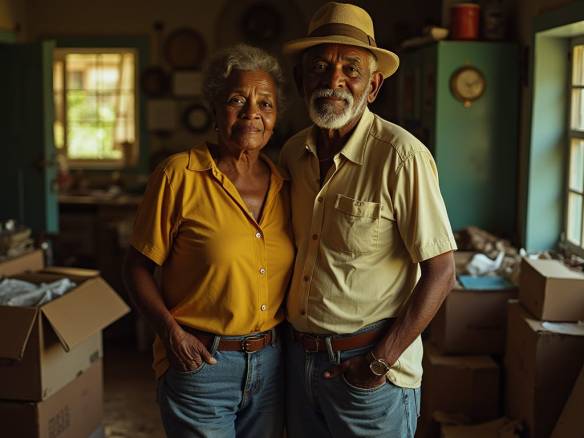
Today, the story is coming full circle. Many descendants of the Windrush generation are now considering moving back to Jamaica — some to retire, some to reconnect, some to rediscover identity.
But returning to Jamaica after decades abroad is not simple. There are emotional, cultural, and practical layers to navigate. The country has changed — and so have you. You’ve lived through a different rhythm, absorbed another culture’s habits, and adjusted to a different kind of order. Jamaica willIn Jamaica, a will is a legal document created by an individual to specify how their assets, including their belongings ... More welcome you, but she will also test you.
Returning home is not about reclaiming the past — it’s about creating a new present.
The Practicalities of Return
If you’re thinking about returning to Jamaica — or even buying propertyProperty encompasses a wide range of tangible assets that individuals or entities can own, utilize, or invest in, includ... More here — do so with both heart and head. Research carefully. Visit for extended stays before making the move permanent. Think about your healthcare, your incomeIncome refers to the money or value that individuals or businesses receive, typically from various sources such as salar... More, your access to services.
And most importantly, adjust your expectations. Life in Jamaica is rewarding, but it demands resilience. The systems can feel slow, the bureaucracy tiring, and the lifestyle different from what you’re used to. But the payoff — the sunshine, the community, the freedom, the deep sense of belonging — is real.
It’s a land where you can wake up to birdsong, where fruit grows in your backyard, where strangers still greet you on the street. It’s a country of contradictions — but also of beauty beyond measure.
The Emotional Truth
Returning to Jamaica is not about finding the same place you left — it’s about discovering who you are now. It’s about reconciling the fantasy with the reality, and still choosing to love the island, flaws and all.
You’ll find that the Jamaica of your memory lives alongside the Jamaica of today. The laughter still rings out, the food still tastes like heaven, the music still stirs your soul. But you’ll also see a country facing real issues — economic, social, and structural — that require understanding, patience, and participation.
In the end, home is not just where you were born. It’s where you choose to build, to love, and to belong — again and again.
Closing Reflections: Between Two Worlds
The Windrush story is not just about migration. It’s about identity, survival, and love that transcends borders. It’s about generations who worked hard so that their children could have choices. It’s about people who carried Jamaica in their hearts even when the streets of London tried to freeze it out of them.
Now, as some of those same hearts turn homeward again, the conversation must be honest. Jamaica is not a postcard. It’s real life — vibrant, complicated, and full of possibility.
So come home, if your spirit calls you. But come home with your eyes open, your heart humble, and your mind ready to adapt. Because the Jamaica you left isn’t gone — it has simply grown.
And perhaps, just like Jamaica, you’ve grown too.
Further Reading
For a deeper look at life, love, and the power of returning home, read Live the Life You Dream — Right Here in Jamaica on Jamaica HomesJamaica Homes is a premier real estate company offering a comprehensive platform for buying, selling, and renting proper... More.



Join The Discussion