
 by
by 
Jamaica’s real estateReal estate refers to property consisting of land and the structures on it, such as buildings and homes. It also include... More market has never stood still. From colonial plantations to post-independence subdivisions, gated villas to urban renewal zones, the landscape has always reflected the pulse of the island — its history, its hardships, and its hope. And now, in 2025, that landscape is shifting again. Quietly, but unmistakably.
Today, buyers are regaining power. Inventory is rising. And beneath the headlines, there’s something deeper happening: the JamaicanThe term "Jamaican" encompasses the citizens of Jamaica and their descendants in the Jamaican diaspora, representing a d... More property marketThe property market operates through a mix of formal and informal constraints that shape the behaviour of market players... More is maturing, recalibrating, and moving toward a more sustainable balance.
For those who’ve been watching, waiting, or wondering whether this is the time to buy — the answer lies not just in today’s statistics, but in the story that’s been unfolding for decades. A story that connects our past to our present, and our present to the future of owning landIn real estate, land is a foundational element that significantly impacts the value and potential of a property. It enco... More on this island.
The Colonial Foundations: Land, Power and LegacyLegacy, in the context of Jamaica, real estate, and the broader world, represents the enduring impact of past actions, a... More
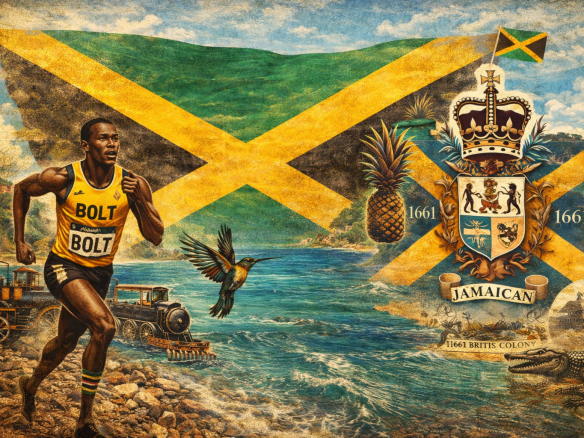
To understand the real estateIn Jamaican real estate, an estate refers to the total collection of assets and property owned by an individual, especia... More market today, we must first look back. In colonial JamaicaJamaica, with its vibrant culture and stunning landscapes, has a unique position in the global real estate market. The i... More, land was the ultimate currency — and it was almost entirely in the hands of a few. Vast sugar estates sprawled across the island, worked by the enslaved and enriched by absentee owners.
Emancipation in 1838 shifted the narrative, but not the imbalance. Freed JamaicansJamaicans are a resilient and vibrant people with a deep-rooted history defined by courage, resistance, and cultural ric... More often found themselves shut out of meaningful land ownershipLand ownership is the legal right to possess, use, and control a piece of land, often including any structures or resour... More, facing high prices, scarce availability, and systemic barriers. Over time, however, small parcels were acquired, villages grew, and generational titles were established. That patch of land in the country? It wasn’t just propertyProperty encompasses a wide range of tangible assets that individuals or entities can own, utilize, or invest in, includ... More — it was freedom, identity, and legacy.
Fast forward to the 1960s. Independence brought a surge of optimism and constructionConstruction is the dynamic process of designing and erecting buildings and infrastructure, crucial for shaping modern l... More. Housing schemes blossomed across St. CatherineSt. Catherine, established in 1664, is one of Jamaica’s seven oldest parishes. Spanning 459.7 square miles, it became ... More and KingstonKingston, the capital city of Jamaica, embodies a dynamic fusion of historical depth and contemporary vitality. Establis... More. Suburbia took root. Homeownership was a national dream, and for many, it finally became reality.
How the Market Has Shifted in the 21st Century
By the 2000s, Jamaica’s property market was becoming increasingly international. DiasporaIn the context of Jamaica, real estate, and the broader global sphere, diaspora refers to the community of Jamaicans liv... More buyers, investors, and returning residentsReturning Residents are Jamaican nationals (or persons eligible through Jamaican descent or marriage to a Jamaican natio... More saw the island as not just home, but opportunity. Gated communities expanded. Tourism-linked developments emerged. Prices rose, particularly in areas like Montego BayMontego Bay, often referred to as MoBay, is one of Jamaica's most popular tourist destinations, known for its stunning b... More, NegrilNegril is a popular town on the western coast of Jamaica, known for its stunning white-sand beaches and laid-back vibe. ... More, and the Blue MountainsThe Blue Mountains are a famous mountain range in Jamaica, and they’re special for many reasons. The highest point in ... More.
Then came the global financial crisis. The market contracted. Speculative projectsA project or projects, within the Jamaican context, refers to a planned endeavor undertaken to achieve specific goals or... More stalled. But Jamaica’s real estate never collapsed — in part because our fundamentals, such as limited land supply and cultural attachment to ownership, remained intact.
In the 2010s, government policies helped revive growth: National Housing Trust (NHTNHT (National Housing Trust) is a Jamaican government agency dedicated to enhancing housing accessibility and affordabil... More) programmes supported first-time buyers; infrastructure projects like highways and airports made rural land more attractive. And foreign interest continued to climb.
By the time the pandemic arrived in 2020, real estate was already moving online. Zoom viewings, drone photography, digital closings — these weren’t novelties, they were necessities. But they also opened the market to a new generation: younger, more mobile, and eager for value.
Where We Stand in 2025: BuyerA buyer is an individual or entity that acquires goods, services, or properties through a transaction, motivated by a ne... More Advantage, Market Correction, and Long-Term Stability
Now, we find ourselves at a curious moment — one where the market, after years of feverish growth, is catching its breath.
Prices, while still rising in some areas, are stabilising in others. Inventory is improving, especially in suburban and semi-rural regions. Sellers, once commanding top dollar without negotiation, are now more open to discussions. Homes are sitting slightly longer. And buyers, especially those armed with financing or cash, are seeing more leverage than they’ve had in years.
“In every real estate cycle, there’s a moment where the savvy don’t rush — but they don’t stall either. This is that moment.”
— Dean JonesDean Jones is a chartered builder, project manager, licensed real estate professional and the founder of Jamaica Homes, ... More, Founder of Jamaica HomesJamaica Homes is a premier real estate company offering a comprehensive platform for buying, selling, and renting proper... More and Realtor AssociateA Realtor Associate in Jamaica is a registered real estate salesman licensed under the Real Estate (Dealers and Develope... More at Coldwell Banker Jamaica RealtyJamaica Realty represents the broad and evolving landscape of real estate services in Jamaica, encompassing the buying, ... More
And importantly, this isn’t a crash. It’s not a bubble. It’s a correction — a necessary rebalancing after years of overheated activity, both locally and globally. We’re seeing healthier market behaviour. Sellers pricing more realistically. Buyers with roomIn Jamaican Patois, the term "room" is commonly used to describe individual spaces within a property, offering a practic... More to negotiate. Agents working harder to make meaningful matches.
Today’s Trends: What’s Actually Happening in the Jamaican Market
- Increased Inventory:
More properties are coming online, especially in parishes like St. Catherine, ClarendonClarendon is a parish situated in central Jamaica, known for its diverse landscape that includes fertile plains and roll... More, and sections of St. Elizabeth. In places once overlooked, like Four PathsFour Paths is a vibrant community located in the parish of Clarendon, Jamaica. Historically, it was recognized as a suga... More or Lionel Town, infrastructure upgrades and diaspora interest are creating new momentum. - Diaspora Buyers Returning with Purpose:
It’s not just about retirement anymore. Many buyers from the UK, US, and Canada are now looking for hybrid homes — live-in properties that can also be rented on AirbnbAirbnb is a website where people can rent out their homes or rooms to travelers who need a place to stay for a short tim... More or used seasonally. Their eyes are sharp, and their expectations high. - Urban Densification and Mixed-Use DevelopmentMixed-use development refers to a real estate project that combines residential, commercial, and sometimes industrial sp... More:
In Kingston and Montego Bay, vertical living is rising. Apartments with securityIn Jamaican real estate, security refers to assets pledged to back a loan or financial obligation. Typically, the proper... More, pools, and shared amenitiesThe amenities and extras that are included vary from house to house. Certain residents only get access to exclusive bene... More are selling quickly, especially to professionals and young families. - Coastal and Rural Land Still in Demand:
Whether it’s farm-to-table dreams or eco-tourism ventures, rural land remains a stronghold — especially if it has water access, road links, or scenic views.
What Buyers Need to Know Right Now
You won’t see slashed prices across the board. Jamaica’s market isn’t saturated. But what you willIn Jamaica, a will is a legal document created by an individual to specify how their assets, including their belongings ... More see is:
- More sellers willing to discuss terms
- Listings with slight price reductions
- Developers offering incentives
- A bit more breathing room in decision-making
This is especially true for mid-market and high-end homes, where competition has eased. In lower-income housing, demand remains very high, and prices are still climbing — particularly due to limited supply.
“The property game is not about timing the market. It’s about understanding your timing — your needs, your goals, and how they align with what the market offers.”
— Dean Jones
The Legacy Perspective: Why Jamaicans Still Value Land Above All
At its core, owning land in Jamaica isn’t just financial — it’s cultural. It’s the thing your grandmother prayed over, your uncle fenced off, your cousin promised to build on next year.
It’s why “titleA title is a crucial document that establishes legal ownership of a property. When a buyer agrees to purchase real estat... More” still holds power in everyday conversation. It’s why disputes over lots stretch generations. It’s why real estate, even with the hassles, is still the most trusted form of wealth on the island.
This is part of what makes Jamaican real estateJamaican real estate encompasses a diverse property market within Jamaica, including residential homes, commercial build... More so resilient. When global markets wobble, we don’t panic — we hold. Because we know, deep down, that land is the one thing they’re not making more of. Especially not on an island.
Looking Ahead: The Future of Jamaican Property OwnershipProperty ownership means having the legal right to use, live on, or manage land or a building. In Jamaica, it’s like h... More
As we move further into 2025, here’s what we can expect:
- Tech-driven buying experiences: Online portals, remote closings, and digital viewings are the new normal.
- Greater regulatoryIn Jamaica, regulatory measures are the formal rules and standards established by government authorities to oversee and ... More clarity: Title processing and land registration, long plagued by delays, are slowly improving due to policyIn Jamaica, a policy represents a guiding principle or course of action adopted by governmental bodies, organizations, o... More reforms.
- Stronger international interest: With Jamaica’s stable democracy, proximity to the U.S., and natural beauty, the world continues to watch our market.
- Focus on sustainability: Green building codes, solar installations, and water capture systems are increasingly being built into new developments.
And yet, the core will remain the same. Real estate in JamaicaReal estate in Jamaica refers to the buying, selling, leasing, and development of properties on the island, encompassing... More will still be about family. About returning home. About investing in a future that feels tangible.
“A houseA house serves as a fundamental structure designed for residential living, providing shelter and a place for individuals... More isn’t just shelter. In Jamaica, it’s proof that you’ve claimed your space in history — and staked your hope in tomorrow.”
— Dean Jones
The Bottom Line: Don’t Miss the Window
Right now, in 2025, Jamaica’s real estate market offers something rare: opportunity wrapped in realism. It’s not flashy. It’s not volatile. But it is open.
Open to negotiation. Open to strategy. Open to those who understand that owning a piece of this island is not just a transaction — it’s a turning point.



Join The Discussion