
 by
by 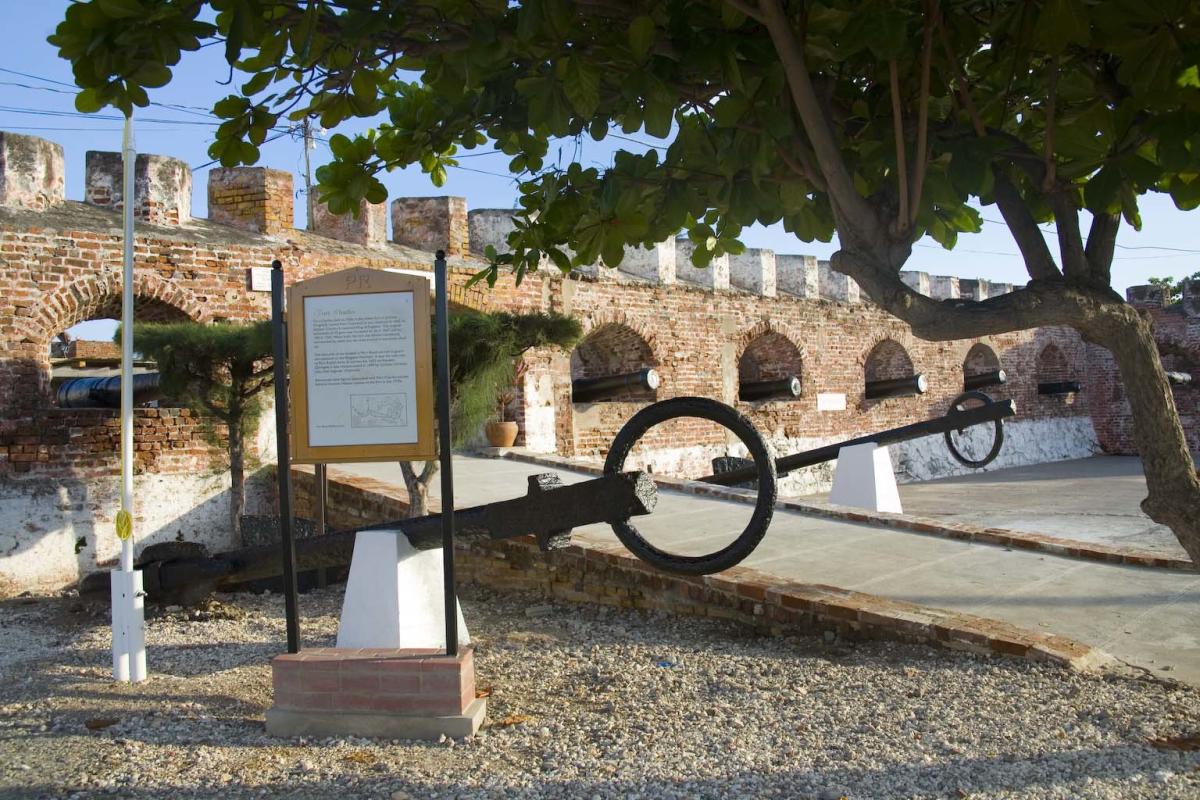
Port RoyalPort Royal is a historic town located at the end of a narrow peninsula in southeastern Jamaica, known for its significan... More, JamaicaJamaica, with its vibrant culture and stunning landscapes, has a unique position in the global real estate market. The i... More, often dubbed “the wickedest city on earthIn the late 1600s, Port Royal, Jamaica, became infamous as the "Wickedest City on Earth," a name that reflected its stat... More,” conjures images of pirates, naval battles, and untold wealth. Its history is as turbulent as it is intriguing, with the cityA city in Jamaica , like those around the world, is a vibrant Hub of culture, commerce, and community, where the pace of... More reaching its peak in the late 17th century before being devastated by a catastrophic earthquake in 1692. Today, Port Royal is a small fishing village, but its past lives on, preserved beneath the waters of KingstonKingston, the capital city of Jamaica, embodies a dynamic fusion of historical depth and contemporary vitality. Establis... More Harbor. This article delves into the rich history of Port Royal, its rise and fall, and the architectural remnants that tell the tale of this once-thriving hubIn the Jamaican real estate landscape, a hub refers to a central point of activity or a focal area that drives growth an... More.

Historical Background
The Rise of Port Royal
Port Royal is located at the end of an 18-mile-long sand spit known as the Palisadoes, approximately 15 miles from Kingston, Jamaica’s capitalCapital refers to the financial resources, whether in the form of equity, debt, or other assets, that individuals or bus... More. Originally, the site was used by the SpanishThe Spanish first arrived in Jamaica in 1494, marking a significant European influence that shaped the island’s early ... More for careening ships and was named Cayo de Carena. However, the Spanish did not establish a permanent settlement.
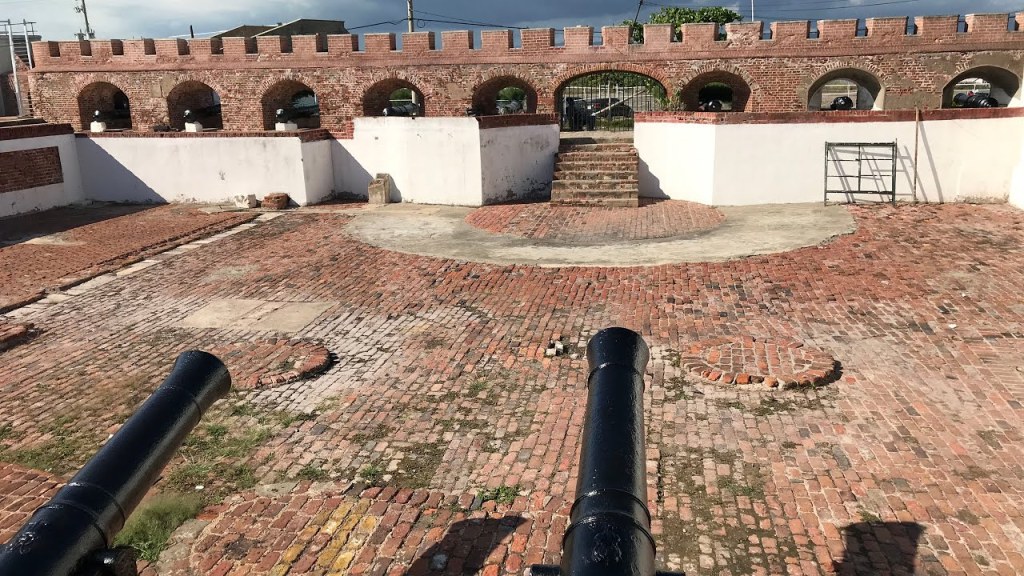
In 1655, the English captured Jamaica from the Spanish, recognizing the strategic importance of Port Royal in defending the island from potential recapture. The English rapidly fortified the area, constructing Fort Cromwell (later renamed Fort CharlesFort Charles, located in the historic town of Port Royal, Jamaica, stands as a striking testament to the island’s colo... More) and several other forts, making Port Royal one of the best-defended settlements in the CaribbeanThe Caribbean is a vast region made up of over 700 islands, islets, reefs, and cays. Some of the most well-known islands... More.
Port Royal’s natural harbor, with its deep waters close to shore, allowed large ships to dock easily, facilitating trade and the rapid growth of the town. Between 1655 and 1692, Port Royal grew from a small settlement to the most important trading hub in the New World. By 1692, it was home to an estimated 6,500 to 10,000 peopleThe people of Jamaica embody a spirit that is at once richly diverse and unbreakably unified, as captured by the nationa... More, including merchants, artisans, sailors, and slaves, housed in approximately 2,000 buildings spread over 51 acres.
Economic Hub and Den of Pirates
Port Royal’s economy was centered on the slave trade, the export of sugar and raw materials, and its role as a mercantile hub. It was also notorious for its association with piracy. English privateers and buccaneers used Port Royal as a base for raiding Spanish ships and settlements, bringing back immense wealth. Despite official efforts to curb piracy, the practice continued well into the 18th century.
The city boasted a variety of amenitiesThe amenities and extras that are included vary from house to house. Certain residents only get access to exclusive bene... More, including churches, taverns, markets, and the homes of wealthy merchants. Captain John Taylor, writing in 1688, described Port Royal as a formidable city with well-built, multi-story brick houses, tiled roofs, and sash windows. Francis Hanson, in 1682, detailed the prosperity of its citizens, noting the abundance of luxury goodsGoods refer to physical items produced for consumption or sale, encompassing a wide array of products from basic necessi... More and the use of coins for currency instead of commodity exchange.
The 1692 Earthquake and Aftermath
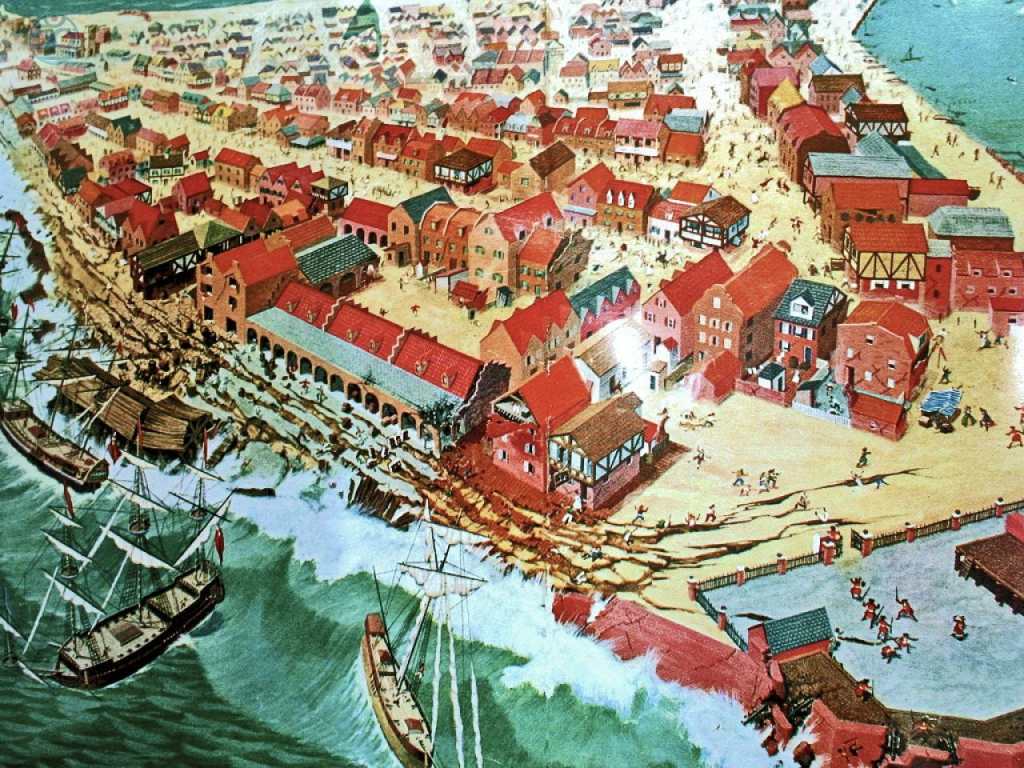
Port Royal’s golden age came to an abrupt end on June 7, 1692, when a massive earthquake struck the city. The earthquake, followed by a tidal wave, caused two-thirds of the town to sink into the sea. Approximately 20 acres of the original 51 acres were submerged, and an estimated 2,000 people died immediately, with another 3,000 succumbing to injuries and disease in the following days.
Despite the devastation, some survivors remained, and efforts were made to revive trade. However, a fire in 1703 and subsequent hurricanesHurricanes, powerful tropical storms characterized by strong winds and heavy rains, significantly impact both Jamaica an... More in 1712, 1722, 1726, and 1744 further hindered recovery. By the 18th century, Port Royal had transitioned from a commercial hub to a British naval station, a role it retained until 1905. Today, the village has a populationPopulation refers to the total number of people inhabiting a defined geographic area and encompasses their demographic, ... More of about 2,000, but its underwater ruins continue to attract interest.
Archaeological Significance
Port Royal is a unique archaeological site, often compared to catastrophic sites like Pompeii and Herculaneum. Unlike typical archaeological sitesArchaeological sites in Jamaica, such as the ancient Taino settlements and colonial-era structures, offer valuable insig... More that evolve over long periods, Port Royal’s destruction preserved the city as it was in 1692. This preservation provides a snapshot of life in a 17th-century Caribbean port.
Underwater Excavations
The first major underwater excavations were conducted by Edwin Link in the 1950s, focusing on areas near Fort James and the King’s WarehouseA warehouse in Jamaica and the rest of the world serves as a crucial facility for the storage and distribution of goods,... More. Subsequent excavations by Robert Marx in the 1960s and Donny Hamilton from 1981 to 1990 revealed well-preserved structures and artifacts along Lime Street and other parts of the sunken city.
Key Findings
- Building 1: A well-built brick structure with six ground-floor rooms and at least one upper story. Artifacts suggest it housed a cobbler’s shopIn Jamaica real estate, and globally, a shop is more than just a commercial space—it’s a community hub where daily l... More, a wood turner’s workshop, a butchering area, and a tavern.
- Building 3: A timber-framed building with raised sills, indicating it was likely two stories high. Artifacts suggest it was used for storage and food preparation.
- Buildings 4/5: A large complex with multiple rooms and yards, likely serving as residences and shops. Artifacts include pewter plates, clay smoking pipes, and food preparation tools.
Shipwrecks
Several shipwrecks dating from the 17th and 18th centuries have been discovered near the harbor. Notable among them is the HMS Swan, a fifth-rate warship lost in the 1692 earthquake, and other vessels associated with piracy and privateering.
Architectural Legacy
Despite the many disasters, some terrestrial structures from Port Royal’s heyday have survived, providing insight into the architectural stylesArchitectural styles in Jamaica and globally represent the distinctive characteristics and design principles that define... More and building techniques of the time.
The Naval Hospital
Rebuilt in 1818, the Naval Hospital is a rare example of a building using pre-fabricated cast iron units imported from England. It features a “raft-foundation” for added stability against hurricanes and earthquakesEarthquakes, natural events caused by the sudden release of energy in the Earth's crust, can have significant impacts on... More. Today, it houses the National Museum of Archaeology.
The Naval Dockyard
Remnants of the dockyard include the coaling wharf, the naval storehouse, and the Admiralty HousesThe Admiralty Houses in Jamaica, located in Kingston, are a notable reflection of the island’s colonial architectural ... More built in the late 1800s. The foundations of St. Paul’s Church (1682) have also been uncovered.
Historic Buildings
Two historic buildings remain in the modern town: the gaol-house, built in 1710, and McFarlane’s Bar, constructed in the 19th century. Both structures reflect the architectural styles of their respective periods.
The Future of Port Royal
Efforts to preserve and develop Port Royal for tourismTourism in Jamaica refers to the industry focused on attracting visitors to the island, who come to experience its natur... More have been ongoing for decades, but challenges remain. The underwater city is an archaeological preserve, and diving is restricted to protect the site. Plans for tourism developmentIn Jamaica, the term "development" can refer to various contexts, each with its unique focus and implications. Real esta... More must balance economic benefits with the need to preserve Port Royal’s unparalleled archaeological record.
Port Royal’s history is a testament to its resilience and significance. From its days as a bustling port to its role as a British naval base, the city has left an indelible mark on Jamaica’s cultural heritageHeritage, in the context of Jamaica, real estate, and the rest of the world, refers to the tangible and intangible asset... More. As research continues, new discoveries willIn Jamaica, a will is a legal document created by an individual to specify how their assets, including their belongings ... More undoubtedly shed further light on this fascinating chapter of Caribbean history.



Join The Discussion