
 by
by 
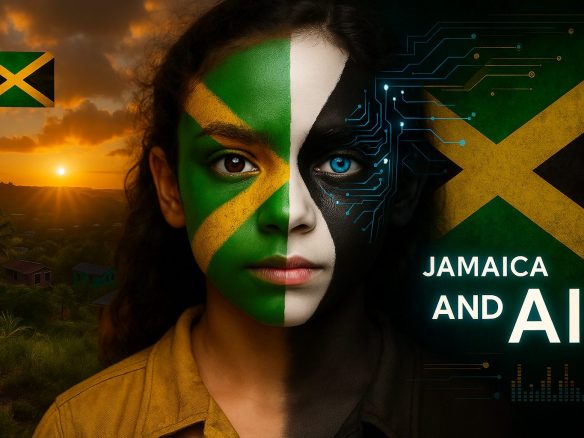
We are living through a revolution. Not the kind that announces itself with muskets and marching boots, nor the kind that replaces one flag with another. This one hums quietly in data centres, whispers through smartphones, and calculates behind the scenes while we rebuild homes, businesses, and communities.
The question is not whether change is happening. The question is: what kind of change is it?
Is it a transhumanist leap into something beyond human? Or is it something more familiar — an industrial revolution of our age, reshaping labour, economics, power and identity?
Subscribe to Jamaica HomesJamaica Homes is a premier real estate company offering a comprehensive platform for buying, selling, and renting proper... More
JamaicaJamaica, with its vibrant culture and stunning landscapes, has a unique position in the global real estate market. The i... More Homes is a reader-supported publication.
Jamaica Homes brings together peopleThe people of Jamaica embody a spirit that is at once richly diverse and unbreakably unified, as captured by the nationa... More, propertyProperty encompasses a wide range of tangible assets that individuals or entities can own, utilize, or invest in, includ... More, and place News, insight, and real opportunities—straight to your inbox.
From a JamaicanThe term "Jamaican" encompasses the citizens of Jamaica and their descendants in the Jamaican diaspora, representing a d... More perspective, the answer demands careful reflection. We are a people forged in resilience — from plantation economies to independence, from structural adjustment to globalisation. We understand upheaval. But this digital-industrial revolution is different. It does not only alter how we work; it threatens to redefine how we govern, transact, and even think.
And in a nation steadily regathering its footing and strengthening its foundations, we must approach this conversation with both hope and discernment.
A Revolution Without Smoke, But Not Without Fire
When the Industrial Revolution reached our shores centuries ago, it came through sugar estates, shipping routes, and imperial trade systems. It shaped Jamaica’s economy for generations.
Today’s revolution arrives through fibre-optic cables, satellite connections, and artificial intelligenceArtificial intelligence, or AI, is like a super-smart computer program that can learn, think, and make decisions, just l... More systems. It is quieter — but no less powerful.
AIArtificial Intelligence, or AI, is like a super-smart computer that can think and learn to do things humans usually do, ... More is already transforming banking, real estateReal estate refers to property consisting of land and the structures on it, such as buildings and homes. It also include... More, logistics, agriculture, and public administration. In KingstonKingston, the capital city of Jamaica, embodies a dynamic fusion of historical depth and contemporary vitality. Establis... More, Montego BayMontego Bay, often referred to as MoBay, is one of Jamaica's most popular tourist destinations, known for its stunning b... More, and across our diasporaIn the context of Jamaica, real estate, and the broader global sphere, diaspora refers to the community of Jamaicans liv... More networks in the UK, Canada and the US, algorithmsAlgorithms are like step-by-step recipes that tell computers what to do to solve problems or make decisions. In Jamaica,... More are influencing how loans are approved, how properties are marketed, how crops are monitored, and how customers are served.
This is not theoretical. It is practical. Immediate. Present.
Yet there is a profound ethical lag. TechnologyTechnology, in its original definition, refers to the application of scientific knowledge for practical purposes, often ... More is developing faster than our moral frameworks can keep pace. The tools are sophisticated; the guardrails are still under constructionConstruction is the dynamic process of designing and erecting buildings and infrastructure, crucial for shaping modern l... More.
As Dean JonesDean Jones is a chartered builder, project manager, licensed real estate professional and the founder of Jamaica Homes, ... More, Founder of Jamaica Homes and Realtor AssociateA Realtor Associate in Jamaica is a registered real estate salesman licensed under the Real Estate (Dealers and Develope... More, puts it:
“Technology must serve the dignity of the Jamaican people, not silently designDesign is the art and science of creating plans and specifications for the construction of objects, structures, and syst... More systems that decide our future without us.”
That statement is not anti-technology. It is pro-human. And that distinction matters.
The Jamaican Context: We Must Flip the Script
Much of the global debate about AI comes from the United States, China, and Europe — large economies with vast research budgets and geopolitical competition driving innovation.
Jamaica operates differently. We are not in an AI arms race. We are not building autonomous weapons. We are not leading trillion-dollar tech conglomerates.
But we are usersIn Jamaica's real estate market, as in the rest of the world, "users" refer to the individuals or entities interacting w... More. And users are affected.
In the United States, conversations often focus on superintelligence, transhumanism, or even apocalyptic speculation. In Jamaica, our immediate concerns are more grounded:
- WillIn Jamaica, a will is a legal document created by an individual to specify how their assets, including their belongings ... More AI displace BPO workers in Montego Bay?
- Will automated systems reshape banking access?
- Will property transactionsIn Jamaica, property transactions refer to the legal processes involved in buying, selling, or transferring ownership of... More become more digitised?
- Who controls the data of Jamaican citizens?
- How do we ensure inclusion rather than exclusion?
The revolution looks different from here. And that difference matters.
We must resist importing American hype — whether utopian or dystopian — without filtering it through Jamaican realities.
The Lewis Warning: Tools and Power
In 1940, The Abolition of Man by C. S. Lewis offered a chilling observation: technology presents itself as humanity’s conquest over nature, but in reality it becomes the power of some people over others.
That warning feels strikingly contemporary.
When AI systems determine creditworthiness, who designs the criteria?
When automated moderation filters speech, whose standards shape the boundaries?
When predictive analytics guide policing or economic forecastingForecasting involves using historical data and analytical techniques to predict future trends and outcomes, providing va... More, who checks the bias?
Technology is never neutral. It reflects the values, assumptionsAssumptions are underlying conditions or factors that are accepted as true or certain without concrete proof, which infl... More, and incentives of those who build and deploy it.
For Jamaica, the danger is not that we will build an all-controlling AI dictatorship tomorrow. The danger is subtler: adopting systems built elsewhere, embedding foreign assumptions into local realities, and gradually surrendering agency.
Lewis warned that unchecked technological control could produce not fully human beings, but artifacts — shaped, engineered, manipulated.
That may sound dramatic. But consider this: if every financial decision, employment screening, educational recommendation, and social media feed is algorithmically curated, how much autonomy remains?
The issue is not AI replacing humans. The issue is AI shaping humans.
Economics, Control, and the Caribbean Imagination
Some thinkers argue that AI could eventually create economic systems so integrated and centralised that dissent becomes economically impossible — access to trade, finance, and opportunity mediated through digital infrastructure.
For large authoritarian states, that possibility raises obvious concerns. For Jamaica, a small democratic island nation with deep global ties, the question is different:
How do we harness digital tools to strengthen freedom rather than erode it?
We already operate in a globalised economic system. International banking regulations affect us. Global capitalCapital refers to the financial resources, whether in the form of equity, debt, or other assets, that individuals or bus... More markets influence us. Diaspora remittances sustain many households.
AI will simply intensify that interconnectedness.
But here lies a critical insight: Jamaica has always adapted foreign systems creatively. We took English common lawCommon law in Jamaica refers to the body of legal principles and precedents developed through judicial decisions and cas... More and shaped it. We took global religions and localised them. We took imported music forms and gave birth to reggaeReggae is a genre of music that originated in Jamaica in the late 1960s, characterized by its distinct rhythm, offbeat t... More and dancehall.
Why should AI be any different?
The Risk of Slavery Reimagined
Some commentators warn that advanced AI could enable unprecedented forms of control — economic systems with “lethal powers” over populations. That language is strong. It evokes apocalyptic imagery.
Yet Jamaica understands slaverySlavery in Jamaica, which began in the early 17th century following the island's colonization by the British, was a brut... More not as metaphor but as history.
We must therefore be careful with comparisons. There is no equivalence between historical chattel slavery and algorithmic governance.
However, there is a moral echo worth noting: systems that remove agency, concentrate power, and reduce individuals to data points must always be interrogated.
The worst slavery is not chains on the wrist. It is systems that quietly condition behaviour while convincing you that you are free.
That is why ethical oversight is not optional. It is essential.
The Arms Race We Are Not In — But Still Affected By
Globally, AI developmentIn Jamaica, the term "development" can refer to various contexts, each with its unique focus and implications. Real esta... More resembles an arms race. Nations fear that if they do not push forward aggressively, another will dominate.
Jamaica is not building large language models at scaleScale is a fundamental concept in cartography that translates the vastness of the real world into manageable proportions... More. But we import the outputs of those who do.
The pressure elsewhere — “If we don’t do it, someone else will” — influences the technologies that eventually reach our shores.
This creates a delicate balancing act for policymakers and business leaders:
- Encourage innovation.
- Protect citizens.
- Attract investment"Investment" in the realm of real estate refers to the allocation of money or resources into property with the expectati... More.
- Preserve sovereignty.
These goals are not mutually exclusive. But they require thoughtful governance.
As Dean Jones observes:
“Innovation without ethics is just acceleration — and acceleration without direction can drive a nation off course.”
Real Estate, AI, and the Human Element
In real estateIn Jamaican real estate, an estate refers to the total collection of assets and property owned by an individual, especia... More — my own sphere of reflection — AI is already altering the terrain.
Property valuations can be algorithmically estimated.
MarketingThe process of determining, generating, and providing value to a target market in order to fulfill the demands of that m... More campaigns can be automated.
Chatbots can handle enquiries 24/7.
Data analytics can predict neighbourhood trends.
These tools can empower agents and buyers alike. They can increase transparency and efficiency.
But there is a danger in imagining that property is purely transactional. In Jamaica especially, property is emotional. It is inheritanceInheritance is the process by which property, money, or other valuable assets are passed down from one person to another... More. It is family landIn real estate, land is a foundational element that significantly impacts the value and potential of a property. It enco... More. It is “yardIn Jamaican Patois, the term "yard" carries a special significance beyond its literal meaning of a plot of land. Traditi... More.” It is memory and aspiration intertwined.
An algorithm may estimate square footageIn real estate, square footage refers to the measurement of livable space within a property, which plays a critical role... More and market demand. It cannot calculate the emotional value of a verandah where three generations gathered on Christmas morning.
And if we ever reduce our housing market to purely data-driven exchanges, we riskA risk is the possibility of an adverse outcome or loss arising from uncertainty or potential hazards. It represents the... More flattening something profoundly human.
AI can assist. It must not replace discernment, empathy, and lived experience.
The Hype and the Fear
Some global voices speak as if AI is either salvation or doom. On one end of the spectrum are those who envision a post-human future — simulated consciousness, merged intelligence, the end of biological limitation.
On the other end are those who predict totalitarian digital empires.
Both extremes attract attention. Neither fully captures the Jamaican reality.
Our concerns are practical:
- Employment stability.
- Educational readiness.
- Digital literacy.
- Cybersecurity.
- Fair access.
We do not need hysteria. We need clarity.
The revolution is real. But it will unfold unevenly, imperfectly, and in ways shaped by local choices.
Germline Modification and Human Boundaries
The conversation sometimes extends beyond AI into biotechnology — altering human genetics at the germline level, permanently affecting future generations.
That possibility raises immense ethical questions. For a country like Jamaica, with a strong religious and cultural fabric, such developments would provoke serious debate.
Who decides what constitutes “improvement”?
What traits are valued?
What inequalities might deepen?
The more powerful the tool, the greater the responsibility.
Technological capability does not equal moral legitimacy.
The Mission Statement Problem
In business, it is notoriously difficult to translate a mission statement on a wall into daily behaviour.
If that is challenging within a single company, imagine implementing ethical alignment across global AI systems spanning continents and cultures.
Controls are difficult. Enforcement is harder. International coordination is complex.
Yet complexity is not an excuse for passivity.
Jamaica has navigated international financial compliance regimes, climate commitments, and regional cooperation frameworks. We are capable of participating in global AI governance conversations — not as passive recipients, but as thoughtful contributors.
Reclaiming Agency
Ultimately, the question is not whether AI will evolve. It will.
The question is whether we will evolve our ethical frameworks at the same pace.
We cannot outsource moral reflection to Silicon Valley, Beijing, or Brussels. Nor can we afford technological isolation.
We must cultivate:
- Digital literacy in our schools.
- Ethical reasoning in our universities.
- RegulatoryIn Jamaica, regulatory measures are the formal rules and standards established by government authorities to oversee and ... More competence in our public institutions.
- Critical thinking in our citizenry.
As Dean Jones reflects:
“The future of Jamaica will not be written by algorithms alone. It will be written by the courage of a people who choose wisdom over panic and purpose over profit.”
That is not rhetoric. It is strategy.
A Quiet Confidence
Jamaica has survived plantation economies, colonial rule, financial crises, and natural disastersNatural disasters, such as hurricanes, earthquakes, and floods, arise from environmental processes that can cause signif... More. We have rebuilt — repeatedly.
This new revolution, though profound, is not beyond our capacity to navigate.
We must avoid naïveté. We must avoid blind adoption. We must avoid imported hysteria.
But we must also avoid paralysis.
Technology is not descending from the heavens. It is built by human beings. And what humans build, humans can govern.
The witty irony is that in a world worried about machines becoming too intelligent, we might solve the problem simply by insisting that humans become more thoughtful.
Not louder. Not more reactive. More thoughtful.
Conclusion: The Choice Before Us
This is an industrial revolution of our age — one with digital machinery instead of steam engines. It carries enormous promise and undeniable risk.
For Jamaica, the pathA path, in the context of Jamaica and real estate globally, refers to a route or passage that provides access from one p... More forward is neither rejection nor surrender. It is stewardship.
We must ask hard questions.
We must demand transparency.
We must centre human dignity.
We must ensure that innovation uplifts rather than controls.
And above all, we must remember that revolutions do not determine destinies. People do.
The world has changed forever. That much is clear.
But whether that change deepens freedom or narrows it — whether it strengthens communities or fragments them — depends on choices made not only in global capitals, but here at home.
Jamaica has always found a way to transform pressure into creativity.
There is no reason to believe we cannot do so again.
Discover more from Jamaica Homes
Subscribe to get the latest posts sent to your email.
Discover more from Jamaica Homes
Subscribe to get the latest posts sent to your email.


Join The Discussion