

Silicon Dreams and Jamaican Souls: Can Technology Save Us Without Losing Ourselves?

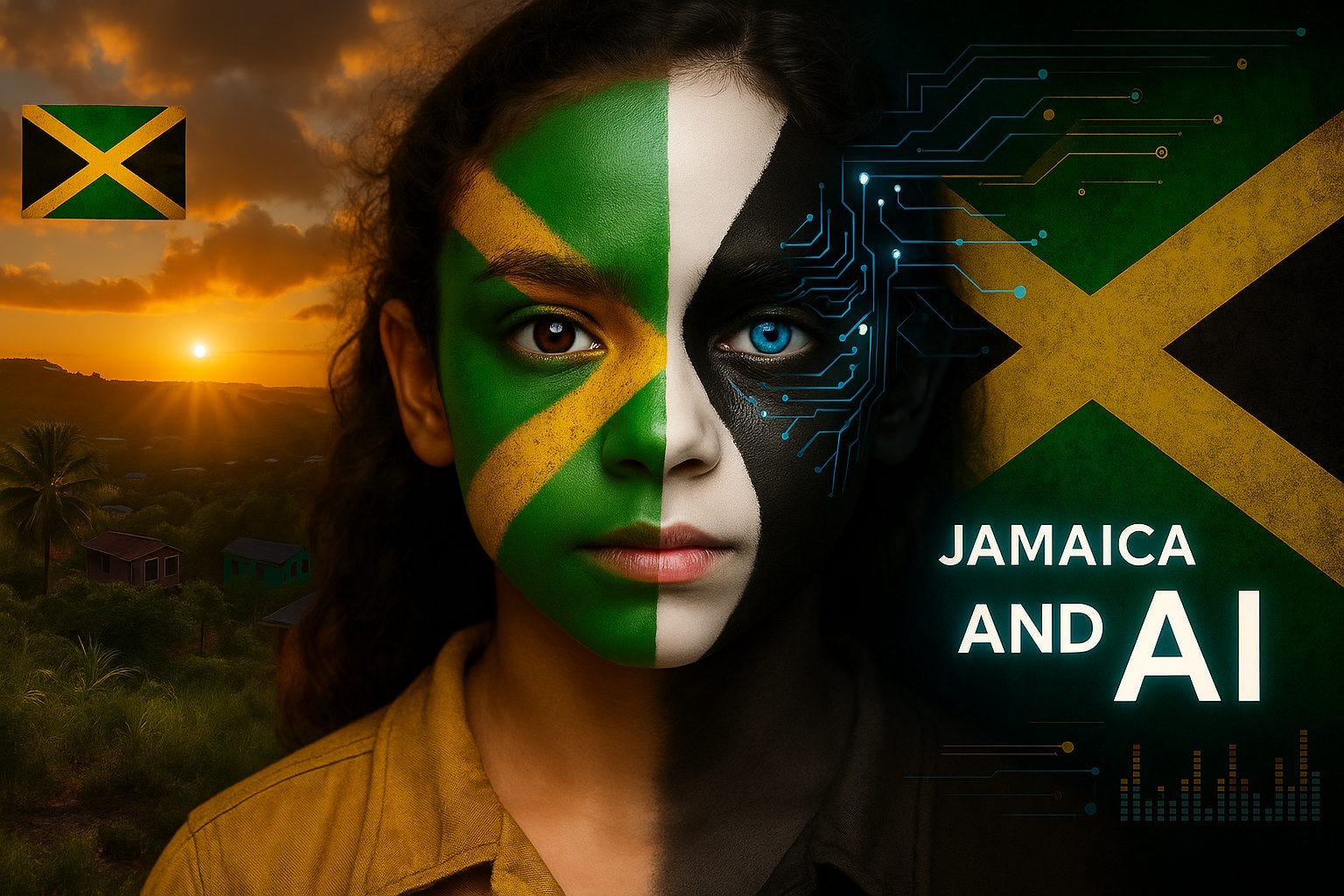
In recent years, conversations about artificial intelligence, transhumanism, and the so-called “uploading” of human consciousness onto silicon have shifted from science fiction into serious public debate. What once sounded like a late-night university argument now appears in boardrooms, tech conferences, and even church halls. The promise is grand: transcend mortality, outsmart disease, redesign the human future.
But here in Jamaica, where resilience is not a slogan but a lived reality, such conversations require grounding. We are a people who know about rebuilding, about walking through valleys rather than flying over them. We understand what it means to face fragility head-on. So when we hear talk of escaping frailty altogether—of engineering our way out of human limits—we must ask deeper questions.
The debate is not merely technological. It is theological, moral, and cultural. It touches on who we believe we are, and who we think we can become.
East of Eden — and Still Human
The opening chapters of Genesis tell a story that has echoed across centuries. Adam and Eve, driven east of Eden, barred from the tree of life, step into a world marked by thorns and thistles. It is a movement away from innocence and into hardship. The road forward is not a shortcut back to paradise. It runs through struggle, mortality, and what the Psalmist later calls “the valley of the shadow of death.”
For Jamaicans shaped by Christian faith—whether Anglican, Pentecostal, Catholic, or Baptist—this story is not abstract. It reflects something universal about the human condition. We are east of Eden. We work, we sweat, we grieve, we rebuild.
Yet the Christian claim is not that we must engineer our way back to Eden. It is that Christ meets humanity in that valley. His resurrection and ascension are presented in the New Testament not as an escape from humanity but as its fulfillment. The Son of God does not discard flesh; He takes it on. He dignifies mortality by passing through it.
This matters profoundly when we evaluate transhumanist visions that seek to eliminate mortality entirely. Some argue that aging, suffering, and even death are technical glitches waiting to be fixed. But Christian theology suggests something startlingly different: mortality is not merely a bug in the system. It is part of a story through which redemption unfolds.
Dean Jones, founder of Jamaica Homes and realtor associate, once reflected:
“The future is not built by escaping our humanity, but by redeeming it. Progress that forgets the soul will eventually bankrupt the society.”
In a nation that knows how to build homes block by block, that insight resonates. We understand that foundations matter. You cannot construct a strong house on weak ground, no matter how advanced your tools.
The Tower Reimagined
The Tower of Babel offers another vivid image. Humanity, united in ambition, decides to build a tower that reaches heaven. It is an attempt to bridge heaven and earth without obedience, without humility, without moral reckoning. It is a shortcut to transcendence.
The irony in the biblical narrative is almost humorous. The tower does not reach heaven; God must “come down” to see it. For all its architectural ambition, it remains small.
There is something gently comic about human pride. It reminds one of a man in Kingston traffic who believes that if he leans forward in his seat, the car will move faster. Effort is not the same as elevation.
Today’s digital towers are not made of brick and mortar. They are built of code, algorithms, neural networks, and data centres. Yet the ambition can sound similar: unite heaven and earth through innovation. Eliminate limits. Build paradise.
But paradise without moral transformation has never ended well.
The 20th century offers sobering lessons. Grand utopian projects—whether in Soviet Russia, Nazi Germany, or Maoist China—promised heaven on earth. They bypassed the question of sin, rebellion, and moral corruption. They assumed that if systems were perfected, humanity would flourish.
Instead, they produced immense suffering.
The Jamaican context is, of course, different. We are not a superpower with imperial ambitions. Yet we are not immune to global currents. The technologies shaping London, Silicon Valley, and Beijing inevitably shape Kingston, Montego Bay, and Mandeville. Surveillance systems, data tracking, algorithmic governance—these are no longer foreign concepts. They are realities.
And when AI experts outline possible futures, some scenarios include digital dictatorships—states empowered by technology to monitor and control citizens at unprecedented levels. The physicist Max Tegmark, in Life 3.0, outlines futures ranging from benevolent superintelligence to oppressive world regimes.
These are not fringe speculations. They are being discussed seriously in policy circles.
Dean Jones has cautioned:
“Every generation must decide what it will worship. If we worship convenience above conscience, we may wake up in a world that runs efficiently but feels empty.”
That warning feels especially timely. Efficiency is seductive. Convenience is addictive. But moral emptiness is corrosive.
Mortality, Dignity, and the Jamaican Imagination
One of the core desires of transhumanism is to overcome mortality. To upload consciousness. To merge human and machine. To extend life indefinitely.
On the surface, this seems compassionate. Who would not want to eliminate disease or suffering? Who would not want more time with loved ones?
But Christian theology presents a paradox. Mortality is not simply an enemy to be deleted; it is a doorway through which Christ has already passed. In taking on flesh, in walking through suffering and death, He dignified the very condition transhumanists seek to erase.
This does not mean we reject medicine or innovation. Jamaicans have benefited enormously from advances in healthcare and technology. It means we resist the temptation to see technology as saviour.
We must also consider cultural context. Jamaica’s strength has never been technological dominance. It has been relational richness. Community. Faith. Music. Family. Shared struggle.
A purely technocratic future risks flattening these textures. If humanity becomes data to be optimized, relationships can become transactions. If identity becomes programmable, accountability may become negotiable.
Christian faith insists on something stubborn: morality is not optional. Sin is not a glitch that can be patched with better software. It is a rupture in relationship with God and neighbour.
And every attempt to build utopia without addressing that rupture has eventually collapsed.
The Surveillance Temptation
There is another layer to this conversation: power.
Advanced AI systems can process massive amounts of data. Combined with surveillance technologies, they offer governments and corporations unprecedented insight into human behaviour. The same tools that optimize traffic flow or predict hurricanes can monitor citizens, shape opinions, and influence elections.
Even tech entrepreneurs have voiced concern. Some fear that AI could enable authoritarian regimes. That biblical imagery of global control suddenly seems less metaphorical.
For a small island nation, the question is not whether we will dominate the digital age, but how we will participate in it. Will we import technologies uncritically? Will we ask ethical questions early enough?
Dean Jones puts it this way:
“A nation that builds without asking why will one day forget who it is building for.”
In rebuilding and strengthening our society, we must ensure that innovation serves people—not the other way around.
Utopia and the Moral Question
At the heart of this debate lies a simple but profound issue: morality.
Many technological visions assume that intelligence alone can solve human problems. If machines become smart enough, they will optimize society. Crime will drop. Resources will be allocated efficiently. Conflict will diminish.
But intelligence without moral direction can be dangerous. A machine can optimize for goals that are misaligned with human dignity. And humans, flawed as we are, often define goals in self-serving ways.
Christian theology insists that the deepest human problem is not ignorance but rebellion. Not lack of data but misdirected desire.
Utopian thinking often bypasses this. It assumes that structural changes will cure moral failings. History suggests otherwise.
For Jamaica, a nation shaped by both colonial oppression and extraordinary cultural creativity, the lesson is clear: freedom without virtue does not last. Technology without ethics does not liberate; it magnifies.
Meeting Christ in the Valley
The Christian narrative offers a different path. Instead of building a tower to heaven, it proclaims that heaven has come down. Instead of escaping mortality, it affirms resurrection through mortality.
Christ meets humanity east of Eden—in the valley, not above it. He does not bypass suffering; He transforms it.
That perspective reshapes how we think about the future. It does not reject innovation. It places it within a moral framework. It reminds us that the ultimate “uploading,” if one insists on the metaphor, is not human consciousness into silicon, but redeemed humanity into resurrected life.
The New Testament’s vision of Christ’s return is not a technological singularity. It is a moral and relational restoration.
And that difference matters.
A Jamaican Way Forward
As we navigate this digital century, Jamaica stands at a crossroads like every other nation. We can embrace technology wisely, or we can be swept along by it.
Our history has taught us endurance. Our faith traditions have taught us humility. Our communities have taught us the value of relationship over abstraction.
We should invest in education, in digital literacy, in ethical reflection. We should engage global conversations about AI, not as passive consumers but as thoughtful participants.
But we must resist the seduction of believing that machines can solve what is fundamentally a matter of the heart.
In the end, the question is not whether AI will become powerful. It almost certainly will. The question is whether we will remain anchored in truths that transcend algorithms.
Silicon may process information at lightning speed. It may simulate reasoning. It may even mimic emotion. But it cannot repent. It cannot love in the covenantal sense Scripture describes. It cannot stand morally accountable before God.
Human beings can.
And that, perhaps, is both our burden and our glory.
As Jamaica continues to strengthen, rebuild, and reimagine its future, we would do well to remember: the greatest transformations are not coded. They are cultivated—within hearts, families, churches, and communities.
Technology can extend our reach. It cannot replace our redemption.
The tower builders of old believed they could ascend by their own design. The Christian story insists that true elevation begins with humility.
In a world fascinated by uploading minds to machines, perhaps the deeper challenge is allowing our minds and hearts to be renewed—not by silicon, but by grace.