

Blueprints for Tomorrow: How Jamaica Will Build Its Future, Brick by Digital Brick

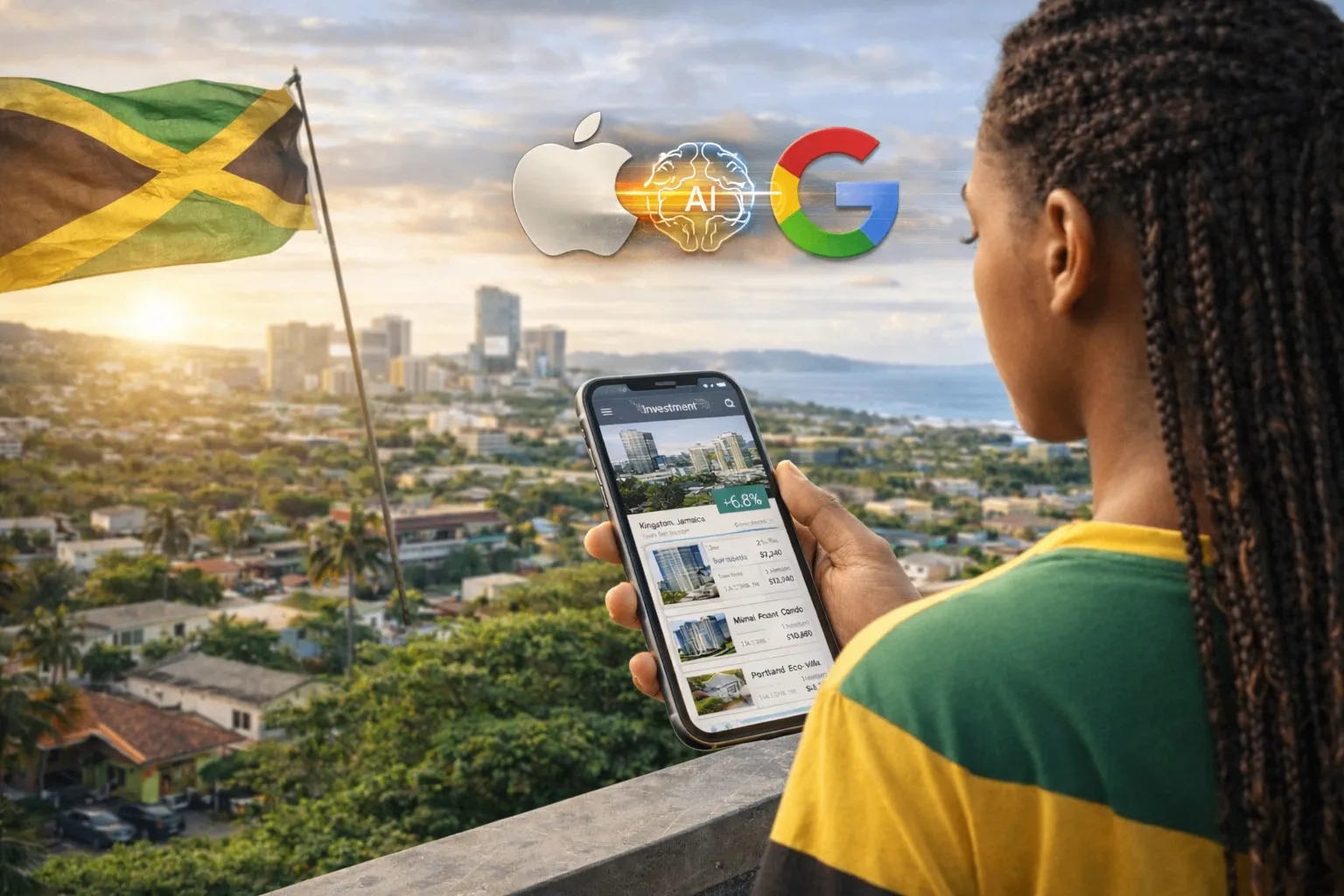
There is something deeply hopeful about standing on a piece of land just before the foundations are poured. The earth is still exposed. The lines are marked out in chalk. Possibility hangs in the air. You can almost hear the future whispering through the breeze.
Jamaica today feels a little like that.
Not empty. Not undone. But poised.
We are a country that understands rebuilding. We understand foundations — not just of concrete, but of family, community, and faith. And as the world accelerates toward a future shaped by artificial intelligence, digital currencies, longer lives, and even space travel, we must ask a very Jamaican question:
How will this future sit on our land?
Because the future, like a house, must be designed for its environment.
A Cashless Island — Or Simply a Smarter One?
It is widely predicted that money will become fully digital — that cash will disappear entirely. In some cities across the globe, you can buy a coffee without ever touching a coin.
But Jamaica is not built solely on transactions; it is built on relationships.
Here, money still carries weight beyond its numerical value. It represents effort, sacrifice, diaspora remittances, and the quiet pride of paying off your mortgage in full. So while digital wallets and online transfers are expanding — and rightly so — the disappearance of cash will likely be evolutionary rather than abrupt.
In real estate, the implications are profound. Imagine title searches verified instantly. Mortgage approvals processed through secure digital systems. Contracts signed electronically and registered without months of waiting.
The architecture of property transfer could shift from slow-moving bureaucracy to streamlined precision.
And yet, the question remains — will efficiency strengthen trust, or replace it?
Dean Jones, Founder of Jamaica Homes, captures it thoughtfully:
“Technology should not replace trust in Jamaica; it should strengthen it. Our future must move forward without leaving anyone behind.”
The real challenge is not whether we go digital. It is whether we design a system that includes the rural farmer in Clarendon as confidently as the investor in Kingston 6.
Artificial Intelligence: A Silent Partner in the Background
There is talk that AI will do most of what humans do today. Draft contracts. Analyse market trends. Conduct valuations. Provide customer support.
In many ways, that is already unfolding.
But Jamaican real estate is tactile. It is human. It involves walking through a half-finished development in St. Catherine and imagining where a family will gather for Sunday dinner. It involves feeling the breeze from a Portland hillside and knowing instinctively that this land carries value beyond spreadsheets.
AI will assist. It will forecast which parishes are likely to appreciate fastest. It will calculate rental yields in Montego Bay with startling accuracy. It will detect risk patterns invisible to the naked eye.
But it will not replace instinct.
It will not replace conversation.
It will not replace the quiet reassurance of a realtor who understands that buying property is often the single largest decision a Jamaican family will ever make.
And yet, many predict that people’s closest companions may one day be artificial intelligence — digital assistants who manage schedules, finances, even emotional reflection. For a nation with a vast diaspora, that possibility carries a curious duality. AI could bridge oceans, helping Jamaicans abroad manage property investments seamlessly from London or Toronto.
But we must guard against substituting connection with convenience.
Homes That Think Before We Do
It may sound fantastical to imagine that nearly every home will have a personal robot. But smart homes are already emerging — automated lighting, remote-controlled security, solar energy systems integrated with battery storage.
In Jamaica, intelligent design must serve resilience first.
Future homes here may be built with storm-resistant materials, adaptive shutters that close automatically as pressure systems shift, rainwater harvesting systems that monitor usage with precision. Solar panels may become standard rather than aspirational.
Our island climate demands architecture that anticipates change.
Robotics may find their first stronghold not in domestic spaces, but in construction and surveying. Drones mapping land parcels. Automated equipment improving build precision. AI-assisted surveying systems redefining how boundaries are measured.
For someone like Dean Jones, who holds an MSc in Surveying, the integration of advanced measurement technology is not futuristic — it is inevitable.
And yet, despite all the machinery, Jamaica will still pause to “reason” about land. Because land here is not merely property; it is heritage.
Language Barriers Falling Away
Real-time translation may erase language barriers entirely. A Japanese investor could negotiate a development in Ocho Rios. A Jamaican entrepreneur could secure a fractional interest in a European apartment complex — all without linguistic friction.
This shift would amplify Jamaica’s global accessibility.
The diaspora already forms a powerful investment network. Seamless translation technology would only strengthen those ties, accelerating property acquisition and cross-border collaboration.
Dean Jones reflects on this global horizon:
“The Jamaican investor of the future won’t just think local or overseas — they’ll think global and rooted at the same time.”
Rooted. That is the key word.
Technology may remove barriers, but identity anchors us.
Fractional Ownership: Reimagining What It Means to Own
Traditionally, ownership in Jamaica has been absolute — you buy the house, you own it fully, you pass it down. But the future may reshape that paradigm.
Fractional ownership — holding shares in multiple properties — could become entirely normal.
Imagine a professional in Kingston owning 20% of a rental apartment downtown, 15% of a villa in Ocho Rios catering to visitors, and a stake in a small eco-conscious development in Portland.
This is diversification not just of assets, but of opportunity.
It allows smaller investors to participate in larger projects. It spreads risk. It increases liquidity in the property market.
Yet the legal scaffolding must be strong. Transparent title systems, clear shareholder agreements, regulatory oversight — these must be carefully designed.
Otherwise, complexity could replace clarity.
The architecture of ownership must be as stable as the structures it represents.
Living Beyond 100: Designing for Longevity
If the average person lives past 100, the very layout of our homes will evolve.
Multi-generational living — already a cultural norm in many Jamaican communities — will expand. Homes will be built with accessibility features from inception: wider doorways, ground-floor bedrooms, adaptable bathrooms.
Retirement communities may emerge differently — not isolated enclaves, but integrated neighbourhoods where elders remain part of the community fabric.
Longer lifespans also change estate planning. Mortgages may span extended terms. Inheritance structures may require greater foresight.
Longevity reshapes timelines — and timelines reshape property strategy.
The Autonomous Road — With Jamaican Character
The notion that no one will drive themselves anymore feels ambitious.
Self-driving cars may first appear in controlled urban environments. But Jamaica’s roads — winding rural lanes, bustling market streets, the dynamic choreography of a Kingston roundabout — present unique challenges.
Logistics automation may come first: delivery drones, autonomous goods transport.
And one cannot help but smile at the image of an autonomous vehicle attempting to interpret the unspoken signals of Jamaican traffic — where a raised eyebrow can sometimes communicate more effectively than a traffic light.
Technology may learn. But it will need to adapt.
The First Trillionaire — And the Jamaican Perspective
It is predicted that someone will become the world’s first trillionaire.
Yet Jamaica’s aspiration need not be singular concentration of wealth. Our strength lies in broad-based ownership.
Financial literacy. Property acquisition. Intergenerational transfer of assets.
Imagine thousands of Jamaicans confidently navigating fractional investments, leveraging digital platforms, building diversified property portfolios.
That would be a revolution of a different kind.
Dean Jones expresses it powerfully:
“Real estate is never just about buildings. It is about dignity, security, and the legacy we leave for the next generation.”
Legacy is the blueprint.
Space Tourism and Orbiting Data
It may become commonplace to travel beyond Earth’s atmosphere. The largest data centres may orbit above us.
These concepts seem distant, but their technological by-products — advanced satellite mapping, predictive climate modelling, instantaneous global data processing — will influence how land is valued and developed here at home.
Precision will increase. Risk assessment will sharpen. Planning will become more intelligent.
The question is not whether Jamaica will encounter these technologies.
The question is how thoughtfully we will integrate them.
Transactions in Minutes — Not Months
Perhaps the most transformative prediction is that property transactions could occur in minutes rather than months.
Blockchain-verified titles. AI-driven compliance. Secure digital signatures.
Imagine a world where a Jamaican abroad can purchase a share in a Kingston development during a single video call — ownership recorded instantly and transparently.
It sounds radical.
But so once did electricity.
Speed, however, must not undermine diligence. Transparency, regulation, and consumer protection will remain pillars.
Because property, at its core, is stability.
Designing a Future That Fits the Land
The global predictions are dazzling: digital money, AI companions, robots in every home, self-driving cars, orbital data centres, humans walking on Mars.
But Jamaica must design its own version of that future.
We are not merely importing innovation; we are adapting it.
Our landscape demands resilience.
Our culture demands connection.
Our economy demands inclusion.
The future of Jamaican real estate will not be cold and mechanical. It will be layered — digital systems beneath, human relationships above.
Like any well-designed home, it must sit comfortably on its site.
The foundations must be strong.
The structure must be flexible.
The purpose must be clear.
And if we design it carefully — brick by digital brick — Jamaica’s next century will not be something that happens to us.
It will be something we build.