


In recent years, the idea of a “strong home” in Jamaica has taken on new meaning. It’s no longer enough to talk about square footage, finishes, or market value. Strength now has to account for weather patterns that are no longer predictable, rising construction costs, changing family structures, and a growing awareness that the way we build today shapes how safely — and comfortably — we live tomorrow.
That is the central question explored in What stronger homes look like — not as a technical manual, and not as a design trend piece, but as a thoughtful reflection on how Jamaican homes are evolving in response to real pressures.
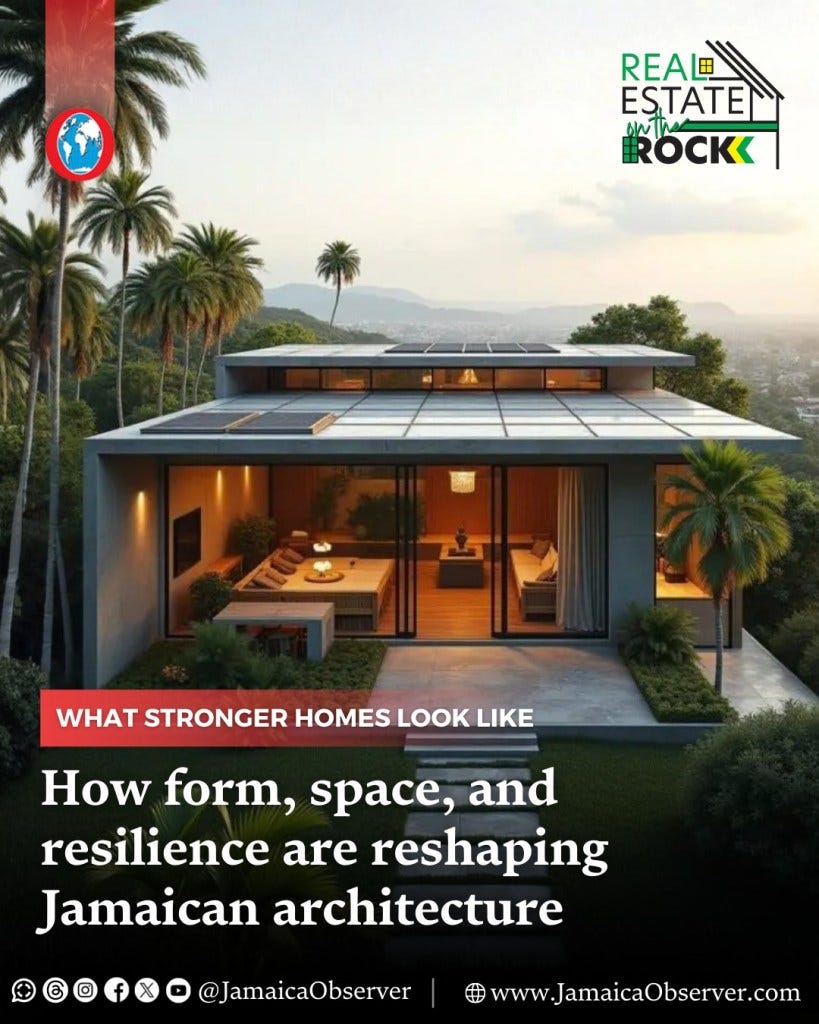
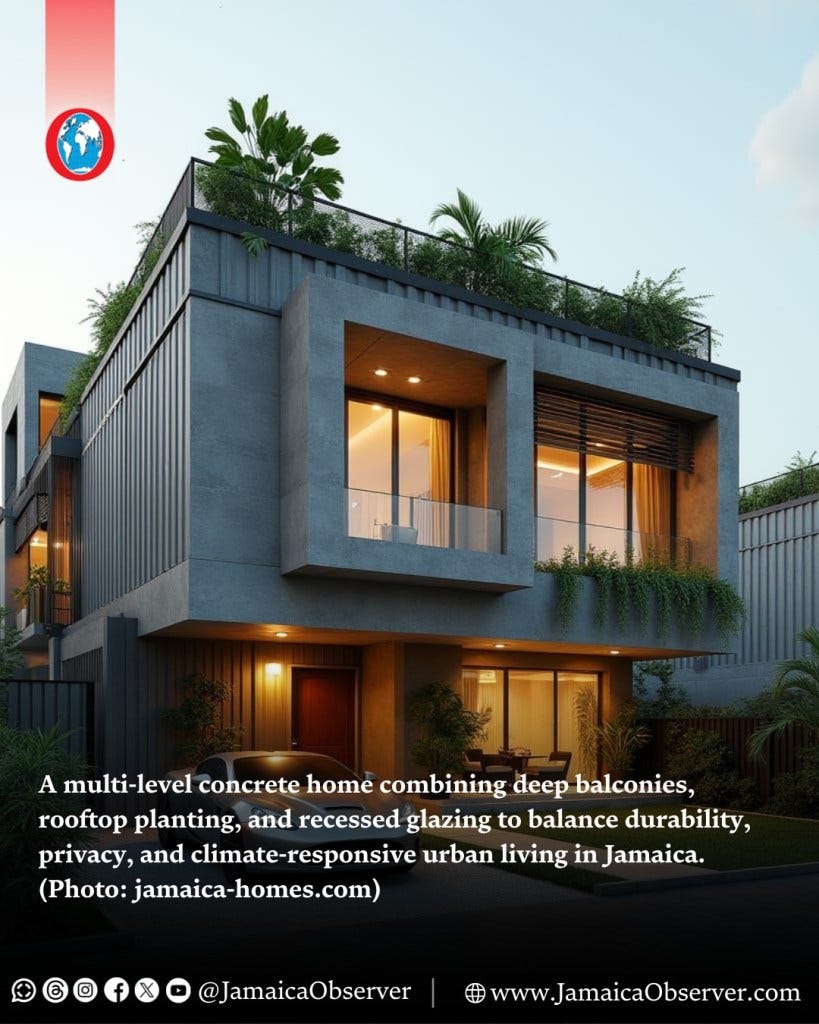
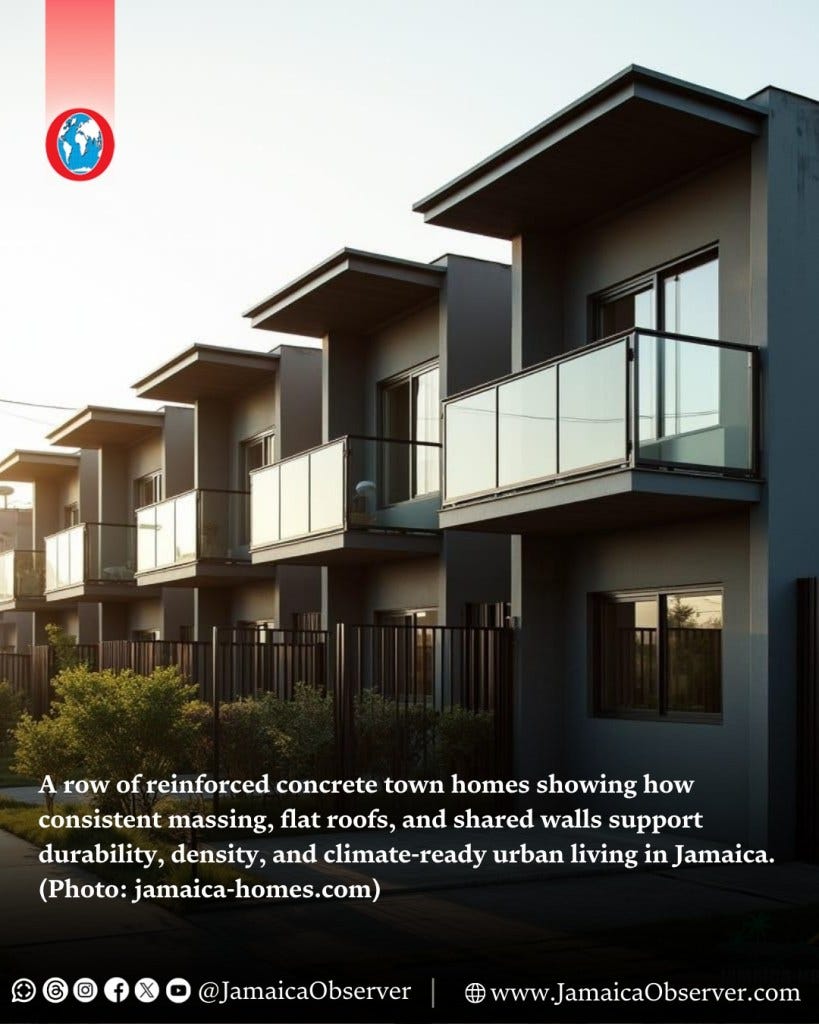
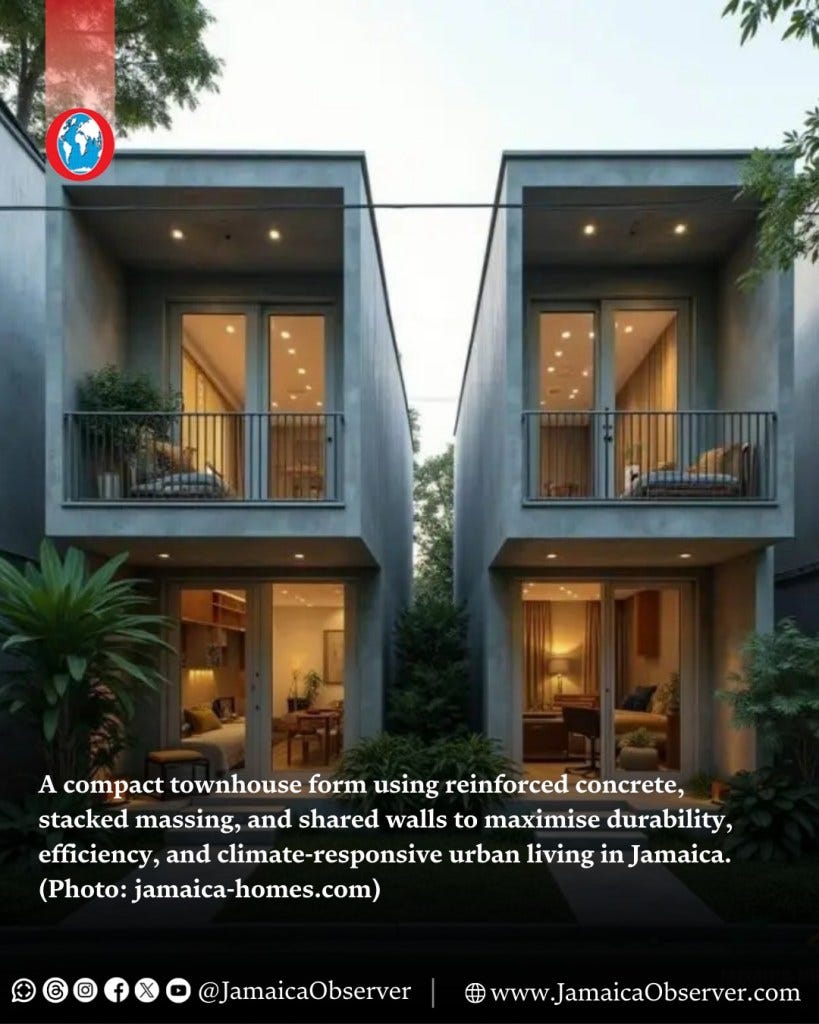
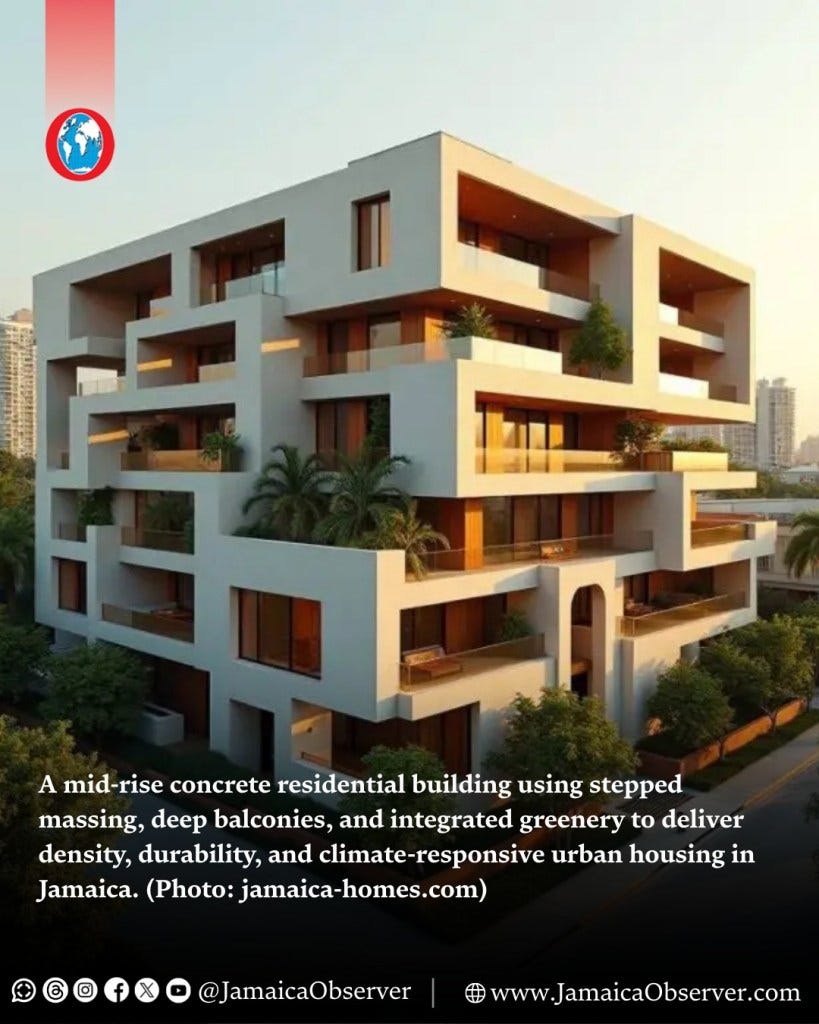
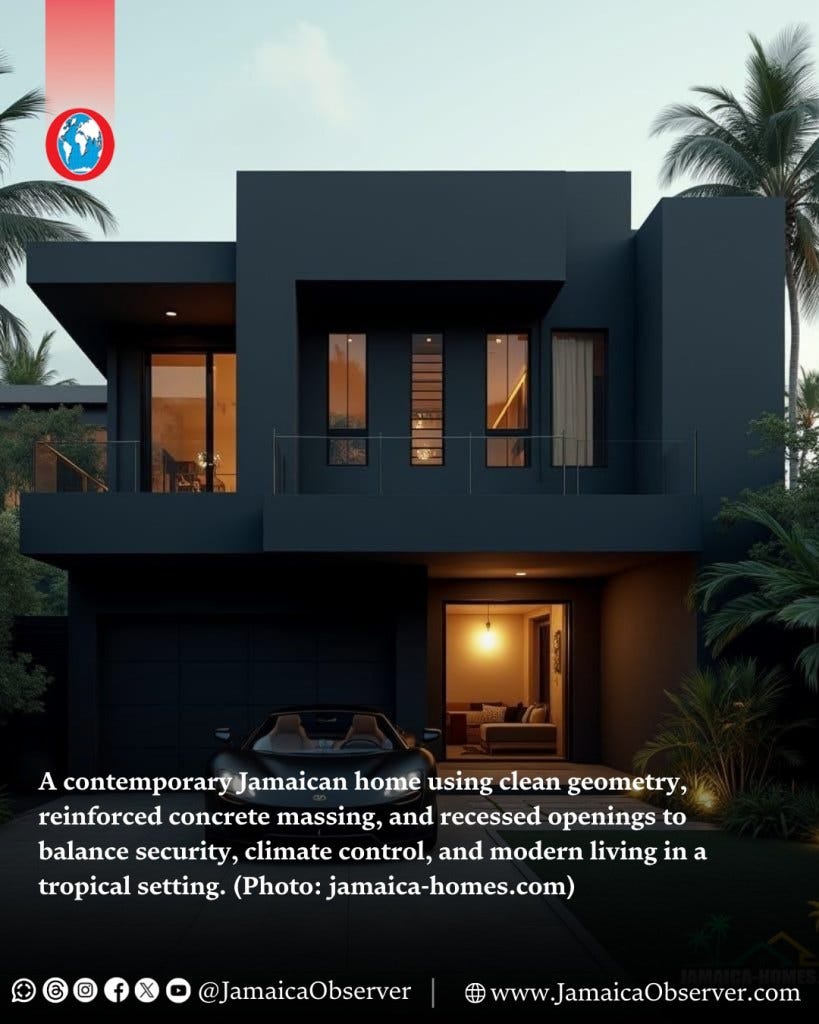
One of the article’s most compelling qualities is that it refuses to reduce “strength” to brute force or concrete thickness alone. Instead, strength is framed as intentional design — homes that are planned with purpose, foresight, and an understanding of the environment they sit in. This matters, because Jamaica’s landscape has never been neutral. Our hills, coastlines, winds, heat, and rainfall all demand a level of respect from the buildings we place within them.
What stands out is the way the article quietly challenges the assumption that resilience must always look “modern” or imported. Jamaican architecture has long contained smart responses to climate — raised structures, shaded outdoor spaces, cross-ventilation, deep eaves. Rather than romanticising the past, the article argues that these principles are being reinterpreted, adapted, and strengthened with contemporary materials and engineering. That balance between tradition and innovation is where the piece does its best work.
The discussion around roofs is a good example. Roofs are often treated as a purely aesthetic decision, or worse, an afterthought. Here, they are positioned as multifunctional elements — defensive against uplift and rain, but also potential spaces for water harvesting, energy generation, or social use. It’s a subtle but important reframing: a home’s uppermost structure is no longer just what covers us, but what can actively support resilience and daily life.
Another strength of the article is its accessibility. It speaks to professionals — architects, developers, builders — without alienating everyday homeowners or first-time buyers. Technical ideas are grounded in lived experience. Instead of abstract language about “climate adaptation,” the article talks about wind, heat, water, and how people actually occupy space. That approach matters in a country where many housing decisions are made family-by-family, not boardroom-by-boardroom.
The piece is also careful not to present resilience as something only wealthy homeowners can afford. While it acknowledges cost realities, it focuses more on design thinking than luxury solutions. Strength is presented as something that can be planned into homes at different scales — from modest builds to larger developments — if the right questions are asked early enough.
Perhaps most importantly, the article invites a mindset shift. It suggests that Jamaican homes are no longer just private refuges, but part of a broader national response to climate risk and social change. Each stronger home reduces vulnerability, strain on emergency systems, and long-term rebuilding costs. In that sense, housing becomes a form of quiet public infrastructure.
This is not a piece that tells readers what to build. It asks them what they want their homes to do. Protect? Adapt? Serve multiple generations? Endure beyond the next storm season? Those questions linger long after the final paragraph, which is exactly what good commentary should do.
For readers of Jamaica Homes Journal — whether you are buying, building, advising, or simply paying closer attention to how Jamaica is changing — this is an important read. It encourages a deeper understanding of housing as a long-term commitment rather than a short-term transaction. It also reminds us that strength, in a Jamaican context, has always been about more than walls. It is about foresight, adaptability, and care.
If we are serious about building a Jamaica that can withstand what lies ahead, then conversations like this — thoughtful, grounded, and culturally aware — are not optional. They are essential.
Read the full article:
What stronger homes look like – The Jamaica Observer