
 by
by 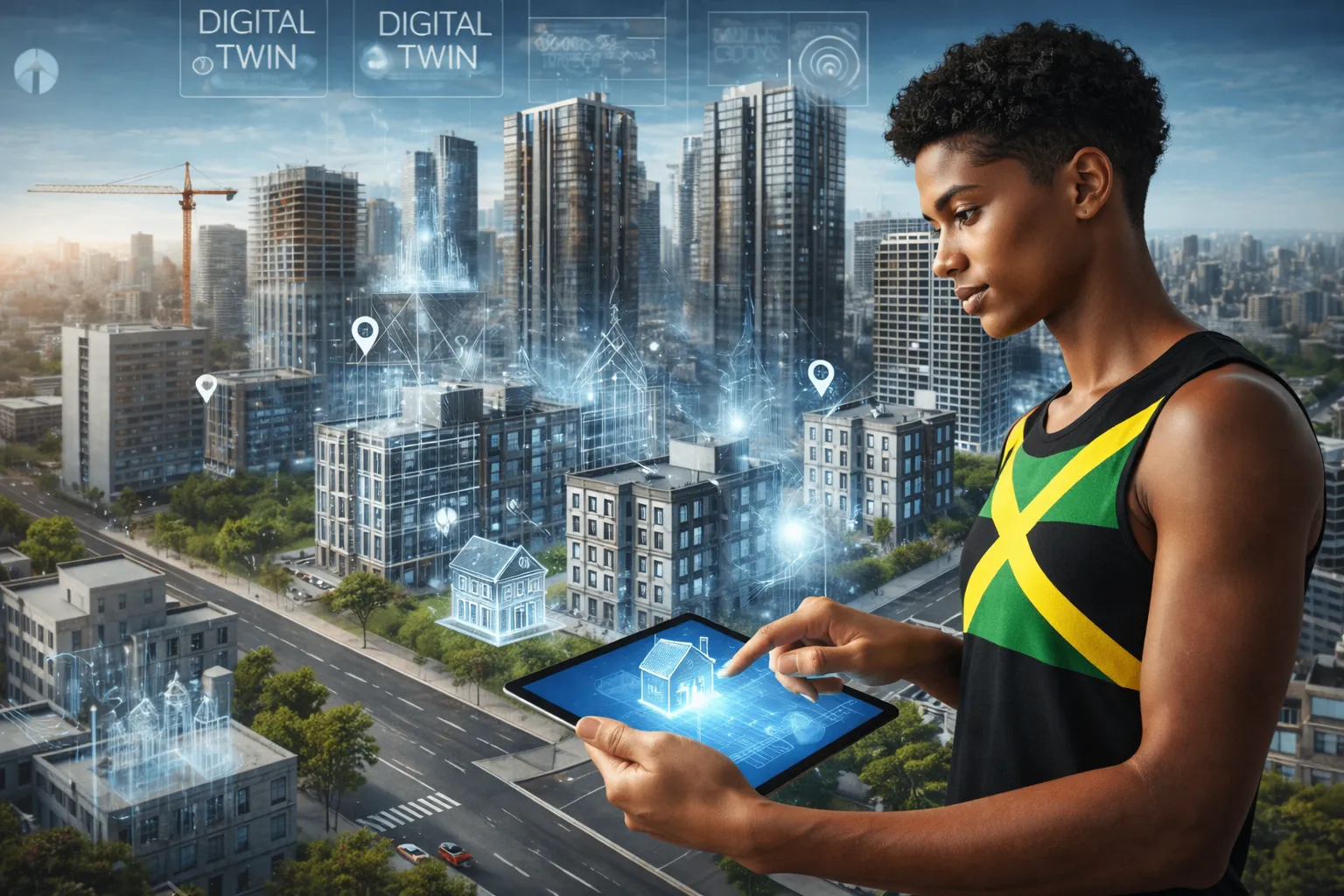
JamaicaJamaica, with its vibrant culture and stunning landscapes, has a unique position in the global real estate market. The i... More has always had a deeply personal relationship with landIn real estate, land is a foundational element that significantly impacts the value and potential of a property. It enco... More and propertyProperty encompasses a wide range of tangible assets that individuals or entities can own, utilize, or invest in, includ... More. A houseA house serves as a fundamental structure designed for residential living, providing shelter and a place for individuals... More is not just square footageIn real estate, square footage refers to the measurement of livable space within a property, which plays a critical role... More here; it is legacyLegacy, in the context of Jamaica, real estate, and the broader world, represents the enduring impact of past actions, a... More, shelter, survival, and in many cases, the single biggest investment"Investment" in the realm of real estate refers to the allocation of money or resources into property with the expectati... More a family willIn Jamaica, a will is a legal document created by an individual to specify how their assets, including their belongings ... More ever make. That reality matters even more in moments like this — when communities are still cleaning up, repairing roofs, drying out walls, and finding their footing again after Hurricane MelissaHurricane Melissa
(noun) Definition:
Hurricane Melissa is a historic and catastrophic tropical cyclone that struck... More.
In times of rebuilding, how we see, understand, and decide about property takes on new weight.
This is where digital tools must be approached with care — not hype, not jargon, and certainly not blind imitation of how things work in the United States. One of those tools, often discussed in glossy international real estateReal estate refers to property consisting of land and the structures on it, such as buildings and homes. It also include... More circles, is the digital twin. Used well, it can support transparency, efficiency, and smarter decision-making. Used poorly, it becomes just another imported idea that doesn’t quite fit JamaicanThe term "Jamaican" encompasses the citizens of Jamaica and their descendants in the Jamaican diaspora, representing a d... More soil.
Subscribe to Jamaica HomesJamaica Homes is a premier real estate company offering a comprehensive platform for buying, selling, and renting proper... More
Jamaica Homes is a reader-supported publication.
Jamaica Homes brings together peopleThe people of Jamaica embody a spirit that is at once richly diverse and unbreakably unified, as captured by the nationa... More, property, and place News, insight, and real opportunities—straight to your inbox.
This article takes a grounded look at digital twins in a Jamaican real estateJamaican real estate encompasses a diverse property market within Jamaica, including residential homes, commercial build... More context — what they are, what they can do here, where their limits lie, and how they may quietly reshape how we market, manage, and protect property in a country that knows all too well the cost of getting things wrong.
What Is a Digital Twin — Really?
A digital twin is a detailed 3D digital representation of a real, physical property. It allows someone to explore a building virtually — roomIn Jamaican Patois, the term "room" is commonly used to describe individual spaces within a property, offering a practic... More by room, angle by angle — as if they were walking through it in person.
In Jamaica, this is not about replacing physical viewings or human relationships. Those remain central. Instead, digital twins work best as decision-support tools, especially for:
- Overseas JamaicansJamaicans are a resilient and vibrant people with a deep-rooted history defined by courage, resistance, and cultural ric... More
- Investors managing property remotely
- Buyers narrowing down serious options
- Sellers trying to reduce unnecessary foot trafficFoot traffic refers to the flow of people walking in and around a particular area, and it is a critical factor in the re... More
- Professionals assessing space, condition, and layout before site visits
Unlike simple photos or videos, a digital twin allows usersIn Jamaica's real estate market, as in the rest of the world, "users" refer to the individuals or entities interacting w... More to move through space, understand proportions, measure distances, and observe relationships between rooms — things that matter deeply when you are deciding whether a property will actually work for your life, business, or budget.
“Good real estateIn Jamaican real estate, an estate refers to the total collection of assets and property owned by an individual, especia... More decisions don’t start with emotion or pressure — they start with clarity. The more clearly someone can see a property, the fairer the decision becomes for everyone involved.”
— Dean JonesDean Jones is a chartered builder, project manager, licensed real estate professional and the founder of Jamaica Homes, ... More, Founder, Jamaica Homes
Why Digital Twins Matter More Now Than Before
Natural disastersNatural disasters, such as hurricanes, earthquakes, and floods, arise from environmental processes that can cause signif... More change how people think about buildings. After a hurricane, questions become sharper:
- How is the roof structured?
- How does water flow through the property?
- Where are weak points?
- What needs repair now, and what can wait?
While a digital twin cannot replace an engineer, contractor, or surveyor, it creates a permanent visual record of a property at a specific point in time. That matters for:
- Insurance documentation
- Renovation planningPlanning in Jamaica involves managing land, resources, and infrastructure to support economic growth, social development... More
- Remote consultations
- Tracking changes before and after repairs
For a country increasingly affected by climate events, tools that improve documentation, foresight, and planning deserve careful attention — not blind adoption, but thoughtful use.
What a Digital Twin Can Tell You About a Jamaican Property
1. Layout That Actually Makes Sense
Floor plans are often missing or inaccurate in Jamaica, especially for older homes or informal builds. A digital twin allows buyers, tenants, or professionals to understand:
- Flow between rooms
- Natural lighting
- Ceiling heights
- Ventilation paths
- Practical use of space
This is especially valuable when viewing properties built in different eras, or where extensions were added over time.
2. Construction Realities (Without Guesswork)
While digital twins do not see inside walls, they do help people understand what is visible but often overlooked — roof angles, stair placements, transitions between materials, and how a structure sits on the land.
This is helpful when conversations need to shift from “pretty house” to “practical investment”.
3. Accessibility in the Jamaican Context
AccessibilityAccessibility in Jamaican real estate refers to the design and adaptation of homes and buildings to ensure that individu... More standards differ across countries. Jamaica does not mirror US ADA rules, but accessibility still matters — especially for aging parents, returning residentsReturning Residents are Jamaican nationals (or persons eligible through Jamaican descent or marriage to a Jamaican natio... More, or commercial spaces serving the public.
Digital twins allow people to assess:
- Step heights
- Corridor widths
- Ramp feasibility
- Bathroom layouts
All before anyone spends money or makes assumptionsAssumptions are underlying conditions or factors that are accepted as true or certain without concrete proof, which infl... More.
4. Energy Use and Natural Cooling
In a country where air conditioning is expensive and electricity costs matter, layout and airflow are not cosmetic concerns.
Digital twins help buyers and builders visualise:
- Window placement
- Cross-ventilation potential
- Shade and sun exposure
- Opportunities for solar or energy upgrades
Sustainability here is not a buzzword — it is about affordability and resilience.
“In Jamaica, efficiency isn’t about trends — it’s about survival, comfort, and long-term affordability. Any technologyTechnology, in its original definition, refers to the application of scientific knowledge for practical purposes, often ... More that helps people see that more clearly has a place at the table.”
— Dean Jones
Five Practical Benefits of Digital Twins for Real Estate in Jamaica
1. A Better Experience Without Pressure
Digital twins allow serious buyers to explore properties on their own time, without feeling rushed or watched. That matters in a culture where trust is earned, not assumed.
For overseas Jamaicans especially, this can mean fewer wasted trips and more confident decisions.
2. Reduced Costs — For Sellers and Buyers
Physical staging, repeated viewings, and unnecessary site visits all cost money. Digital twins reduce these expenses while keeping transparency intact.
In a market where margins matter, efficiency is not optional.
3. Smarter Marketing Without Hype
A digital twin does not oversell. It shows — plainly, clearly, honestly. That tends to attract serious enquiries, not curiosity clicks.
And yes, properties marketed clearly tend to sell faster — not because of technology alone, but because clarity builds confidence.
4. A Living Record of the Property
For landlords, investors, and developers, digital twins act as a visual archive — useful for maintenance planning, renovations, or disputes.
When memory fades, visuals don’t.
5. Alignment Between Decision-Makers
Whether it’s family members, partners, contractors, or professionals in different countries, having a shared reference point reduces misunderstanding.
Anyone who has ever argued over “what the property actually looked like” will understand why that matters.
“Most real estate conflicts don’t start with bad intentions — they start with people imagining the same space differently. A shared visual truth prevents a lotIn Jamaican real estate parlance, the term "lot" refers to a parcel of land designated for residential, commercial, or a... More of unnecessary friction.”
— Dean Jones
What Digital Twins Do Not Replace in Jamaica
This matters just as much.
Digital twins do not replace:
- Physical inspections
- Valuations
- Surveys
- Legal due diligence
- Local knowledge
They are not shortcuts. They are clarity tools.
In Jamaica, where informal practices still exist alongside formal systems, no technology should ever be presented as a substitute for proper professional checks.
Anyone telling you otherwise is selling software, not sound advice.
How Digital Twins Are Created (In Simple Terms)
There are two realistic approaches in Jamaica:
1. Hiring a Professional Scanning Service
This is best for:
- High-value properties
- Commercial spaces
- Developments
- Properties marketed internationally
Professional scans are more accurate and require less learning.
2. Do-It-Yourself with 360 Cameras or Smartphones
This approach suits:
- Smaller residential listings
- Landlords managing multiple units
- Agents experimenting with the technology
The key is preparation. Scanning is unforgiving. What is visible stays visible — clutter, unfinished work, and all.
There is no undo button for reality.
(Some would argue that’s a feature, not a flaw.)
A Note on Sensitivity and Timing
As Jamaica rebuilds after Hurricane Melissa, technology should never feel tone-deaf or opportunistic. Digital twins are not about spectacle. They are about supporting recovery, documentation, and smarter rebuilding.
Used well, they can help people:
- Plan repairs
- Communicate with insurers
- Coordinate professionals remotely
- Make informed decisions during stressful times
Used poorly, they become noise.
“Resilience isn’t just about rebuilding what was lost — it’s about rebuilding smarter, with clearer information and fewer blind spots.”
— Dean Jones
Final Thoughts
Digital twins are not the future of Jamaican real estate.
They are one tool in a much larger ecosystem built on trust, land knowledge, relationships, and lived experience.
But in a world where distance, climate riskA risk is the possibility of an adverse outcome or loss arising from uncertainty or potential hazards. It represents the... More, and complexity are increasing, tools that help people see clearly before they commit deserve serious, grounded considerationIn Jamaican real estate, consideration refers to the value exchanged between parties in a contract, typically involving ... More.
Not because they are fashionable — but because clarity, especially in uncertain times, is one of the most valuable assetsAssets represent valuable resources held by individuals or businesses, crucial for generating income and ensuring financ... More real estate has to offer.
Discover more from Jamaica Homes
Subscribe to get the latest posts sent to your email.
Discover more from Jamaica Homes
Subscribe to get the latest posts sent to your email.


Join The Discussion