

 by
by 
Welcome to the landIn real estate, land is a foundational element that significantly impacts the value and potential of a property. It enco... of wood and water — known to the Taíno as Zika, and later, to the English, as JamaicaJamaica, with its vibrant culture and stunning landscapes, has a unique position in the global real estate market. The i.... The name was not metaphorical. It was practical, descriptive, and precise. This was a place defined by its forests and rivers, by materials that sustained life rather than extracted it. Long before conquest arrived with ships and ledgers, the Taíno farmed cassavaCassava is a starchy root vegetable widely grown and consumed in Jamaica and other parts of the Caribbean. It is a stapl..., fished the coastal waters, and invented the hammock — a simple but elegant solution to heat, insects, and rest. It was designDesign is the art and science of creating plans and specifications for the construction of objects, structures, and syst... responding intelligently to environment, not imposing itself upon it.
Geographically, Jamaica sits in the Greater AntillesThe Greater Antilles is a group of islands in the northern Caribbean that includes Cuba, Hispaniola (home to Haiti and t..., the third largest island in the CaribbeanThe Caribbean is a vast region made up of over 700 islands, islets, reefs, and cays. Some of the most well-known islands... after Cuba and Hispaniola, positioned just south of Cuba and west of Hispaniola. Strategically placed, climatically generous, and naturally fortified, it would soon attract the attention of empires hungry for wealth and control.
In 1494, Christopher ColumbusIn 1494, Christopher Columbus arrived in Jamaica during his second voyage to the New World, forever altering the island'... claimed Jamaica for Spain. But there was a problem. No gold. No silver. None of the mineral riches that justified conquest elsewhere. Spain, unimpressed, pivoted. If the land would not produce wealth easily, the peopleThe people of Jamaica embody a spirit that is at once richly diverse and unbreakably unified, as captured by the nationa... would be made to do so instead. What followed was not settlement but exploitation. Disease, forced labour, and violence devastated the Taíno populationPopulation refers to the total number of people inhabiting a defined geographic area and encompasses their demographic, .... Within a generation, most were dead.
Between 1509 and 1655, the SpanishThe Spanish first arrived in Jamaica in 1494, marking a significant European influence that shaped the island’s early ... began importing Africans to replace the labour force they had destroyed. Many of those Africans refused captivity almost immediately. They escaped into the interiorThe interior of a building encompasses the spaces within its walls, floors, and ceilings, including all rooms, corridors..., into the hills and forests where the terrain itself became an ally. There, they formed independent communities — free villages carved out of steep slopes, dense bush, and hidden paths. These were not accidental settlements. They were deliberate acts of refusal.
Some of the earliest Africans in Spanish Jamaica may have been Black MoorsThe Moors, originating from North Africa, brought African, Arabic, and Islamic scholarship to Spain, which would eventua... from Iberia, but the vast majority were enslaved West Africans brought directly through the transatlantic trade. These men and women carried with them military knowledge, agricultural expertise, and political memory. When Spanish control weakened, they did not wait for freedom to be granted. They took it.
The Spanish referred to these escapees as cimarrón — a word originally used to describe livestock that had gone wild in the hills. Untamed. Unmanageable. Over time, French speakers shortened it to maron. The English later borrowed it as maroonA Maroon is a member of a group of descendants of enslaved Africans who escaped from plantations in the Americas and est.... What began as an insult hardened into an identity. A label meant to degrade became a badge of independence.
In 1655, the English invaded Jamaica and expelled the Spanish. They renamed the island Jamaica, retaining the original meaning — land of wood and water — even as they imposed a new colonial order. The Maroons, less impressed, had their own name for the place: the land where empires come to embarrass themselves.
Unlike other Caribbean territories that were renamed entirely, Jamaica retained its Indigenous name. A small but telling survival. Proof that even conquest has limits.
After seizing the island, the English transformed Port RoyalPort Royal is a historic town located at the end of a narrow peninsula in southeastern Jamaica, known for its significan... into the busiest port in the Caribbean — and arguably the most notorious. Merchants, pirates, and privateers crowded its streets. Money flowed freely. Morality did not. Gambling, drinking, and violence were routine. Port Royal was widely described as the wickedest city on EarthIn the late 1600s, Port Royal, Jamaica, became infamous as the "Wickedest City on Earth," a name that reflected its stat....
Then, in 1692, the earth intervened.
A massive earthquake struck, liquefying solid ground and collapsing buildings into the sea. In minutes, two-thirds of Port Royal disappeared beneath the waves. More than two thousand people died. What had been the Caribbean’s most decadent cityA city in Jamaica , like those around the world, is a vibrant Hub of culture, commerce, and community, where the pace of... became, overnight, its most exclusive underwater ruin.
Between the seventeenth and eighteenth centuries, sugar replaced gold as Jamaica’s primary source of wealth. Plantations spread rapidly, fuelled by the brutal labour of enslaved Africans. Resistance followed just as relentlessly. Poisonings. Sabotage. Work slowdowns. Escape. The plantation system required constant violence to maintain itself because it was fundamentally unstable.
As pressure increased, more enslaved people fled to the mountains and joined the Maroons. These communities were not hiding. They were organising. They built villages deep in the interior, using Jamaica’s geography as a defensive system: steep hills, thick forest, narrow trails known only to them. They raided plantations, freed others, and made colonial administration expensive, exhausting, and uncertain.
They were living proof that slaverySlavery in Jamaica, which began in the early 17th century following the island's colonization by the British, was a brut... could be resisted — and that terrified the authorities.
By the early eighteenth century, the British colonial government decided the Maroons had to be crushed. Between 1728 and 1739, what became known as the First Maroon WarThe Maroon War, fought between 1728 and 1739 in Jamaica, was a significant struggle between British colonial forces and ... unfolded. In the west, the Maroons were led by Cudjoe — a strategist and negotiator whose base was in TrelawnyTrelawny is a Parish located on Jamaica ’s north coast, renowned for its rich history, agricultural heritage, and natu... Town. In the east, they were led by Queen Nanny, whose mastery of guerrilla warfare and spiritual authority made her a figure of legend.
Britain believed it was fighting one rebellion. In reality, it faced two distinct but coordinated struggles. Cudjoe negotiated from a position of strength. Nanny ambushed relentlessly from the hills. Redcoats found themselves disoriented, exhausted, and defeated by terrain they could not master.
Eventually, Britain conceded. Peace treaties were signed. The Maroons were granted land and autonomy. Britain gained a fragile peace — and the uncomfortable knowledge that it could be forced to negotiate with people it had tried to enslave.
In 1760, another challenge erupted. A man known as Tacky — originally a paramount chief of the Fante people in present-day Ghana — led one of the largest slave uprisings in Caribbean history. Tacky had once participated in West AfricanAfricans, in the context of Jamaica, real estate, and the broader world, represent individuals of African descent or tho... warfare and had himself sold prisoners of rival states into slavery before being captured, sold by the Dutch, and transported to Jamaica. He knew power from both sides of the chain.
In April 1760, Tacky and around one hundred militarily trained enslaved men stormed a plantation, killed overseers, and seized weapons. The rebellion spread rapidly. Plantations fell. Numbers swelled into the hundreds. After days of fighting in St Mary, the rebels retreated into the hills.
Unable to crush the uprising, the British invoked the Maroon treaties, compelling Maroons to fight against enslaved rebels. Tacky was eventually killed, reportedly by a Maroon marksman. His head was severed and displayed on a pole in Spanish TownSpanish Town is a historic town located in St. Catherine Parish, Jamaica, and was once the island's capital during the S... — not by Maroons, but by the British, following a long colonial tradition of public terror. In England, traitors’ heads had lined London Bridge for centuries. In Jamaica, bodies were hanged, gibbeted, caged, and displayed as warnings.
But the rebellion did not end with Tacky’s death. Fighting continued across WestmorelandWestmoreland is a parish located on Jamaica's southwestern coast, known for its scenic beauty and vibrant communities. T..., ClarendonClarendon is a parish situated in central Jamaica, known for its diverse landscape that includes fertile plains and roll..., and St James for months before being crushed through brutal reprisals in 1761.
These revolts echoed beyond Jamaica. Dutty"Dutty," meaning "dirty" in Jamaican Patois, is often used to describe unclean or undesirable conditions and can be part... Boukman, a key figure in the early Haitian Revolution, had been enslaved in Jamaica before being sold to Saint-Domingue. The memory of JamaicanThe term "Jamaican" encompasses the citizens of Jamaica and their descendants in the Jamaican diaspora, representing a d... rebellions formed part of the revolutionary consciousness that exploded in Haiti in 1791. The British took notice — and worried.
By the 1790s, tensions between the colonial government and the Maroons flared again. Accusations of treaty violations escalated into the Second Maroon War. Despite deploying over 5,000 soldiers and Cuban bloodhounds, the British struggled to defeat the Maroons. Eventually, through deception rather than victory, they forced a surrender.
Promises of pardon were broken. In 1796, around 550 Trelawny Town Maroons were deported to Nova Scotia. It was exile by climate — a calculated cruelty. Cold, hunger, and neglect followed. Within a few years, the Maroons demanded removal again. In 1800, they were shipped to Sierra Leone, joining other formerly enslaved Africans.
Other Maroon communities remained in Jamaica, maintaining their autonomy to this day.
In 1831, Baptist deacon Sam Sharpe organised a Christmas strike that grew into the largest rebellion in Jamaica’s history. Sixty thousand enslaved people joined. Cane fields burned. Plantations fell. The rebellion was crushed violently, and Sharpe was executed, but the shock reverberated through Britain. Slavery was abolished in 1834. Full emancipation followed in 1838. Freedom arrived — but without land, securityIn Jamaican real estate, security refers to assets pledged to back a loan or financial obligation. Typically, the proper..., or justice.
Indentured labour from India and China followed, reshaping the island again. Communities blended. Cultures merged. Jamaica adapted.
In 1865, Paul BoglePaul Bogle, a revered figure in Jamaican history, is celebrated for his leadership in the Morant Bay Rebellion, which si... marched on Morant BayMorant Bay, located on the southeastern coast of Jamaica, is a historic town and the capital of the parish of St. Thomas..., declaring that justice did not live in the courthouse and must be brought there. The rebellion was crushed. Bogle and George William Gordon were executed. But the message endured.
In the twentieth century, Marcus GarveyMarcus Garvey, one of Jamaica's most important heroes, was born in Saint Ann in 1887 and grew up to inspire people all o... articulated a global vision of Black pride and self-reliance. Later, Bustamante and Manley organised labour and politics, combining rhetoric and strategy. One gave speeches. The other drew plans.
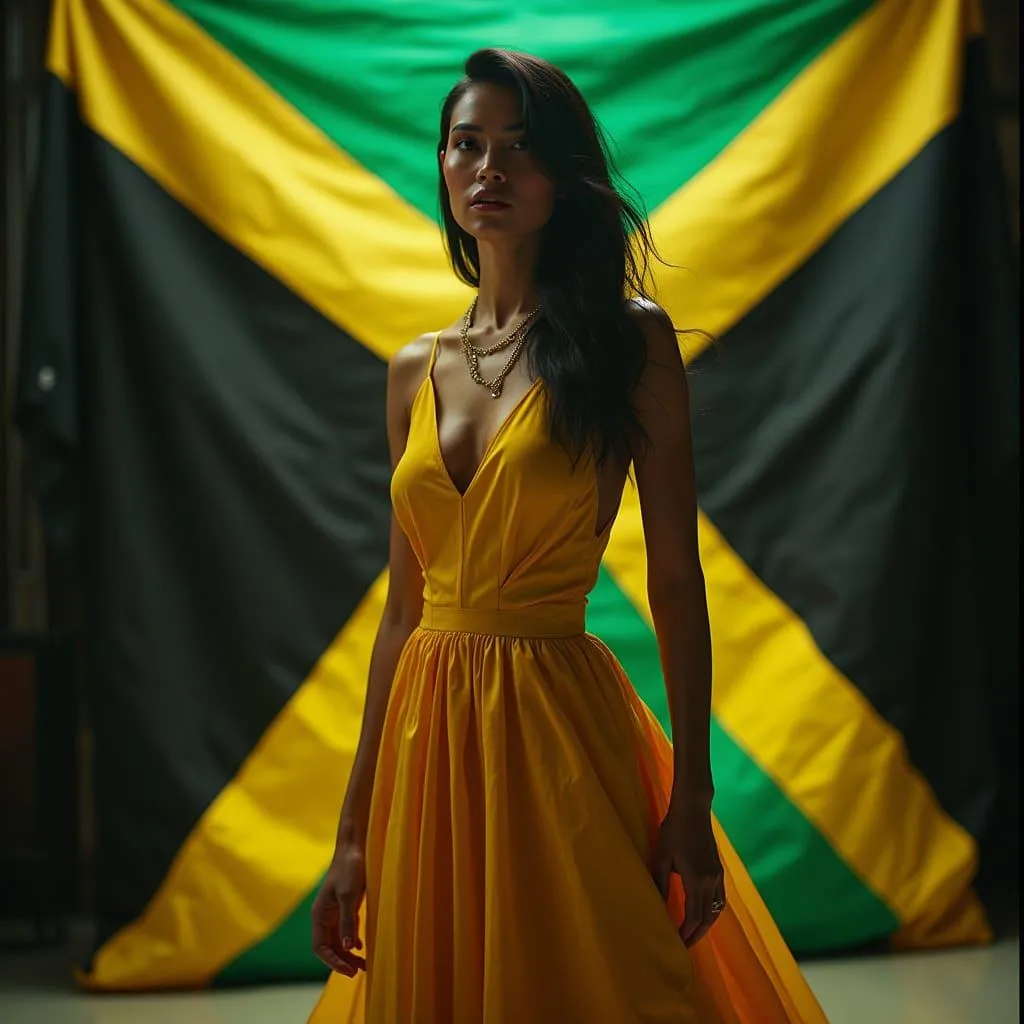
On August 6th, 1962, Jamaica became independent.
From Queen Nanny’s mountains to Sam Sharpe’s gallows, Jamaica’s story is not one of passive survival but of continuous resistance. The Maroons proved that an empire could be outthought, outlasted, and outmanoeuvred.
“Freedom was never gifted here. It was taken, defended, and remembered.”


Join The Discussion